Apple reveals iOS 27 and iPadOS 27 systems with assistant focused on artificial intelligence
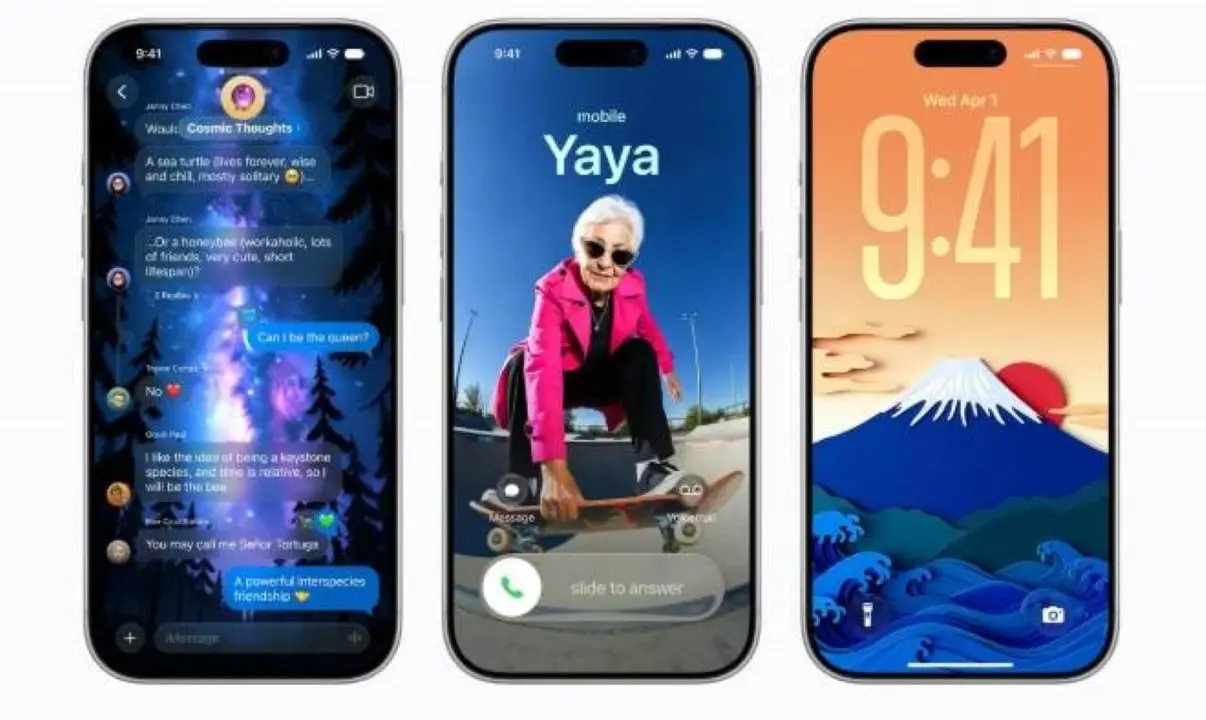
During the annual WWDC26 conference, the technology giant revealed the future of its mobile devices with the arrival of iOS 27 and iPadOS 27. The main objective of this generation of software is to improve the fluidity of navigation, deliver superior performance and completely transform voice interaction through advanced artificial intelligence. Programming professionals can now download preliminary editions to start adapting their applications.
Visual changes to the Liquid Glass design give users greater control
The translucent aesthetic adopted by the company in past generations gained an unprecedented fine-tuning tool. Through a slider in the settings, people can define exactly the degree of transparency of windows and menus. This modification solves a long-standing readability problem, preventing text from blending into the screen background. The manufacturer implemented this new feature directly to respond to criticism from consumers who found the factory default uncomfortable for daily reading.
The customization spectrum ranges from an almost invisible interface to an opaque, colorful finish. The entire platform adopts this choice uniformly, ensuring that the appearance does not change drastically when opening different programs. Software creators already have access to the code needed to ensure their tools respect this global configuration. In practice, the cell phone begins to more accurately reflect the visual preferences of the person holding it.
More on this story: Google launches Gemini 3.7 Flash with coding improvements and promotional price for developers
- Manual adjustment bar to set interface transparency
- Improved reading by separating graphic elements from the main text
- Variation of styles ranging from translucent to solid colored
- Standardization of the chosen look across all installed applications
Code optimizations ensure superior speed when executing daily tasks
The agility of the operating system received special attention, resulting in media opening in the gallery up to 70% faster. Nearby file sharing, known as AirDrop, had its waiting time reduced by 80%. Anyone who works with folder management will notice a dramatic difference, as the transition between directories is five times faster. All this software engineering work is intended to eliminate small crashes that irritate the consumer.
The transition from home wireless to carrier connection now happens without dropping calls or downloads in progress. The device can intelligently sustain data traffic while the user leaves home or work. Another important technical advance occurred in processor management, which was rewritten to benefit hardware from previous generations. This optimization strategy prevents phones that are several years old from running slow after the update.
Devices launched from the iPhone 11 onwards are on the official compatibility list for this new version. Keeping a 2019 device updated until 2026 represents a rare milestone of longevity in the technology market, covering a gigantic base of active customers. Preliminary evaluations by experts indicate that switching between open applications is actually more fluid compared to last year’s software.
Learn more: Apple trains its own AI model for the China market in partnership with Alibaba
Transformation of the Siri AI virtual assistant introduces continuous conversations format
The main highlight of the event was the complete redesign of the brand’s artificial intelligence. The assistant gained its own application and began to inhabit the interactive notch at the top of the screen of modern models, the Dynamic Island. When activated, the tool displays bright graphics and drop-down windows that illustrate request processing in real time. The interaction history now resembles a traditional messenger, following the market trend established by generative text platforms.
The virtual robot acquired the ability to remember what was said minutes before, allowing questions in sequence without the need to repeat the context. The understanding of elaborate commands has evolved, ensuring in-depth communication with the cell phone’s factory programs. People gained the freedom to change the tone, speed and emotion of the synthesized voice. To deliver accurate responses, the system searches authorized data within the owner’s inbox, calendar, gallery and text messages.
See Also

Nintendo launches nine games in May 2026 to unite Switch generations

NASA accelerates Artemis 3 mission with assembly of the Orion spacecraft and new tests
Apple system update crashes cell phones and drains battery quickly
The technology can read the content displayed on the display and offer useful shortcuts related to that specific information. Voice-to-text transcription has reached a new level of accuracy, understanding slang and accents with ease. Searching for a specific memory in the gallery or a work document requires only an informal description, eliminating the need for rigid keywords.
Artificial intelligence tools modify the way native applications work
The image editor built into the system received a generative engine capable of expanding scenes, correcting lighting and adjusting the framing of photographs automatically. The Safari browser now groups open websites by subject and notifies Internet users when a favorite portal undergoes updates. Add-ons developed by third parties also gained more space to modify the internet browsing experience.
On the same topic: Uber expands global reach with 2,000 Pony.ai robo-taxis in Europe
The photo capture interface abandoned the rigid layout, allowing each person to position the video, portrait or panorama buttons wherever they prefer. The display now works as an intelligent reader that translates nutritional tables, identifies everyday products and saves contacts from printed paper. Physical tickets and credentials can be transformed into virtual versions and stored instantly in the phone’s digital vault.
Digital security for minors has undergone a profound restructuring. Children’s profiles automatically apply strict content filters based on their registered year of birth. Those responsible have detailed panels to block financial expenses, restrict access to web addresses and limit hours spent on entertainment platforms. The usage statistics panel gained a new look and now displays advice prepared by psychologists on digital health.
iPadOS 27 update focuses on productivity and window adaptation on tablets
The brand’s tablets gained the option of fixing the toolbar at the top of the display, facilitating quick access to essential commands. Applications created exclusively for cell phones have lost their black borders and can be stretched or shrunk freely by the user. These exclusive functions are in addition to all the artificial intelligence innovations already mentioned. The manufacturer’s objective is to bring the equipment’s usability closer to that of a traditional portable computer.
Full coverage: Latest News (EN)
Global distribution of the software package will take place in the second half of the year for all supported devices. The schedule points to an official launch in September, strategically coinciding with the arrival of the company’s next generation of smartphones in stores. Meanwhile, programmers continue to test and report failures in test editions released after the conference.
Release calendar and compatibility list for new software versions
This generation of operating systems prioritizes stability and efficiency over completely revolutionizing the appearance of the interface. The real technological leap lies in the processing speed and reasoning capacity of the virtual assistant. The decision to maintain support for phones manufactured seven years ago reinforces the brand’s commitment to the durability of its products on the market.
- Release of the first test version for programmers: June 8, 2026
- Expected arrival of the beta edition for the general public: July 2026
- Final and stable update rollout: September 2026
- Supported devices: iPhone 11 line onwards and tablets of the same generation