
Perseid meteor shower of 2026: see how and when to observe the peak in August

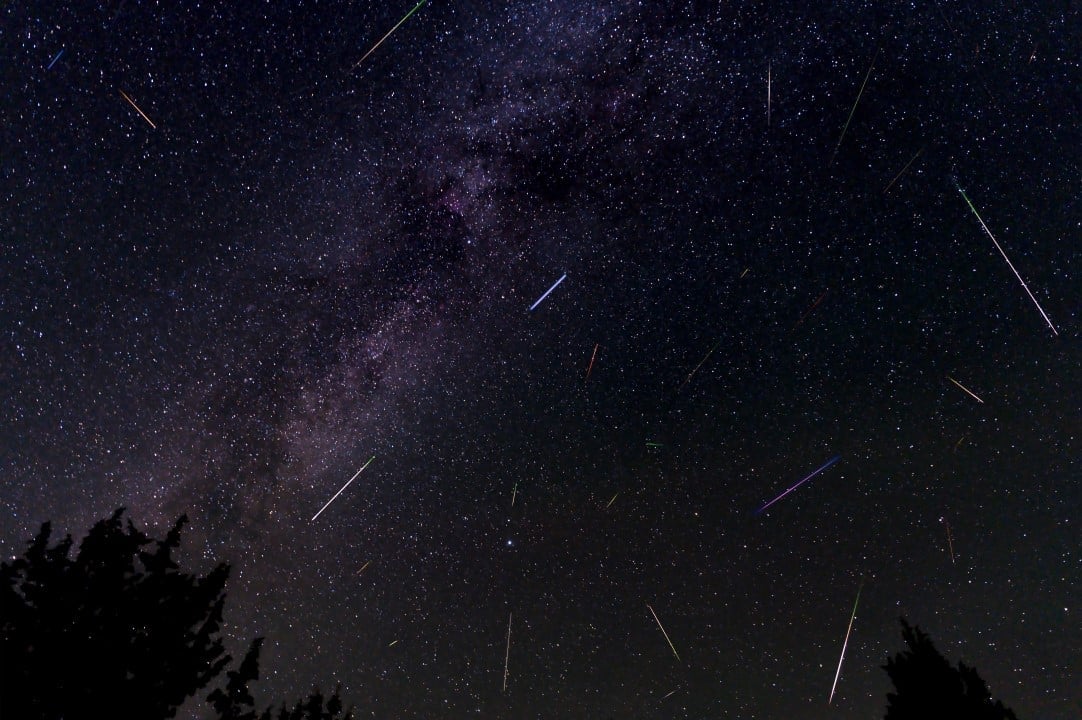
The Perseid meteor shower, one of the most anticipated annual astronomical events, will return in August 2026, promising a light show for observers around the world. That month, Earth will cross the trail of debris left by comet 109P/Swift-Tuttle, creating luminous beams in the night sky. This phenomenon, known for its fast, bright meteors, is accessible without the need for specialized equipment, making it a time of contemplation and learning for many astronomy enthusiasts.
The story of comet Swift-Tuttle and the formation of the Perseids
The Perseid meteor shower is an annual reminder of the journey of comet 109P/Swift-Tuttle, an icy nucleus approximately 26 kilometers in diameter. Discovered independently by astronomers Lewis Swift and Horace Parnell Tuttle in 1862, this comet has an elliptical orbit that causes it to pass close to the Sun every 133 years. During its passages through the inner solar system, solar heat causes the ice on its surface to sublime, releasing vast amounts of dust and rocky particles in its wake.
Each year, when Earth crosses this debris stream on its orbital path, the tiny particles — often no larger than a grain of sand — collide with the planet’s upper atmosphere. The friction generated by this input at speeds of tens of thousands of kilometers per hour heats the particles to incandescence, creating the bright beams of light that we observe as meteors. The name “Perseids” derives from the point in the sky from which the meteors appear to radiate, the constellation Perseus, although they can be seen over wide areas of the firmament. This direct connection to a specific celestial object offers scientists a unique window into studying the composition and evolution of comets.
NASA Recommendations for Observation in August 2026
The space agency NASA highlights the Perseids as one of the most popular meteor showers, due to their constant activity and the intensity of the meteors, which can reach dozens of flashes per hour at the peak of the event. To optimize the observation experience in August 2026, NASA suggests that the public look for locations with low artificial lighting and dark skies, far from large cities, where light pollution does not obscure vision.
It is essential to allow your eyes to adapt to the darkness for a period of at least 20 to 30 minutes before seeking the best views, as nighttime sensitivity gradually improves. Bright light sources, such as cell phone screens, flashlights and street lamps, should be avoided as much as possible, as they can reset ocular adaptation and significantly reduce the number of visible meteors. The event does not require telescopes or special equipment; in fact, binoculars and telescopes are often less effective because meteors are fast and appear over a wide area of the sky, making precise focusing difficult. For photography enthusiasts, NASA advises the use of long exposure techniques, which can capture light trails, depending on the weather conditions and the darkness of the observation location.
Practical tips for an unforgettable spectacle of the Perseids
For those looking to witness the peak of the Perseid meteor shower in August 2026, some preparations can significantly enhance the experience. The visibility of meteors will be influenced by local weather conditions, the phase of the Moon and the amount of light pollution present.
The best observation points are generally in rural areas, open fields, parks or other locations away from urban environments with bright lights. A wide, unobstructed view of the sky increases the chances of spotting meteors in different directions. The pre-dawn and early morning hours often offer the most favorable conditions, as the observer will be on the side of Earth advancing through the comet’s debris field.
- For more comfortable and effective observation:
- Find a location with dark skies and away from city lights.
- Arrive early so your eyes can get used to the darkness for at least 20 minutes.
- Bring a beach chair or blanket to lie down on and have a comfortable view of the sky.
- Wear warm clothes, even on summer nights, as the temperature can drop in the early hours of the morning.
- Be patient and enjoy the beauty of the night sky, waiting for the bright flashes.
- Avoid using cell phones and other light sources that can obscure your night vision.
Why the Perseids are a crucial spectacle for science
In addition to its stunning beauty, the Perseid meteor shower plays a key role in astronomical research. Studying the debris left behind by comet Swift-Tuttle provides invaluable data about the formation and evolution of our solar system. By analyzing the frequency, brightness, speed and chemical composition of these meteors, scientists can infer the comet’s internal structure and the types of materials that make it up.
These observations allow us to better understand how comets fragment and how cosmic dust disperses in space. Each particle that passes through Earth’s atmosphere is a small “time capsule” containing clues about conditions in the early solar system. Information collected during the Perseid rain helps refine models of planetary formation and understand the origin of volatile elements that were transported to Earth by celestial objects. Therefore, what appears to be just a light show is, in reality, a natural laboratory on a cosmic scale to deepen our knowledge of the universe.





