
August holds two eclipses in the sky, but Brazilians will only watch one of the events


In August, two different eclipses will cause much of the planet to pause to look at the sky, however, only one of these moments can be observed in Brazil. The first, a total solar eclipse, will not be visible here, but a partial lunar eclipse, which will occur between August 27th and 28th, can be enjoyed by Brazilians.
Total solar eclipse: where the astronomical phenomenon will be observed
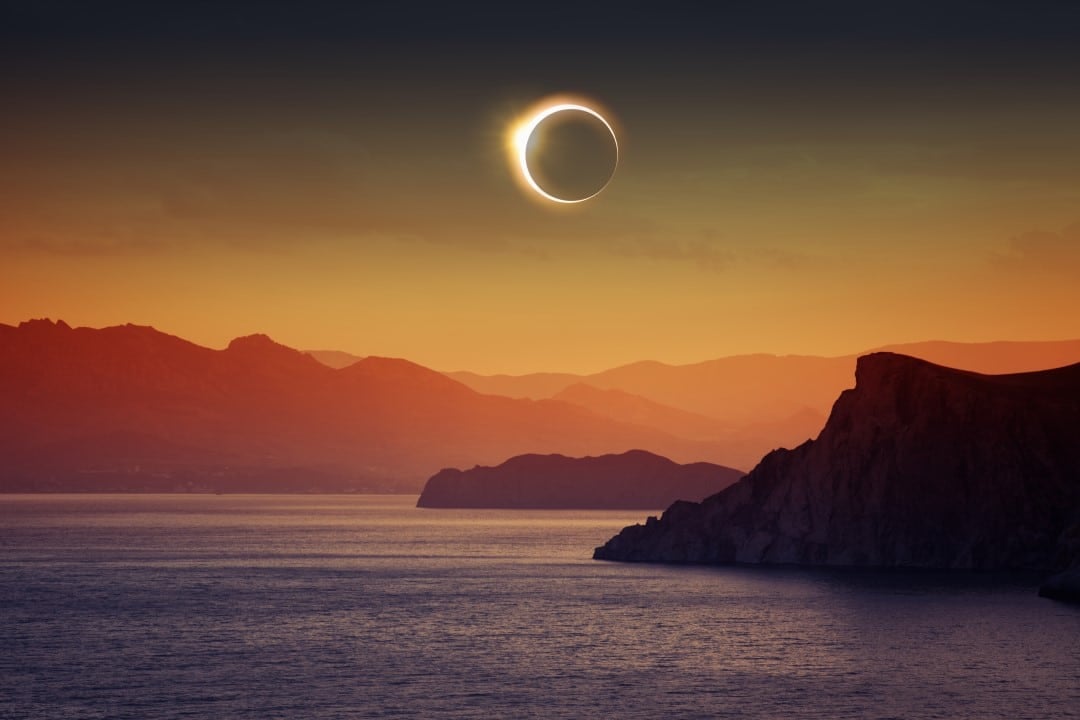
A complete solar eclipse will turn day into night for up to two minutes on August 12, 2026. This event can be seen in several regions of Europe, North America and Africa, including countries such as Spain, Greenland, Iceland, Russia, Alaska, Canada, the United Kingdom and Portugal.
Some of these places even plan festivals lasting up to five days, with music, camps and even performances by artists, such as singer Björk. Mainly in Portugal, Iceland and Spain.
In Brazil, as well as throughout Latin America and other parts of the globe, this specific moment will not be noticed. However, another celestial phenomenon will capture the attention of Brazilians days later.
Arrival of partial lunar eclipse at the end of the month
At the end of this month, a partial lunar eclipse will leave the Moon covered in up to 93% of its surface for a period of more than three hours. The natural spectacle will be visible in the Americas, Africa and Western Asia, according to information from NASA. The inhabitants of Brazil will also have the opportunity to follow the phenomenon.
As it is a partial lunar eclipse, the Moon’s surface will not be completely obscured. The North American space agency explains that the star can be “dramatically dark, with the sides painted a rusty bronze.”
This event will take place between the night of August 27th and the early morning of August 28th. Its observation is safe and can be done with the naked eye, with binoculars or even with a small telescope for a more detailed view.
Understand the difference between lunar and solar eclipses
A solar eclipse happens when the Moon is positioned between the Sun and the Earth, and when it is total, the Sun is completely covered by the shadow, which can generate minutes of darkness in some parts of the world; A lunar eclipse occurs when the Earth is positioned between the Moon and the Sun, causing the Earth’s shadow to fall on the star, reducing its brightness.





