Jovi X300 Ultra debuts in Brazil for R$20,000 with professional lens kit By Luís Henrique Costa
4 min read
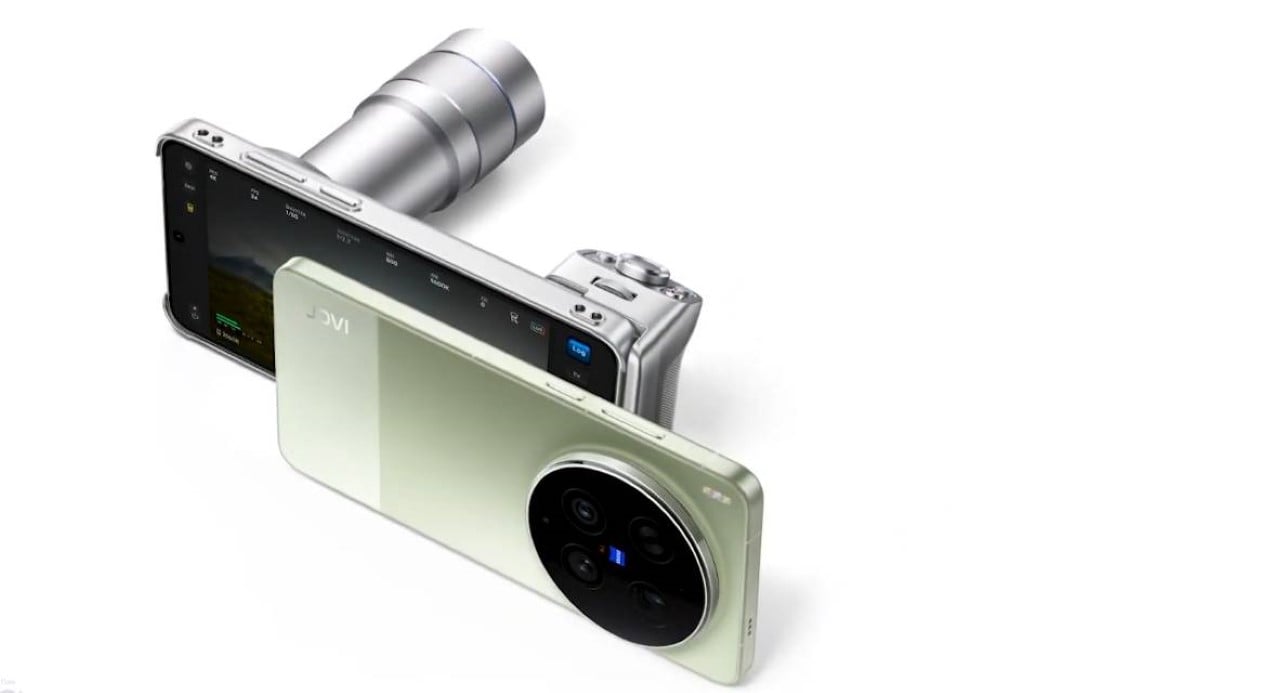 |
Asian manufacturer Jovi officially announced the arrival of its most advanced mobile device on the national market on August 4, 2026. Named X300 Ultra, the device arrives in the country with the ambitious proposal of merging the portability of a cell phone with the optical capacity of dedicated cameras. To achieve this goal, the brand included a robust set of physical accessories in the product box. This sales strategy raised the final cost of the equipment to the R$20,000 mark, placing the model on a highly luxurious shelf.
How launch value compares to tech giants
Charging two tens of thousands of reais for a smart phone represents a bold move in the current economic scenario. Models renowned by the public, such as the Samsung Galaxy S26 Ultra, the iPhone 17 Pro and the Oppo Find X9 Pro, currently operate in a price range that varies from R$9,000 to R$14,000 in national retail. The significant difference in values indicates that the Chinese manufacturer is not looking for sales volume, but rather to capture the attention of an extremely specific niche.

This target audience is made up of content creators, amateur videographers and photographers who need agility without compromising optical quality. Instead of carrying a backpack with a camera body, interchangeable lenses and extra batteries, the user finds all these solutions integrated into a single mobile ecosystem. The transition from the entry-level camera market to smartphones takes on a new chapter with this hybrid approach offered by the company.
Details of the modular equipment that comes with the device
The Jovi X300 Ultra’s main selling point isn’t just its image processing software, but the external hardware that comes with it. The company has developed an ecosystem of modular parts that attach to the phone’s chassis, completely changing the ergonomics and capture possibilities. This factory package eliminates the need to seek third-party solutions to adapt the cell phone to complex recording scenarios.
- Optical approximation modules: two external lenses come with the kit, one 200 mm (guaranteeing 2.35x zoom) and the other 400 mm (reaching 4.7x real approximation).
- Aluminum protective housing: A rigid case specifically designed to support the weight and secure fit of additional optical components.
- Grip module: a side support with a physical trigger button that houses an extra 2,300 mAh power cell, guaranteeing more hours of screen time.
- Transport and fixing accessories: adapter rings for using light filters, standard thread for tripods and a safety strap.
- High-speed power supply: a plug adapter capable of delivering 100W of power for emergency recharges.
Delivering this complete package to Brazilian retail represents an important competitive advantage for the Asian brand. Other companies that tried to flirt with the idea of photographic kits, such as Oppo itself with the Find X9 Pro line, chose to sell only the base device in Brazil, leaving the accessories restricted to the international market. Jovi’s decision ensures that local consumers have access to the full experience designed by hardware engineers.
Hardware power and the new generation of high-density batteries
To manage the enormous flow of data generated by very high-resolution photographs, the equipment’s interior houses state-of-the-art components. The brain of the operation is the Snapdragon 8 Elite Gen 5 processor, manufactured by Qualcomm, which is among the fastest chips today. Working in conjunction with this engine, the phone has 16 GB of RAM, eliminating any risk of crashes when editing heavy videos or transitioning between applications. The internal storage offers 512 GB of free space.
Power supply is provided by a 6,600 mAh tank, built with the latest silicon-carbon anode technology. This material allows you to store more milliamps in a smaller physical space, preventing the cell phone from becoming too thick, a crucial advance for media-focused devices. At the rear, the native photographic set impresses with four independent sensors. Two of these cameras deliver 200 megapixels of definition, the main one and a telephoto lens with 3.7x zoom. The system also has a 50 MP ultrawide camera and an exclusive VS1+ chip for real-time color calibration.
Physical impact of the complete set on users’ routine
Carrying all this technology in your pocket requires some compromises, especially when it comes to physical comfort. The base model, without any accessories connected, already has a dense structure that weighs 237 grams on the scale. When we put this measurement alongside direct competitors, the difference becomes evident, as a traditional iPhone 17 weighs approximately 177 grams. The user immediately realizes that they are holding a massive block of metal and glass.
The true ergonomic transformation happens when all the pieces of the photography kit are assembled simultaneously. When attaching the aluminum cover, the side battery support and the imposing 400 mm lens, the total weight of the equipment jumps to 638 grams. In this format, the device stops being a cell phone and takes on the body and usage dynamics of a compact professional camera. The screw system for attaching the lenses only requires a quick turning movement, making it easy to change parts during an outdoor photo shoot.
Due to this considerable volume, the neck strap included in the box stops being a mere gift and becomes a mandatory item to avoid accidental falls. The optical range provided by external lenses allows you to record distant elements with a clarity that digital zoom via software cannot yet replicate perfectly. This is equipment aimed at those who accept giving up lightness and discretion in exchange for visual results that challenge the limits of contemporary mobile photography.