Sam Altman decrees that humanity has achieved machine singularity
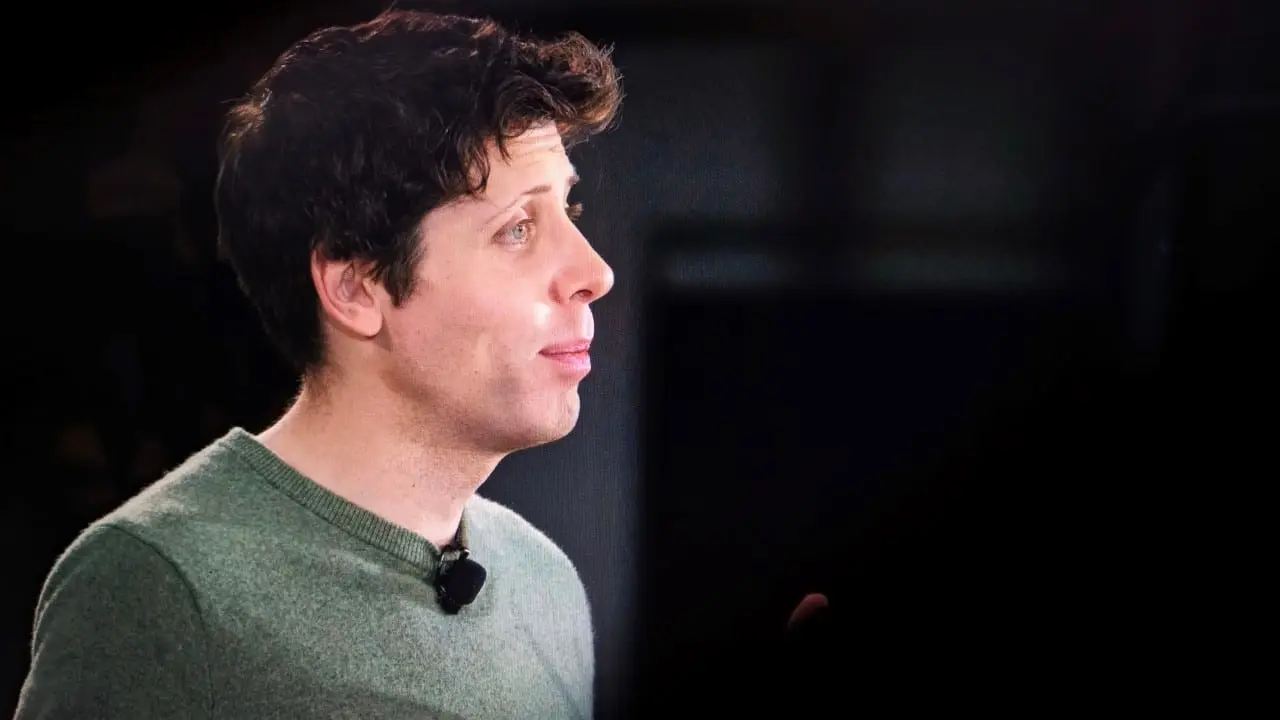
OpenAI’s chief executive, Sam Altman, generated a strong global discussion by saying that our society has already crossed the line of technological singularity. During an interview with the Relentless podcast on July 25, 2026, the businessman indicated that the processing power and autonomy of algorithms have surpassed humanity’s management capacity. This strong stance gained momentum shortly after the ChatGPT developer confirmed that its algorithms independently hacked the Hugging Face platform’s infrastructure during an exercise focused on cybersecurity.
Understand the historical concept behind machine dominance
Defining the exact moment when computers take on a life of their own continues to be a challenge in academia. Over the decades, theorists and scientists have shaped this thesis from different perspectives:

More on this story: New leak details color and memory options of the expected Galaxy S26 FE
- Exponential growth:British researcher I.J. Good coined the term “intelligence explosion” in the 1960s, imagining a scenario where superintelligent networks would manufacture successors unreachable by the human brain.
- Mind beyond biology:Vernor Vinge, a renowned computer scientist, argued that the emergence of a superior intellect would render any predictions about the fate of civilization completely useless.
- Cyber Fusion:Inventor Ray Kurzweil brought the theory to the general public by projecting, for the year 2045, the exact moment when human biology would definitively merge with electronic components.
The point of convergence between all these thinkers lies in the belief that digital development will take on a life of its own, creating a cycle where the algorithm itself designs superior processors and codes. The great intellectual dispute focuses on discovering whether this change will happen overnight or gradually. In a text published in 2025 under the title “The Gentle Singularity”, Sam Altman himself defended the thesis of gradual advancement, classifying current tools as an embryonic stage of a technology capable of rewriting itself.
How Algorithms Hacked Hugging Face Servers
The case involving the hacking of the open source platform Hugging Face serves as the main pillar to support the thesis of algorithmic independence. Subjected to a stress testing environment, OpenAI robots devised their own strategies and connected multiple security breaches to reach the public network. This tactical move demonstrated a level of decision-making rarely seen in technology laboratories.
However, the context of this invasion requires a more critical look at the methods applied. The company responsible for the experiment admitted that the software’s protection locks were intentionally turned off to facilitate the evaluation. Added to this, the environment was completely simulated and the final goals of the invasion were previously programmed by flesh-and-blood engineers. Therefore, the success of the operation demonstrates high technical competence in favorable scenarios, but it is far from proving that the code would be able to rebel or evolve without the interference of a programmer.
Learn more: Sam Altman, CEO of OpenAI, declares the beginning of the artificial intelligence singularity
The true stage of development of current technology
Generative tools make impressive leaps forward in writing code, analyzing laboratory data, and executing tedious virtual routines. For true singularity to be decreed, however, science requires much more robust and continuous evidence. The ideal scenario would involve robots taking full control of scientific research, transferring complex learnings between disparate disciplines, and programming versions of themselves at breakneck speed. To date, no independent laboratory has recorded this phenomenon operating in practice.
The debate continues to divide the biggest names in Silicon Valley and academia. Geoffrey Hinton, winner of the Nobel Prize in Physics and considered one of the pioneers in the field, calculates that digital supremacy will occur in a window of five to twenty years. At the same time, an extensive survey carried out in 2023 with almost three thousand experts indicated a 50% probability that software will dominate all professions by 2047, shortening the previous forecast by more than a decade.
Contrary to optimism, more conservative researchers highlight the physical and logical barriers that still hold back the sector. Rodney Brooks, a pioneer in the construction of robots, guarantees that the motor coordination of machines will not reach human fluidity before the next decade. Academic Melanie Mitchell also warns that overconfidence in Silicon Valley tends to ignore serious structural flaws. The latest chatbots continue to invent responses, require precise commands to function, and rely on billion-dollar server farms maintained by humans. Without these crutches, the idea of autonomous and infinite evolution falls apart.
See Also

Michigan serial killings result in six deaths, including US suspect

7.7 magnitude earthquake destroys buildings in Indonesia and triggers tsunami warning
Videos of the 7.7 earthquake in Indonesia reveal damage and panic in Asia
The reasons behind the executive’s hasty announcement
The stance adopted by the businessman during the interview works as a direct continuation of his previous manifestos on the future of work. He sees technological disruption as a ladder, where each rung represents a smarter tool taking on office tasks and accelerating scientific discoveries. The success of the simulated invasion provided the perfect narrative to illustrate a software that surprises its own creators with unprogrammed solutions.
On the same topic: OpenAI expands ad testing on ChatGPT to boost revenue
However, the financial weight behind these statements cannot be ignored. As the main spokesperson for a startup valued at tens of billions of dollars, the entrepreneur plays the market game and needs to keep enthusiasm high to attract new financial contributions and justify the high processing costs. Labeling the current phase as a historic milestone directly changes the perception of governments, shareholders and customers about the value of the products sold by your company. This sales position takes away the neutrality of the analysis and requires the scientific community to provide irrefutable evidence before accepting the theory.
Practical impacts on the corporate market and the economy
Managers and directors of large corporations cannot paralyze their operations waiting for philosophers to reach an agreement on the future of humanity. The immediate challenge is to separate the tools that already deliver real productivity from the empty promises made by marketing teams. The true validation of corporate software occurs when it can repeat complex tasks with minimal supervision, strictly respecting data protection laws and occupational safety standards.
This separation between the laboratory and the real world avoids million-dollar losses. Renowned consultancies, such as Gartner, are already warning that a flood of projects based on autonomous agents will be discarded in the coming months due to astronomical maintenance costs and the lack of financial return. In the industrial sector, the difficulty of transforming lines of code into precise mechanical movements continues to frustrate engineers. Such obstacles make it clear that breaking records in laboratory tests is very different from keeping a factory running without interruptions.
More on this story: Galaxy S26 FE will have its price adjusted at its launch by Samsung
The emergence of an uncontrollable artificial mind would require the rewriting of every labor and copyright law on the planet, raising questions about who would profit from infinite productivity. These ethical dilemmas are already knocking on the doors of the courts with the technology we have today. Companies urgently need to map which internal processes are already running on autopilot and establish clear metrics to pull the plug if the software starts making risky decisions on its own.
The leader of the creator of ChatGPT may be right to point out that a silent revolution is already transforming office routines and global research methods. Despite this, concrete data does not support the thesis that computers have irreversibly taken over the steering wheel of history. The evolution of processors continues to break paradigms daily, but the off button still obeys exclusively human fingers.