


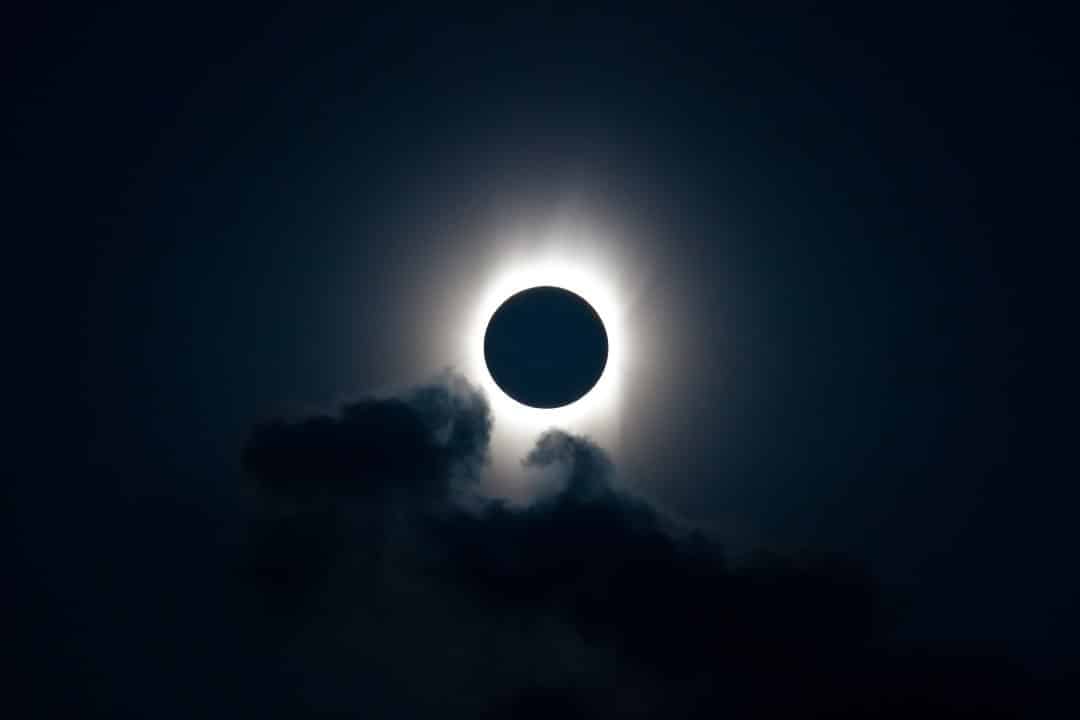
On August 12th, scientists from different nations will focus their attention on one of the most anticipated astronomical phenomena in recent years: a total solar eclipse visible in parts of northern Spain and other European regions. During this event, the Moon will completely obscure the solar disk for up to 1 minute and 40 seconds in some locations, creating a brief period of darkness. This moment will act as a natural laboratory for new investigations into the Sun.
Even though the phenomenon causes temporary darkness only in areas located within the eclipse’s totality band and not on the entire planet, the data collected has the potential to deepen knowledge about the behavior of the star vital to life on Earth.
With the intense sunlight blocked by the Moon, researchers will be able to directly analyze the solar corona and chromosphere, which are the outer layers of our star and are usually covered by its brightness.
Astronomer Alain Sachabrun of the French Atomic Energy Commission (CEA) said the eclipse offers a unique opportunity for a deeper understanding of the solar magnetic field, plasma dynamics and the physical processes that govern the star’s activity throughout its natural cycle.
The solar corona can reach temperatures close to 2 million degrees Celsius and extends about 10 million kilometers beyond the solar surface.
Researchers seek to unravel the origin of solar storms
Another purpose of scientific research is to better understand how solar storms arise and how to improve their predictions.
These events release charged particles that are capable of interacting with the Earth’s magnetic field, impacting satellites, spacecraft, communications systems, electrical grids and navigation technologies. The northern and southern lights, observed in the polar regions, are also a result of this interaction between the solar wind and the Earth’s atmosphere.
The European Space Agency (ESA) stated that it will use the eclipse to study the structure of the solar wind and improve forecast models for these events. Carole Mundell, the agency’s Science Director, reported that understanding the formation of solar storms is currently one of the highest priorities for space research.
Solar eclipses have an important history in the evolution of science. On May 29, 1919, during an eclipse observed on the island of Príncipe, off the west coast of Africa, British astronomer Arthur Eddington experimentally confirmed Albert Einstein’s Theory of General Relativity.
On that occasion, he observed the deflection of starlight caused by the Sun’s gravity, a phenomenon known as gravitational lensing, which was only possible to be seen because the intense solar luminosity was temporarily blocked.
Constant monitoring of the sun by active space missions
In addition to the observations carried out during the eclipse, several missions continue to monitor solar activity. The Solar Orbiter probe, launched by ESA in 2020, collects data on the environment around the Sun, while the Proba-3 mission creates artificial eclipses in space to enable prolonged studies of the solar corona.
The agency is also developing the future Meso mission, which aims to observe the Sun for even longer periods, using the Moon’s shadow as support for research.
The eclipse will last approximately 1 hour and 50 minutes, considering all phases of the phenomenon, although totality, which is the period of maximum darkness, will last approximately 1 minute and 40 seconds at some points along the way.
Experts warn that it is not safe to look directly at the Sun without adequate protection. The recommendation is to use glasses certified according to ISO 12312-2 or to use indirect observation methods, such as pinhole projection, to avoid permanent damage to the retina.





