
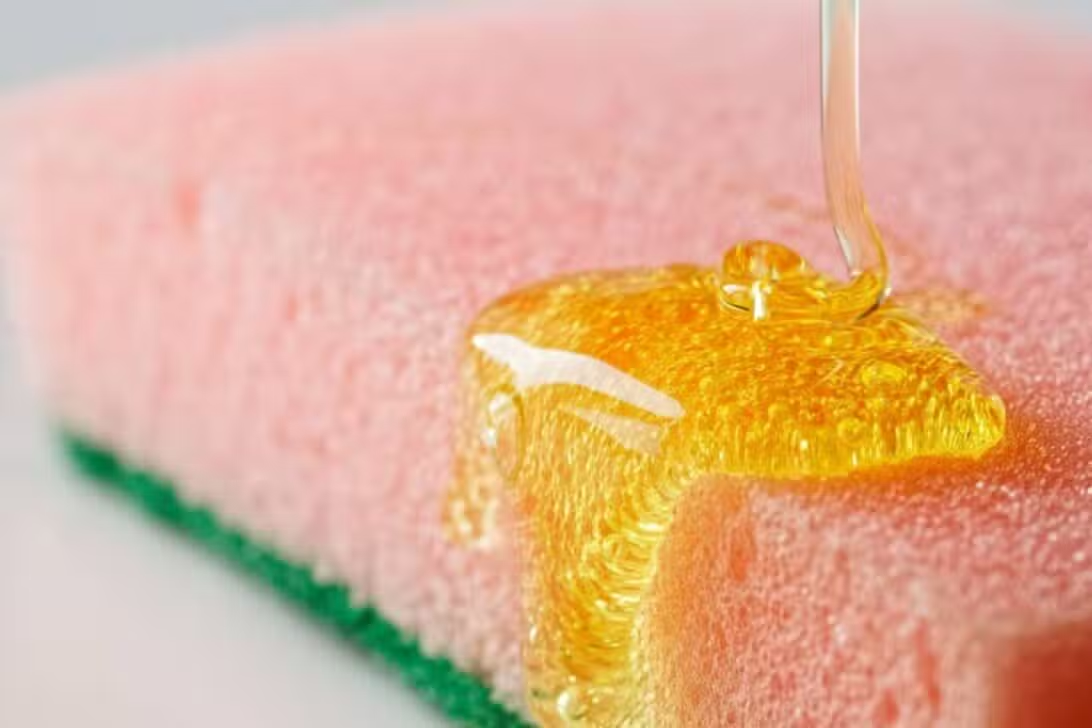
The kitchen sponge, an item present in most homes, can harbor dangerous bacteria for weeks, even after it has been used and dried. Recent research, conducted by scientists at the German Federal Institute for Risk Assessment (BfR), has demonstrated the surprising ability of disease-causing microorganisms to survive and multiply on this common utensil. The results raise an alert for domestic hygiene and the risks of food infections.
The persistence of pathogens on household items
The BfR’s in-depth study analyzed the survival of three types of bacteria often associated with foodborne infections: E. coli, Salmonella Enteritidis and Staphylococcus aureus. The researchers introduced small populations of these microorganisms into the sponges. They observed that, from these initial colonies, the bacteria were able to reproduce intensely and establish stable populations that lasted for at least 14 days.
One of the most relevant findings of the research is that this ability to persist even after the sponges were completely dry. This detail highlights the remarkable resilience of these pathogens in the kitchen environment, demystifying the idea that drying the sponge alone is sufficient to eliminate microbiological risks. The porous structure of sponges, combined with moisture and food residue, creates an environment conducive to proliferation.
Foodborne infections: an underestimated risk at home
While the research does not determine the exact bacterial load needed to cause an illness, scientists warn of the potential for concern, especially in home environments with more vulnerable individuals. Foodborne infections, which often cause symptoms such as diarrhea, vomiting and fever, are a public health problem with much of their origin within homes.
Andreas Hensel, one of the study’s authors and president of the BfR, said that “many cases of foodborne infections originate in private homes, and they are not always limited to one or two days of feeling unwell.” He added that “such infections can be particularly dangerous for vulnerable groups, such as the elderly or those with underlying health conditions, as well as young children” who have less developed or compromised immune systems.
The failure of traditional disinfection methods
The perception that a visually clean or smell-free sponge is hazard-free is a common mistake that can compromise food safety. The study clearly demonstrates that the survival of bacteria is not linked to human observation. Even after home “cleaning” methods such as boiling or microwaving – which can temporarily reduce bacterial load – the persistence of microorganisms, especially after drying, remains a critical factor.
This means that relying solely on a quick wash or exposure to air for drying does not guarantee complete elimination of pathogens. The intricate nature of the sponge, with its countless microscopic spaces, makes it difficult for cleaning agents or heat to reach all bacterial colonies, allowing them to recover and continue to proliferate.
Effective strategies for kitchen hygiene
Given these findings, adopting more rigorous hygiene practices in the kitchen becomes essential to protect the health of everyone, especially those at risk. Raising awareness about the potential for contamination of sponges is the first step towards implementing effective changes in everyday life.
- Frequent sponge replacement:The main recommendation is to change your kitchen sponge regularly. In homes with intense use, the ideal is to replace it every one or two weeks. The frequency should be even greater if the sponge is used to clean surfaces that have come into contact with raw food, such as meat and poultry.
- Consider more hygienic alternatives:There are other options for washing dishes and cleaning surfaces that may be easier to sanitize. Microfiber dishcloths, for example, can be washed at high temperatures in the machine, while dishwashing brushes with synthetic bristles dry faster and can be disinfected more effectively, as they are less porous.
- Avoid cross-use of utensils:To prevent the spread of bacteria, it is crucial not to use the same sponge to clean different areas or types of residue. Have a specific sponge for surfaces that touch raw food and another for washing already sanitized dishes or general contact surfaces.
- Complementary hygiene practices:In addition to taking care of the sponge, keeping your hands clean with soap and water after handling raw foods and before preparing meals is essential. Regularly cleaning all kitchen surfaces with suitable products also contributes significantly to reducing the microbial load in the environment.
Education about these practices can help minimize the risks of household foodborne infections, ensuring a safer kitchen and healthier environment for all residents.