Behind the Scenes of Saros Soundtrack Reveals Sam Slater’s Use of Drone Metal By Maria
5 min read
 |
UK musician and producer, Sam Slater, revealed behind the scenes behind the musical development of the highly anticipated game Saros. Released on digital audio platforms on May 22, the official soundtrack developed for the Housemarque title relies on a dense fusion of dark synthesizers, dragging drone metal guitars and vocal experiments to bring the inhospitable planet Carcosa to life.
Known for his award-winning work in the sound design of works such as the Chernobyl series and the film Joker, the artist faced the project as a true editing enigma. The main intention was to translate into audio the identity of a world devastated by the Eclipse phenomenon, resulting in a purposeful collision between organic noises and extremely high-precision electronic beats.
Creative dialogues shaped the identity of the virtual universe
The first exchanges of ideas directly involved Greg Louden, the work’s creative director, and the Housemarque development team. As both professionals have a strong appreciation for the heavy metal genre, this affinity made it easier to define the weight and aggressiveness that the setting would require.
During this embryonic phase, the developers shared several musical selections full of varied influences. The goal was to invent an exclusive auditory dialect for a reality that does not exist, following the usual methodology of the producer, who prefers to structure the rules of the universe before writing any musical note.
Concept arts and preliminary captures served as a compass for the first drafts in the studio. The creators rigorously evaluated whether each beat or noise fit Saros’ aesthetic, turning planning into a complex spatial challenge that needed to respond perfectly to the player’s commands.
Instead of separating background music from special effects, the Brit treated the entire soundscape as a single ecosystem. Frequent meetings with the studio’s audio engineers ensured that footsteps, gunshots and melodies had their own prominent spaces, creating calculated and immersive overlays.
Geographic characteristics dictated the rhythms of each scenario
Different areas of the Carcosa map have gained unique acoustic signatures. In the region known as Ancient Depths, the base composition uses beats in ceramic materials to emulate the echo of underground rocks, while the reverberation effect gradually decreases to give the illusion of an endless dive.
The moment the Eclipse event enters the scene, metal-based percussion arrangements merge with the noises of the scene itself. The distance between the protagonist and the machinery dictates the intensity of this interaction, modifying the trail in real time as exploration progresses.
For the Desecrated Fortress section, avant-garde singer Rully Shabara performed vocal recordings in front of a steel plate suspended in the studio. This configuration caused unpredictable distortions with each sound emission, converting the human timbre into an almost alien auditory anomaly.
This method of deconstruction permeates practically the entire experience of the title. The only trace of human warmth that survived the final edition is directly linked to the memories that the protagonist Arjun keeps of Nitya.
Central music explores the characters’ dramatic charge
The song titled Sun is Forever was initially conceived to represent Nitya, a pivotal yet physically absent figure during the campaign. The producer avoided seductive or mystical clichés, preferring to give a welcoming and maternal texture to the vocals.
The melody conveys a very delicate aura of enigma until the moment the heavy guitars invade the track, generating a cathartic explosion. This peak of instrumental aggression serves as a direct representation of Eclipse tearing up the tranquility of the environment.
The clash between feelings of affection, nostalgia, fury and degradation is the great pillar of this composition. The artist sees these paradoxes as the heart of the plot, highlighting that Arjun is only able to assume the role of savior because of the darkness he already carries within himself.
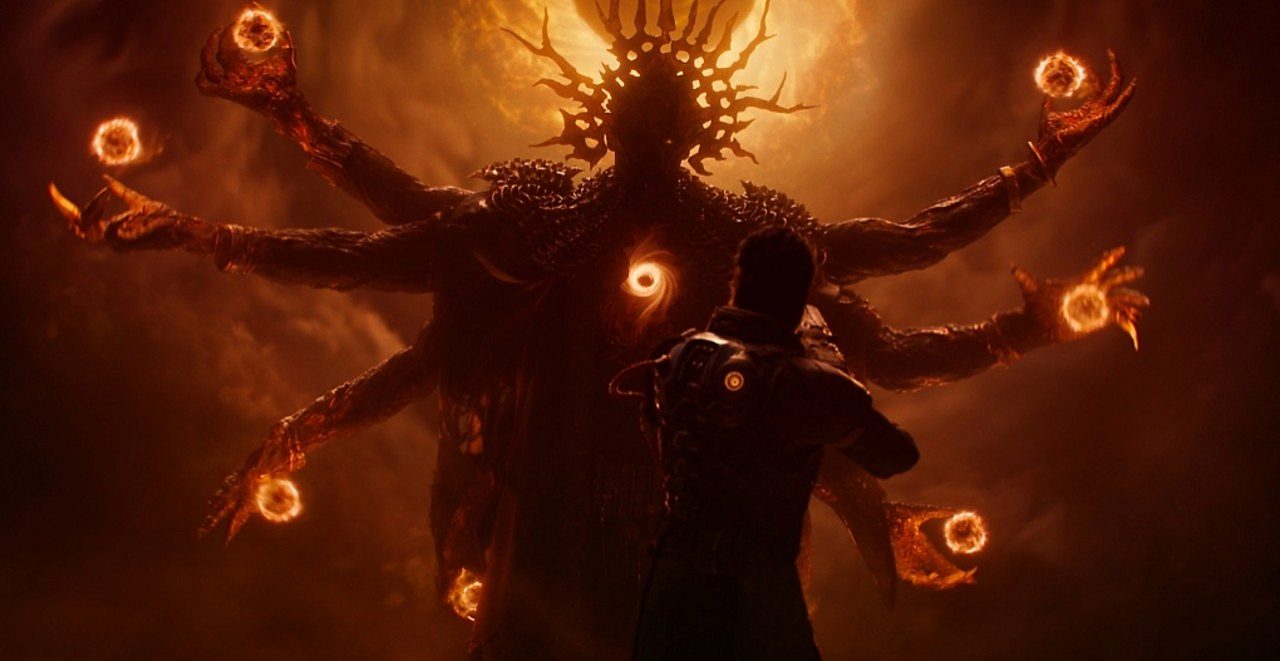
The cosmic phenomenon acts as a symbol of collapse and information overload. Everything that sounds crystal clear and well defined in the nature of Carcosa ends up being crushed and corrupted little by little by the force of this anomaly.
Technical distortions translate the destruction of the planet
To materialize this threat on the speakers, the composer applied overdrive pedals as a musical allegory. This technical resource forces sound waves to exceed the limit capacity of the equipment, generating dirty and saturated noise.
An additional trick involved transposing musical notes by exactly six semitones. The rhythmic base remains the same, but the main harmony is shifted, causing the player’s mind to recognize the original song but immediately realize that there is a disturbing flaw in it.
This manipulation of frequencies creates a climate of psychological tension without the user noticing the engineering trick behind it. The practical result is total immersion in the anguish of walking through a world in ruins.
Boss battles raise acoustic tension to the maximum
Clashes against elite enemies inherit the sound palette of the scenarios in which they occur, varying between the peaceful state and the corrupted version. These tracks function as the climax of all the auditory experimentation built during the exploration of that specific area.
At the same time, these compositions require a direct and exciting beat to maintain the rhythm of the action. The producer highlights that, when the music reaches the right point, a continuous trance state is created that connects those who play with those who composed.
Several members of the community have already reported this perfect synchronization during the most difficult clashes. The need to try to beat the same opponent several times ends up fixing the musical theme in memory until the moment of triumph.
- The track Sun is Forever acts as the dramatic heart of the journey.
- The Ancient Depths sector simulates an acoustic abyss through deep reverberations.
- The Desecrated Fortress area uses metal sheets to disfigure vocal pickups.
- The Eclipse event triggers industrial beats that react to the character’s movements.
- Saturation and tone change techniques highlight the degradation of the environment.
Ultimate goal is to make a lasting impact after the game ends
The person responsible for the work compares the conclusion of the campaign to the feeling of leaving a movie theater after a remarkable feature film. The atmosphere needs to be so immersive and cohesive that the simple act of turning off the screen and returning to the real world causes a slight psychological shock.
Housemarque studios, known for their technical excellence in audio design, worked to perfectly synchronize script, mechanics, score, effects and dubbing. The musician hopes that fans will be able to absorb and appreciate this great sensorial illusion created by dozens of professionals.
The complete album with all tracks can now be accessed on the main digital music services. The launch serves as an open invitation for adventurers to return to the mysteries of Carcosa, even when they are away from the controls.