
BYD Song Pro utility debuts flex engine and promises to run more than a thousand kilometers


The Asian manufacturer BYD confirmed, on August 4, 2026, the official arrival of the Song Pro sports utility vehicle in the national territory, now equipped with plug-in hybrid technology capable of burning ethanol. The vehicle, which had already been spotted in the brand’s stores, arrives in Brazil divided into GL and GS options, with the promise of shaking up the category due to its dual-fuel engine and long range. Depending on the variant chosen, the driver can exceed the thousand kilometer mark without needing to refuel or recharge at the socket.
Pricing strategy and positioning of versions in Brazil
Those interested in the new SUV will have two purchase options at dealerships. The most affordable configuration, called GL, is included in the catalog with a price listed at R$ 176,990. On the other hand, anyone looking for the most complete package will need to pay R$199,990 for the GS variant. Both options share the same mechanical base that combines electric propulsion with a combustion engine, the latter specifically modified to accept Brazilian vegetable fuel.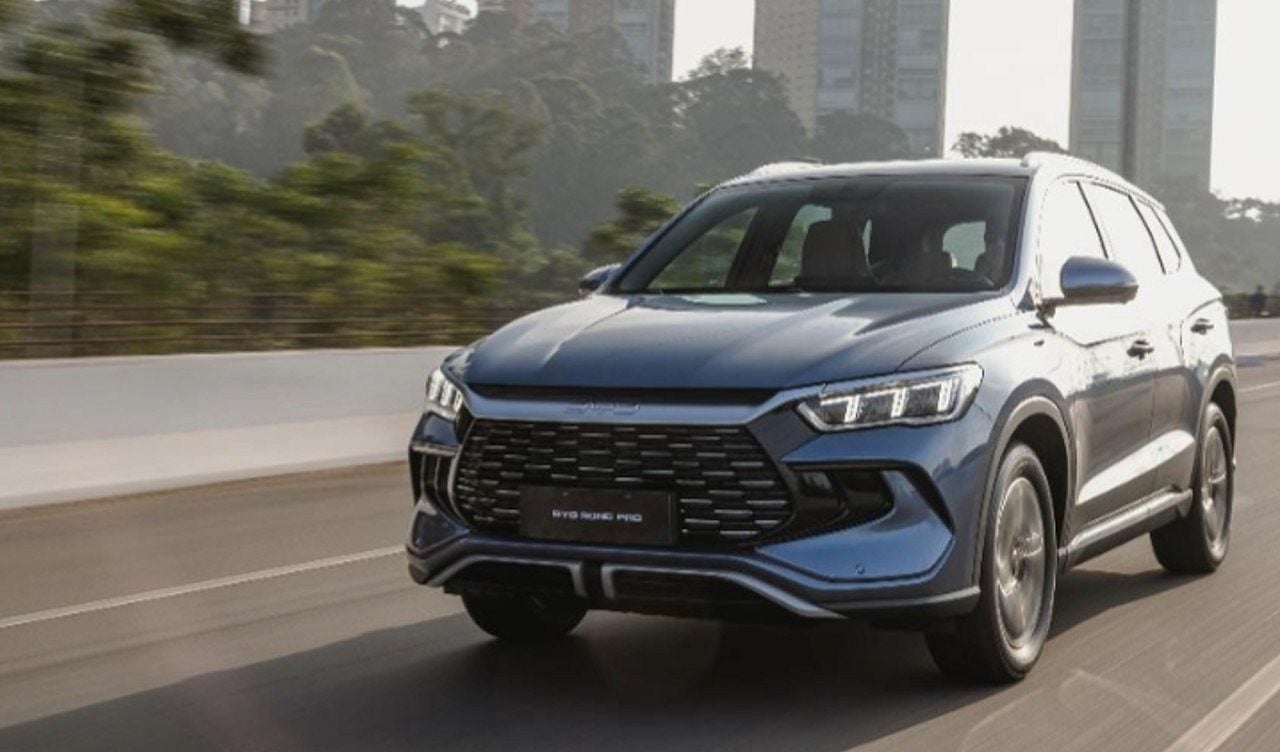
Engineering work for the use of ethanol and electric range
The heart of the project is the 1.5 naturally aspirated engine, which required a year and a half of rigorous calibrations to work perfectly with the sugarcane derivative. This nationalization of mechanics intensifies direct competition with strong rivals, such as the GWM Haval H6 PHEV, providing consumers with an economical and versatile alternative. According to measurements from the Chinese NEDC cycle, the total range reaches 1,075 km in the GL model and reaches 1,105 km in the GS. When the driver chooses to run solely on electricity, official data from Inmetro indicate 57 km of autonomy for the 13.1 kWh battery (GL) and 72 km for the 18.3 kWh component (GS), ideal for daily traffic in cities without polluting emissions.
Updates to exterior design and cabin refinement
The utility vehicle brings to Brazil the same restyling recently presented in the Asian market, ensuring a more striking visual presence on the streets. The front of the car sports tapered LED light clusters, which connect through a unique grille with a silver finish, as well as a redesigned bumper with more generous air intakes. At the back, the manufacturer softened the texture of the dark section of the bumper, closing the external package with 18-inch alloy wheels that display an exclusive style.
Inside, the family atmosphere was improved with the adoption of glossy black surfaces on the dashboard and an instrument panel fully integrated into the package. The seats received dark coverings, while the front windows received acoustic treatment to reduce the intrusion of external noise during travel. Another ergonomic change was the transfer of the gear lever from the console to the steering column area, opening up space in the cabin, with the top-of-the-line option also pampering occupants with a large panoramic sunroof.
Protection and adaptation systems for national asphalt
Concern for the integrity of passengers is highlighted in the GS configuration, which encompasses a complete package of intelligent driving assistants. This system offers autonomous braking for rear cross traffic, imminent collision warnings, blind spot monitoring and an audible warning if someone tries to open the door with approaching vehicles. To deal with the country’s pothole situation, the automaker re-adjusted the suspension set, seeking a softer and more resistant ride, maintaining the 255/60 R18 tires and opting for an emergency repair kit instead of the traditional spare tire.
Power numbers and dimensions of the sport utility vehicle
Dynamic performance is guaranteed by an efficient drive system in both catalog choices. The combination of the combustion engine and the electric generator results in 218 horsepower in the entry-level model and 219 horsepower in the most expensive option, always delivering 30.6 kgfm of instantaneous torque. On the track, the vehicle needs 8.6 seconds (GL) or 8.8 seconds (GS) to come out of inertia and reach 100 km/h, limiting the maximum speed to 180 km/h. The large size translates into 4.74 meters from tip to tip, 1.86 m wide, 1.71 m high and a wheelbase of 2.71 m, leaving 530 liters of capacity in the luggage compartment.
Technology and comfort packages offered to buyers
The list of conveniences included in the Chinese launch is extensive, ensuring that even the buyer of the cheapest model will have a garage full of cutting-edge technology.
- Six airbags spread throughout the cabin, covering the front, side and curtain areas.
- Electronic traction and vehicle stability systems.
- Parking brake activation by button.
- Disc braking system on four tires.
- Rear axle equipped with multilink independent suspension.
- Audible and visual warnings for lane departure and risk of frontal collision.
- Automatic steering corrector to keep the car in the lane.
- Intelligent and automatic high beam switching.
- Adaptive autopilot for long journeys.
- Intelligent cruise speed management.
- 8.8-inch digital screen dedicated to the driver’s instruments.
- 12.8-inch central multimedia monitor compatible with Apple and Android cell phones.
- 360-degree vision system generated by multiple cameras.
- Exclusive electrical adjustments for the driver’s seat.
- 18-inch alloy wheels shod with 225/60 profile tires.
For customers who opt for the superior version, the brand adds equipment focused on luxury and active safety.
- Wireless charging platform for smartphones with 50 Watts of power.
- Panoramic glass roof with wide opening area.
- Electrical controls also extended to the front passenger seat.
- Advanced set of radars for active protection, including automatic rear braking and blind spot reader in the mirrors.





