Rare total solar eclipse phenomenon will fascinate the northern hemisphere on August 12

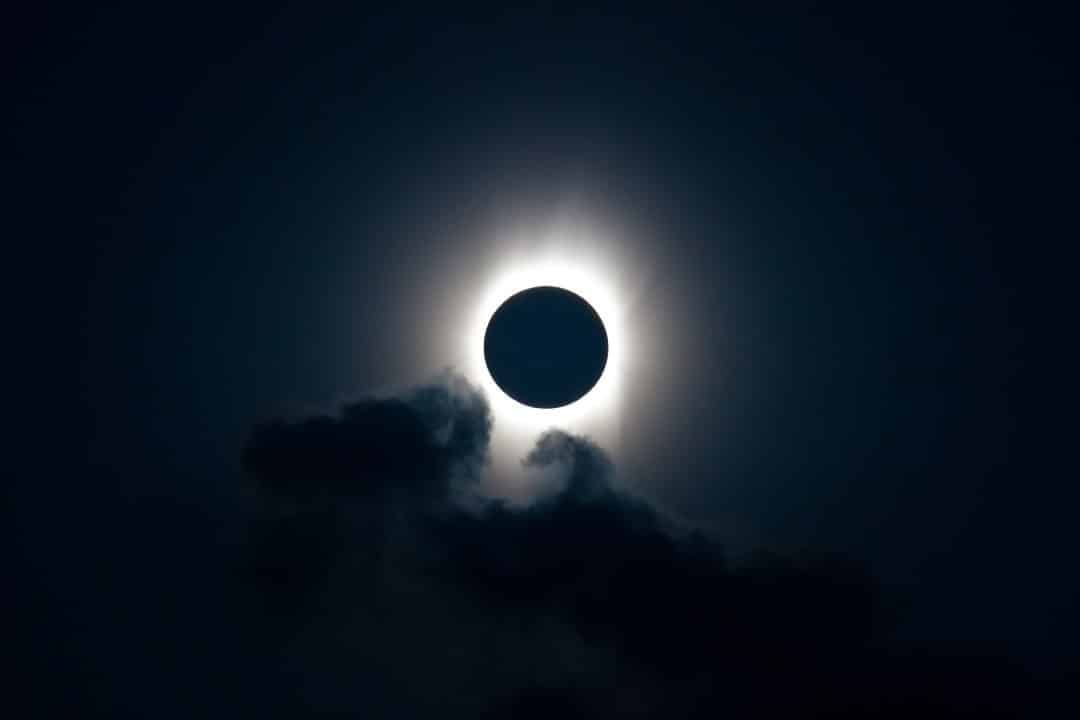
A rare celestial spectacle, the total solar eclipse, is about to transform the sky in several parts of the Northern Hemisphere on August 12, 2026. This astronomical event, which occurs when the Moon positions itself between the Sun and the Earth, will cast a shadow that will completely obscure sunlight in specific areas, providing a unique visual experience after more than two years.
Understand the phenomenon of total solar eclipse
A total solar eclipse is a cosmic alignment where the Moon comes perfectly between the Sun and our planet. This conjunction forms a “band of totality” where the lunar shadow completely blocks sunlight, temporarily plunging the day into darkness. Outside this narrow band, the phenomenon is observed as a partial eclipse, with only part of the Sun hidden. The occurrence of a total solar eclipse in a particular location is a relatively rare event, making observation a privilege for those in its path.
Route of totality: where day turns into night for a few minutes
The band of totality for the August 12, 2026 eclipse will span approximately 8,300 kilometers. The route will begin over the Arctic coast at around 1 pm Brasília time, heading to the North Pole. Observers in various regions of Greenland, Iceland, northern Spain and northeastern Portugal will have the opportunity to experience the entirety. In these locations, the sky will momentarily darken as the solar disk is completely covered by the Moon.
For those in Greenland, totality may last just over two minutes, while in northern Spain, it will last around 20 seconds. Full visibility, however, will depend on favorable weather conditions. In Spain, the phenomenon will cross Galicia and the Balearic Islands at nightfall, accelerating the transition from day to darkness. Parts of Europe, Africa and North America may also witness a partial eclipse.
Differences in observation: partial versus total eclipse
The main distinction between a partial and a total solar eclipse lies in the intensity of the experience. While a partial eclipse offers the view of a slice of the Sun being covered, the total event transforms the landscape. During totality, the solar corona—the Sun’s outer atmosphere, which is normally dimmed by its bright glare—becomes visible to the naked eye, revealing an ethereal beauty. The sky takes on a twilight tone, the brightest stars may appear, and the ambient temperature may drop. This profound environmental and visual change is what makes a total eclipse a memorable event, unlike viewing a partial eclipse.
Scientific Opportunities: How Eclipses Boost Research
Solar eclipses represent crucial moments for the scientific community, allowing in-depth study of the Sun and its corona. The natural occultation of the solar disk offers a unique opportunity to observe the Sun’s outer atmosphere without the need for specialized equipment that blocks its light. During the August 12, 2026 eclipse, researchers plan to launch high-altitude balloons. The goal is to capture images of the event and the lunar shadow, replicating a historic 1919 experiment that confirmed Albert Einstein’s Theory of General Relativity by measuring how the Sun’s gravity bends light from distant stars. Additionally, the initiative invites the public to participate as “citizen scientists” by building their own instruments to monitor the atmospheric changes that occur when the sky momentarily darkens. European Space Agency (ESA) Science Director Carole Mundell said these moments “connect us to the Universe and remind us that the desire to explore and understand is one of humanity’s greatest strengths.”
Calendar of upcoming solar eclipses around the world
Despite the rarity of total solar eclipses, the phenomenon will continue to fascinate the planet for years to come. According to NASA, the next event of this nature is scheduled for August 2, 2027. Its band of totality will pass through southern Spain, northern Africa, Saudi Arabia and Yemen.
- For the United States, the opportunity to witness a total solar eclipse will be limited until 2033:
- March 30, 2033:It will only be visible in Alaska.
- August 22, 2044:Totality will occur over North Dakota and Montana, marking the return of the phenomenon to the continental United States.
- August 12, 2045:A total solar eclipse with a wide range of coverage will cross the 48 contiguous US states, including California, Nevada, Utah, Colorado, Kansas, Oklahoma, Arkansas, Mississippi, Alabama and Florida. Other states will see a partial eclipse.
Continental Europe has not seen a total solar eclipse since 2006. Spain, in particular, has not seen a full solar eclipse since 1905, and the 2026 event will be the first of three solar eclipses the country will witness between now and 2028.
Essential precautions for safe observation
Observing a solar eclipse directly, without adequate protection, can cause irreversible damage to your eyes. It is essential to follow safety recommendations to enjoy the celestial spectacle without risk. One should never look at the Sun without specialized protection, except during the brief period of totality when sunlight is completely blocked.
- At the first sign of sunlight reappearing, it is essential to use:
- Certified Eclipse Glasses:They must follow an international safety standard and be thousands of times darker than ordinary sunglasses.
- Portable Solar Visors:A safe and effective alternative.
- Equipment with special filters:If you are using telescopes, binoculars or cameras, make sure they have specific solar filters on the lens, which offer the same eye protection as eclipse glasses.
It is crucial to avoid using regular sunglasses as they do not provide the necessary protection. Likewise, eclipse glasses or sun visors that are torn, scratched or damaged should not be used. NASA also warns against observing the Sun through any optical device (camera lenses, telescopes, binoculars) while using eclipse glasses or a portable solar viewer. The concentration of solar rays by these devices can burn the filter, resulting in serious eye damage. Eye safety is the top priority during eclipse viewing.