Samsung designs Galaxy S26 Ultra with 2 nanometer chip and native artificial intelligence
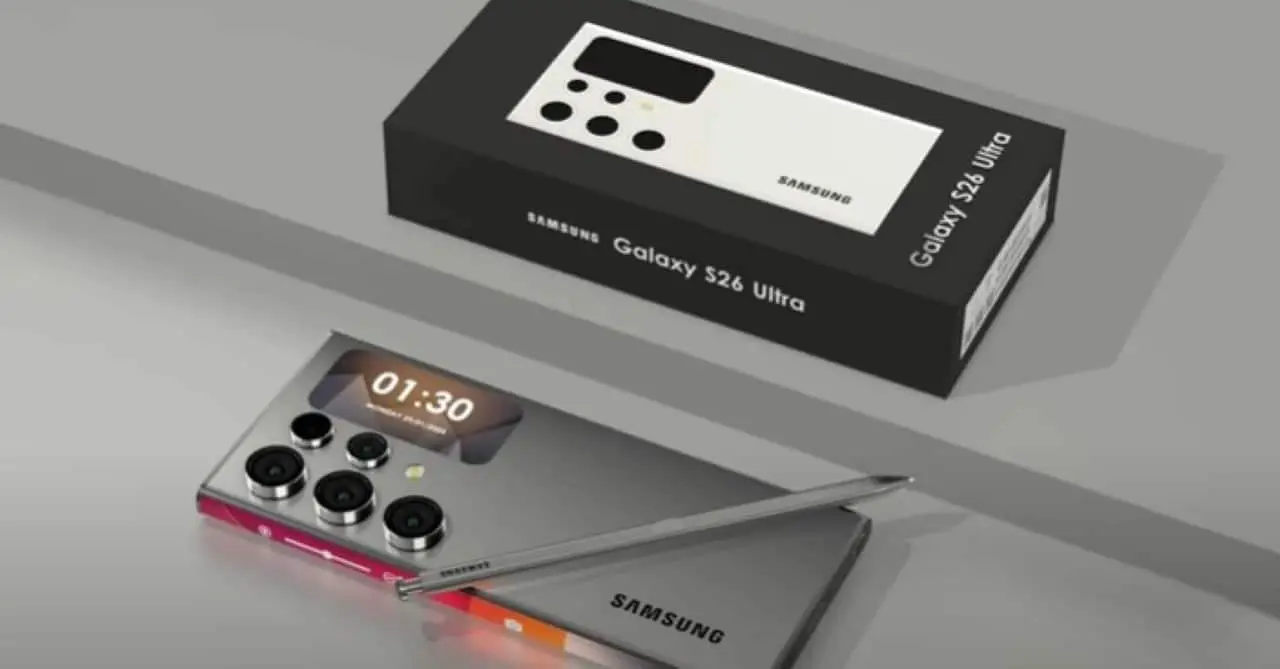
The technology sector is already turning its attention to the next steps in the mobile device industry, with a special focus on the future Galaxy S26 Ultra, expected to reach consumers in 2026. The South Korean manufacturer’s top-of-the-line device attracts intense speculation, indicating a complete overhaul in the way people use their phones, driven by advanced machine learning tools and a completely redesigned photographic suite to consolidate the brand at the top of the luxury segment.
Market experts project that the new model will not be limited to just delivering more speed, but rather a transformation in the digital routine. The main expectations revolve around a leap in processing power, significant aesthetic changes and battery life capable of supporting the intense use of modern applications.
With the launch window scheduled for two years from now, the Asian company plans to dictate the direction of the telephone sector, delivering a unified digital environment that expands the capabilities of portable equipment. From performing simple day-to-day tasks to using professional editing software, the new embedded technologies promise to be the product’s biggest differentiator.
Deep integration of machine learning into the operating system
The cell phone architecture is being designed to reach the maximum level of use of artificial intelligence, surpassing the basic functions of current voice assistants. The software must act in a predictive manner, shaping the interface according to the owner’s preferences and adjusting the system’s performance instantly, based on the continuous analysis of usage patterns.
More on this story: Google introduces Pixel 11 series with improved Tensor G6 chip and new Pixel Tag
Behind-the-scenes information suggests the inclusion of an exclusive neural coprocessor, dedicated to solving complex calculations without the need to send data to the internet. This internal physical structure guarantees a superior level of protection for the privacy of personal information and drastically reduces response time to commands.
Extreme customization will be one of the pillars of the project, allowing the system to understand the individual’s routine to anticipate actions and save energy, without depending on cloud servers. This feature turns your phone into a highly secure and efficient productivity tool.
Advances in optical assembly and professional image capture
The camera module is usually the most anticipated component by enthusiasts, and projections indicate considerable technical evolution. The manufacturer must incorporate new sensors, designed to absorb a greater amount of light and offer a superior stabilization mechanism, resulting in clearer recordings and photos.
Learn more: PS5 owners gain permanent access to two major titles in the virtual store
The objective is to deliver results worthy of professional equipment, even in environments with poor lighting. Neural processing will act directly on the rendering of files, correcting imperfections, enhancing textures and balancing colors automatically to ensure the best possible exposure.
Additionally, the gallery software will bring complex editing tools that will only require one touch of the screen, making it easier for anyone to create high-quality audiovisual materials. The democratization of advanced editing promises to raise the level of content shared on networks.
Rumors also point to a reformulated periscopic lens, capable of delivering multiple optical focal lengths without loss of quality, ideal for long-distance recordings. Video capture will receive support for unprecedented resolutions and higher frame rates, accompanied by dynamic focus that tracks moving objects with precision.
See Also

Electrical discharge knocks man off roof in Jaguaruana after contact with power lines

Global auction raises US$11.9 million and Brazil’s historic currency reaches record value

Former fighter Prichard Colón dies at age 33 after decade in a vegetative state
Performance leap with new processor lithography
The heart of the device will be a cutting-edge chip, most likely built on the long-awaited 2-nanometer lithography. Currently, giants such as TSMC and Samsung Foundry itself are engaged in a billion-dollar industrial race to make this thickness viable by the beginning of 2026, which will guarantee an exponential increase in data traffic speed and energy savings, essential factors for running heavy games and rendering videos in very high resolution.
To support this gain in brute strength, the phone’s engineering will include a resized heat dissipation system, preventing performance drops during prolonged use. RAM memory and internal storage space will also be increased to keep up with the demands of modern applications, ensuring fluid transition between dozens of open tabs.
On the same topic: Teenager kills mother and brother after using AI to create fantasies about the crime
Premium materials and visually uninterrupted display
The appearance of the equipment will combine resistance and sophistication, adopting extremely high-cost raw materials, such as improved titanium alloys to reduce total weight. The Dynamic AMOLED 2X panel will receive an even higher peak brightness and more responsive variable refresh rates. The big bet is on the evolution of the hidden camera under the display (UDC), a technology that the company is already testing on the Galaxy Z Fold line, but which will now need to overcome the challenge of pixel distortion to be successfully implemented in its main conventional product, eliminating the hole in the screen once and for all. New generation protective glass will complete the package against drops and scratches.
Intelligent energy management and fast recharging
Battery life continues to be a central requirement of consumers, and the project foresees notable advances in this regard. The combination of a physically larger power cell and the thermal efficiency of the new processor will result in additional hours of screen-on time.
Plug-in time will be reduced through new ultra-fast charging standards. The operating system will use algorithms to map the owner’s sleep schedules and peak usage moments, managing energy distribution to preserve the component’s long-term useful life.
Global connectivity and device synchronization
The smartphone will be prepared for the mobile networks of the future, featuring antennas optimized for 5G Advanced and preparing the ground for the first tests of the 6G standard, guaranteeing almost zero latency. Communication with smart watches, headphones and household appliances will be orchestrated invisibly by the neural system.
More on this story: Slow charging of Galaxy Watch 9 and Ultra 2 forces users to tricks like fan and ice
- Satellite communication for sending data and emergency messages in areas without operator coverage.
- Instant, enhanced synchronization with the brand’s entire line of wearable accessories.
- Centralization of home automation control directly on the main phone panel.
High-precision data protection and biometrics
Faced with the increase in cyber threats, protecting stored information has gained status as a top priority in development. The Knox security platform will receive additional layers of locking, combining physical locks on the hardware with military-grade software encryption.
This digital shield will prevent the installation of malicious applications and the theft of sensitive data. Authentication sensors, such as the ultrasonic fingerprint reader and facial mapping, will act with greater speed and precision, ensuring that only the owner has access to the device’s content.