
Rare total eclipse in 2026 will turn day into night in the village of Avellanosa de Muñó, Spain

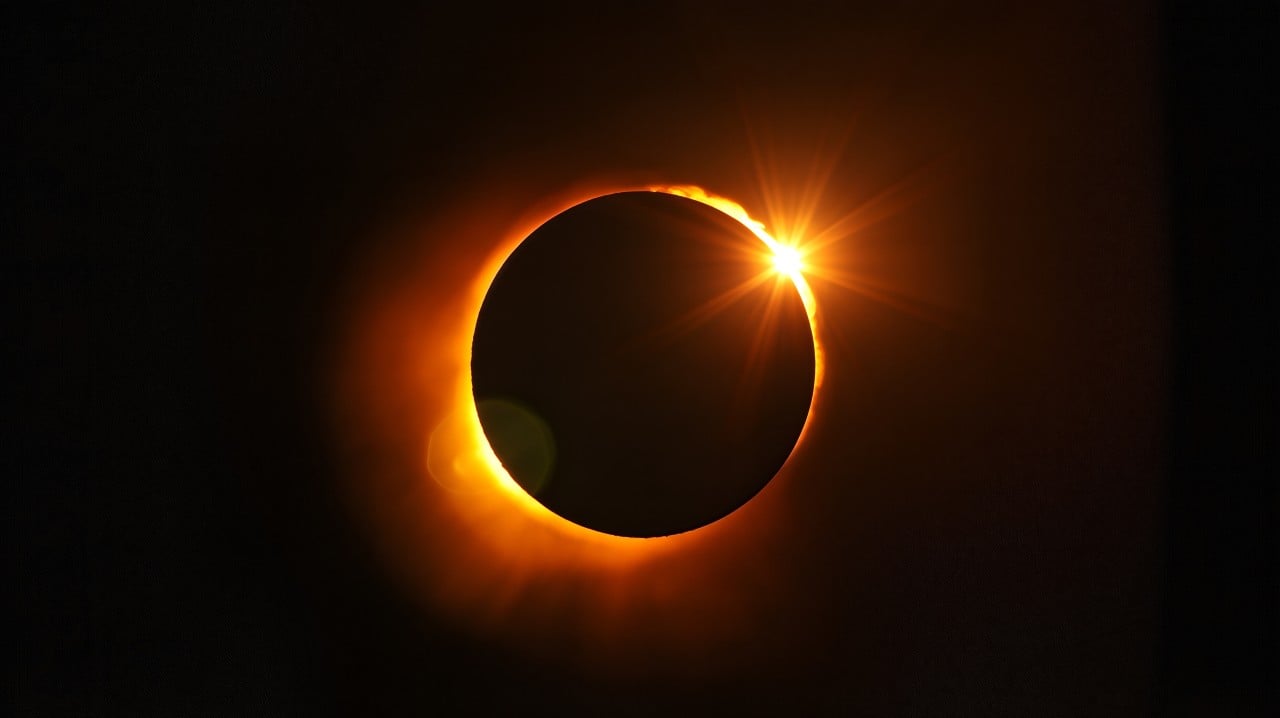
With few inhabitants, no restaurants and few visitors, the small village of Avellanosa de Muñó, in the province of Burgos, Spain, is preparing for a unique night. On August 12, 2026, the location will be one of the privileged points for observing a total solar eclipse that promises a “double twilight” phenomenon.
Avellanosa de Muñó stands out for its tranquility, where the absence of large shops or nightlife is the norm. There is a bar that never opens and an old wine cellar that will never open again.
Despite the silence, a subtle atmosphere manifests itself through the buzzing of bees in lavender bushes under the summer sun. Birdsong echoes between the stone rooftops, and the distant rumble of a lone tractor is often the only trace of human activity.
Once a week, a white van from a neighboring bakery breaks the peace to deliver bread to the few residents who still live there, briefly waking them up from the calm of the place.
For these few people, this routine dictates the daily rhythm in a place where, most days, nothing significant happens. However, this summer of 2026, a village characterized by its notable absence of events will transform into one of the most sought-after places on the planet.
The total solar eclipse, which will cross the Atlantic on August 12, 2026, will mark the first time since 1999 that the phenomenon will be visible in continental Europe. According to Madrid-based physicist María Teresa López Sánchez, it will be the first total solar eclipse seen from mainland Spain since 1912. Totality will only be visible in a narrow strip of the continent, and Avellanosa de Muñó is directly in that path. The local landscape, with its golden wheat fields and low hills, offers a broad western horizon, few buildings, little artificial light and almost none of the crowds expected in better-known locations, making it an ideal viewing point.
The timing of the eclipse makes it even more special, as it will occur just before sunset, creating a “double twilight” effect, as López describes it, “like experiencing two sunsets in just a few minutes.” Later that same night, the Perseid meteor shower will also be visible, forming a rare convergence of celestial events.
For resident Sara Álvarez Rodríguez, there is no doubt where she will point people: “Go up towards the cave,” she says, “from there you can see everything.”
Born in Avellanosa de Muñó in 1937, Álvarez has never lived anywhere else. In her nearly nine decades, she has witnessed the complete transformation of the village. In the 1950s, the place had approximately 200 inhabitants and several small stores. Fishermen traveled by bicycle to nearby villages to sell their fish. Raúl Grande Revilla, who was born there 73 years ago but moved to Madrid as a child, remembers a postman who arrived on a donkey to deliver letters and newspapers, trusting the animal to know where to stop, including at the small post office at the end of the town.
For generations, the village depended on rainfed agriculture, vegetable gardens, vineyards and livestock farming. With the mechanization of agriculture and few other employment opportunities nearby, people migrated to cities such as Madrid, Bilbao and Barcelona.
## Useful information for observing the eclipse in Avellanosa
- Site access:Avellanosa de Muñó is around a 30-minute drive from Burgos and just over two hours from Madrid.
- Hosting options:There are no tourist accommodations in Avellanosa de Muñó, and hotels in neighboring Lerma have been fully booked for some time. There is still availability in Burgos, or in Madrid, from where it is possible to take a day trip, but heavy traffic is expected after the eclipse.
- Observation time:In Avellanosa, the eclipse will begin at around 7:33 pm, with totality just after 8:29 pm, lasting just under two minutes.
- Don’t miss the night:The Perseid meteor shower will also be active that night. With little moonlight expected at its peak, Avellanosa’s dark rural skies can make it an excellent spot to observe, as long as the skies are clear and you move away from the local lights.
Today, more goats graze on the surrounding hills than people permanently live in the village, and vast fields of sunflowers stretch across the landscapes where hundreds of villagers have worked the land.
However, this summer, the eclipse is drawing some of those families back.
For the event, Grande will return with her partner, her son, grandchildren and a group of friends. His brother will also come with his three children, grandson and sister, bringing together a group of around 20 people and doubling the village’s population for one night. And the movement doesn’t stop there. Álvarez says that other neighbors will also welcome friends and relatives, with people traveling from all over Spain and even the United Kingdom, France and Venezuela.

Dr. Lucrezia López, professor in the Department of Geography at the University of Santiago de Compostela, says that unique events like the eclipse can encourage people “to rediscover a place with which they already have some connection.”
In Avellanosa, this rediscovery already extends beyond former residents and their families.
The Parador de Lerma, a nearby hotel located in the former palace of the Duke of Lerma, has been completely booked for the event since 2022. Alberto Bosque Coello, from the Castilla y León tourism board, notes that the same pattern is repeated throughout the region.
“Most of our accommodations are fully booked. In fact, they were booked well in advance,” he said, adding that eclipse experts looked for “the best place, not the best known” as they wanted ideal viewing conditions.
Grande reported on a California family who plans to travel to Spain for the eclipse. Not wanting them to miss totality in Madrid, he went house to house asking if anyone in Avellanosa could host them, so they could experience the eclipse from what he considers the best observation point in Spain.
Asked what it means for a village of about 10 people to suddenly find themselves in the spotlight, Grande laughs and nods. “Tal cual” (That’s exactly it), he said, amazed that his little village is, however briefly, drawing the world to its doorstep.
Throughout Burgos, communities are preparing observation points and gatherings for the eclipse. In Avellanosa de Muñó, however, residents and visitors will head to the caves above the village.
With the sun just eight degrees above the horizon during totality, an unobstructed view to the west will be crucial, making the elevated caverns a prime location for this once-in-a-generation celestial spectacle. In addition to being a good observation point, the caves have a deep sentimental value for the community, who for generations have gathered there to watch the sunset, and one former resident even chose to have his ashes scattered at the site.
Avellanosa is a place that Sara Álvarez has never left and will never leave. Raúl Grande Revilla returned almost every year of his life. Each summer, Álvarez’s daughters return home and will continue to do so even after their mother is gone. Grande now brings her children, her grandchildren and, increasingly, her friends. He hopes to create the same bond he formed there as a boy, so that one day his grandchildren will also feel compelled to return. “What matters most to me is that my children and grandchildren feel the same affection for the village as I do,” he said.
On the day of the eclipse, Avellanosa de Muñó will once again be filled with conversations. Smoke from grilled lamb chops will take the place of non-existent restaurants, and children’s laughter will sound from where a school once stood. Then, for a few extraordinary minutes, darkness will fall twice. And, by a remarkable accident of geography, one of Spain’s most forgotten villages will soon become the center of the world.





