Senator Rand Paul recommends contempt charges against Anthony Fauci in the United States By Jeronimo Santos
6 min read
 |
Republican Senator Rand Paul formally proposed on July 6 that the United States Department of Justice charge Dr. Anthony Fauci with contempt of Congress. The initiative marks an attempt by critics of the Republican Party to sue the renowned scientist for his refusal to testify about the US government’s role in the Covid-19 pandemic.
Paul stated that his office would personally deliver the recommendation to federal authorities shortly after the Senate Homeland Security and Governmental Affairs Committee approved the contempt charge against Fauci. The vote was close and followed party lines.
The senator maintained that Fauci could not invoke his right, protected by the Fifth Amendment of the US Constitution, against self-incrimination to avoid answering lawmakers’ questions.
The Department of Justice confirmed that it received the document later, on the afternoon of July 6. “We are analyzing the material and will work with the Senate according to the appropriate procedure,” the body said in an official statement.
The measure poses a legal and political challenge of great relevance to the government, which needs to decide whether to bring charges against Fauci, despite the legal uncertainty about the success of an eventual lawsuit.
“It doesn’t need to go through the House, it doesn’t need to be signed by the president, and in fact, it doesn’t need to go to the Senate,” Paul said July 6 of his recommendation. The senator added: “The majority voted to forward this, so it will be completed today.”
🚨 BREAKING: Sen. Josh Hawley just dropped a bombshell.
— GRANDPA’s FREE ADVICE (@GOP_is_Gutless) August 7, 2026
The Senate is downloading the entire contents of Anthony Fauci’s secret phone — the same one he used while running NIAID and locking down the country.
While Americans lost jobs, businesses, and freedom, Fauci was allegedly… pic.twitter.com/w53gOfCQlb
Anthony Fauci’s refusal to collaborate with parliamentarians
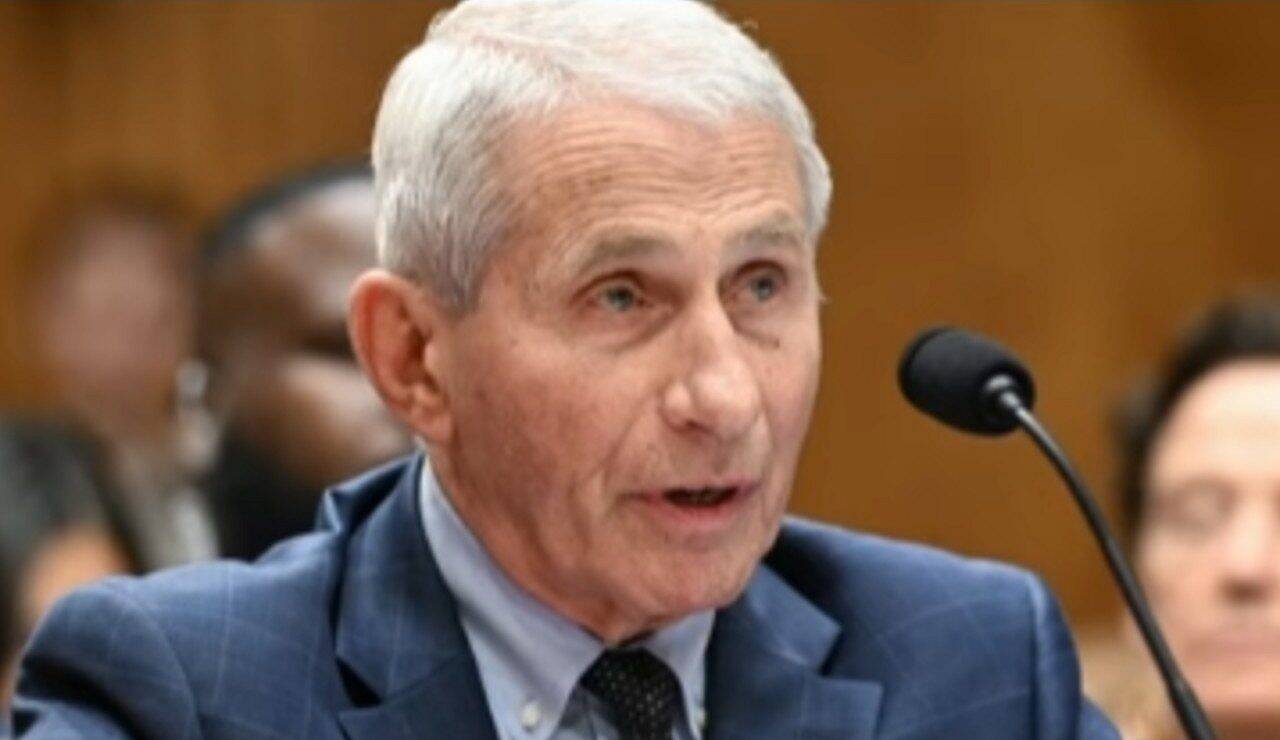
The committee’s 8-7 vote came a week after Fauci refused to respond to lawmakers in a tense hearing before the Senate committee. On that occasion, he invoked his Fifth Amendment right more than a hundred times.
Fauci’s denials sparked discontent among the panel’s Republicans, who argued that the doctor’s decision paved the way for federal contempt charges. This crime, if proven, can result in up to one year in prison.
Paul seeks to speed up the process, bypassing a full Senate vote on contempt, which represents a break with historical precedent. Some legal experts have warned that this approach could weaken the government’s ability to bring charges against Fauci.
The action gives the committee several possibilities to continue the case.
Under the resolution approved by the committee, Vice President J.D. Vance, in his constitutional role as president of the Senate, would need to authorize the change in procedures before the Justice Department can decide whether to prosecute Fauci.
At the same time, Paul stated that he believes he can send his recommendation directly to Justice Department officials, but he kept open the possibility of a full Senate vote in the near future.
“There is some precedent for doing it this way, and it can still be done this way,” he said of the possibility of a vote on the Senate floor. Such a scenario would require some Democrats to join with Republicans to reach the sixty-vote threshold needed for approval.
Legal experts have warned that there is no guarantee of success for contempt charges, predicting a long legal fight over the limits of Fauci’s Fifth Amendment right.
Committee Democrats repeatedly tried to delay the contempt vote, expressing concerns about Paul’s plan to forward the recommendation directly to the Justice Department and the precedent that could set.
“Members of this committee should vote to shelve this resolution until we can receive assurance from the committee chairman that he will not take actions that weaken the ability of the Senate and this committee to conduct oversight in the future,” said Senator Gary Peters, the committee’s top Democrat.
Republicans on the panel rejected Democrats’ attempts to block the vote.
After the vote, Fauci’s attorney, David Schertler, described the decision as a “gross political maneuver designed to punish Dr. Fauci for exercising his constitutional rights.”
“For years, Senator Paul has declared to anyone who would listen that Dr. Fauci should be prosecuted and imprisoned. Dr. Fauci committed no crime, and Senator Paul knows it,” the lawyer said.
Analysis of Joe Biden’s preemptive pardon
Paul and other Republicans argued that Fauci could not invoke the Fifth Amendment as he had already received a preemptive pardon from former President Joe Biden. This pardon would cover actions taken during the Covid-19 period that are under investigation by the committee.
Republicans have long accused Fauci of lying and manipulating data during the Covid-19 response, although they have not presented clear evidence of an alleged cover-up.
During the vote, Paul stated that Congress needs to pass legislation to ensure a better response to future pandemics. However, he added that he “cannot determine what additional reforms are needed until we fully understand what remains unanswered,” a process that Fauci is obstructing by refusing to answer the committee’s questions.
“Declaring a witness in contempt is serious and should be rare,” Paul added. “The power to declare contempt exists for exactly this situation.”
However, Republican lawmakers also publicly acknowledged before the hearing that they expected Fauci to commit perjury in his testimony, which would allow new charges not covered by the pardon to be filed.
These motivations threaten to weaken the argument that Fauci should be held in contempt for refusing to collaborate with lawmakers.
The White House did not respond to requests for comment. Questioned by journalists, President Donald Trump did not adopt a definitive position on Fauci’s possible accusation.
Still, the contempt vote represents the most aggressive step in a long-running controversy between Fauci and Paul.
Details of the history of friction between Rand Paul and Anthony Fauci
In private, Paul and Fauci have repeatedly clashed over the origins of the coronavirus. The Republican senator maintained that the virus resulted from a laboratory leak linked to viral research in China, funded by the National Institute of Health (NIH).
Fauci, who supports the hypothesis that Covid-19 likely emerged naturally, has vehemently denied that the NIH has funded studies related to the strain of coronavirus that triggered the pandemic.
Last year, Paul also invited Health and Human Services Secretary Robert F. Kennedy Jr. to assist his investigation. The union of forces took place with the former anti-vaccine activist, who has had his own dispute with Fauci for years.
Before the hearing, the HHS (United States Department of Health and Human Services) made a copy of Fauci’s official iPhone available to Senator Ron Johnson, a member of the committee. Fauci used the device during his time as director of NIAID (National Institute of Allergy and Infectious Diseases).
The move followed Kennedy’s release of Fauci’s diary during the Covid-19 era, which he gave to Paul after finding it on his department’s servers.
The diary, published by Paul before the hearing, contained Fauci’s blunt and sometimes unflattering descriptions of colleagues and internal debates, as well as his fascination with his own rise in popularity. However, the document provided little new evidence to support Republicans’ claims against it.
Trump and other prominent Republicans have also attacked Fauci since his retirement from public service in 2022. This has happened despite the president’s heavy reliance on the doctor during his first term in the early stages of the pandemic and his later decision, shortly before leaving office, to award Fauci one of the presidential awards in recognition of his contribution to the development of the Covid-19 vaccine.
In recent weeks, Trump has sought to distance himself from Fauci, saying he only briefly relied on his advice during the 2020 crisis. However, he has so far avoided joining explicit calls for criminal prosecution of Fauci.
“He received a pardon from Biden, and I respect that,” Trump said, in response to questions about whether he would seek to invalidate Fauci’s pardon. “I know how powerful this is. It’s a very powerful thing — they say it’s literally the most powerful thing a president has.”