Skeleton of horror crocodile Deinosuchus schwimmeri is recreated after decades of research

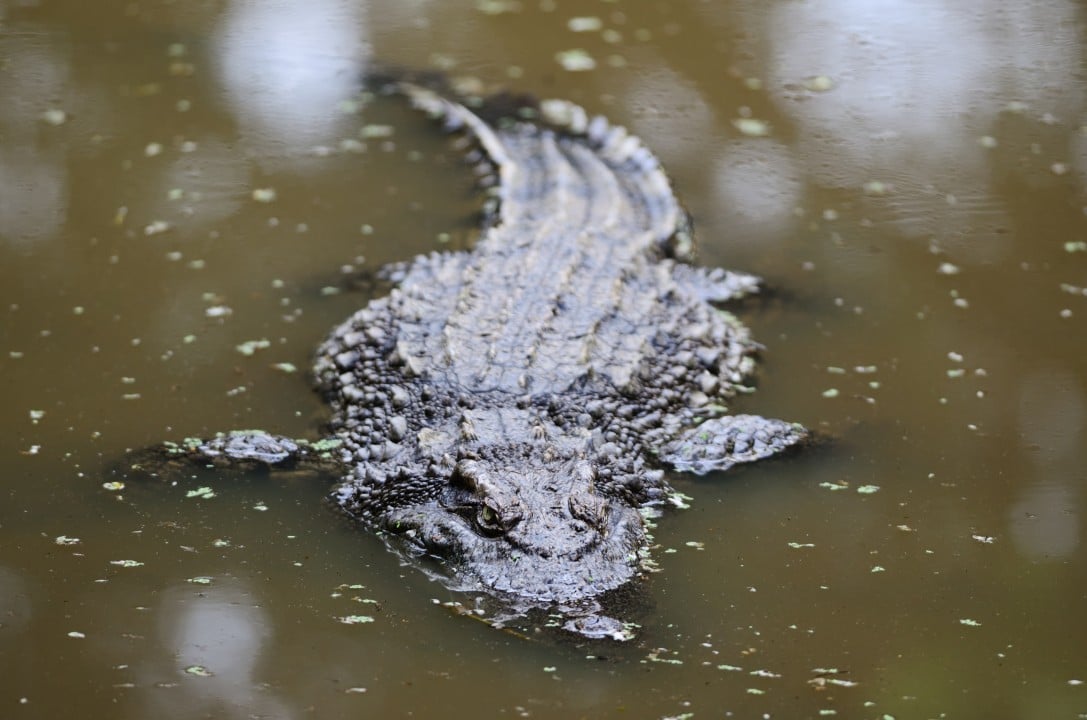
A colossal crocodilian, known for hunting dinosaurs and whose size resembled that of a school bus, has been resurrected as the world’s first skeleton assembled with scientific precision.Deinosuchus schwimmeri. This 30-foot replica is now on display at the Tellus Science Museum in Georgia, the result of extensive fossil scans and more than 40 years of research conducted by paleontologist Dr. David Schwimmer, who inspired the species name, and was introduced to the public on August 5, 2026.
The unprecedented reconstruction brings to light a 9.5-meter predator that dominated the ecosystem of what is now the eastern states of the United States. Considered a “dinosaur killer”, the giant reptile was certainly the top predator of its time.
Dr. David Schwimmer, professor of geology at Columbus State University and an internationally recognized authority on the genreDeinosuchus, dedicated several decades to creating this first accurate skeletal replica. Their work was based on rigorous academic studies, cementing the creature’s reputation as one of the greatest prehistoric predators.
Colossal reptile that hunted dinosaurs is recreated in museum
O Deinosuchus schwimmeriinhabited the eastern United States approximately 83 to 76 million years ago. Despite its resemblance to an alligator of gigantic proportions, this animal belonged to an ancient lineage of crocodilians, a group that includes today’s crocodiles, caimans, caimans and gharials.
This prehistoric animal could reach a length of up to 9.45 meters, equivalent to the size of a school bus. Its imposing size and extremely powerful jaws made it capable of attacking dinosaurs and other large animals that approached the water’s edge.
The newly installed prototype was commissioned by the Tellus Science Museum, located in Cartersville, Georgia. Its completion is the result of two years of consultancy between Schwimmer and Triebold Paleontology Inc., a company specialized in creating models of fossilized skeletons for museums, universities and various tourist attractions around the world.
Hannah Eisla, director of education at the Tellus Science Museum, explained the importance of the new acquisition: “Every year, we welcome thousands of students from across Georgia and neighboring states. Many of them come on school field trips with the specific goal of learning about the history and changes of the region where they live. The addition ofDeinosuchus schwimmeriallows us to offer a more complete view of the ecosystem of this area during the Cretaceous period.”
The Cretaceous period, the last great stage of the age of dinosaurs, presented a North America with landscapes, coastlines and wildlife drastically different from today.
Rebecca Melsheimer, the museum’s curatorial coordinator, added: “The Tellus is currently the only museum to display a replica of theDeinosuchus schwimmeri, providing an exclusive experience to our visitors. The magnitude of dinosaurs and other Late Cretaceous creatures is difficult to describe with words or images alone. Say that theDeinosuchusIt’s 30 feet long is one thing, but seeing it in person is much more impactful.”
Species gains name in recognition of decades of scientific dedication

In 2020, paleontologists formally granted the “terror crocodile” distinct species status, naming itDeinosuchus schwimmeriin honor of Dr. Schwimmer. This recognition was the culmination of years of fossil analyses, scientific publications, conference presentations and his influential 2002 book on the giant crocodilian.
In the study published in the Journal of Vertebrate Paleontology in July 2020, the researchers justified the name as a tribute to “their tireless work in the paleontology of the Late Cretaceous of the Southeast and East Coast of the USA.”
Schwimmer dedicated more than four decades to searching, excavating and studying fossils belonging to theDeinosuchus schwimmeri. National Geographic grants financially supported some of his field expeditions in Alabama, Georgia, and Texas, highlighting the impact of his research.
The specimens he recovered are now permanently preserved in important museums, which are dedicated to storing and maintaining these scientifically relevant fossils, ensuring their availability for future research. Institutions include the Smithsonian Institution in Washington, D.C., the American Museum of Natural History in New York, and the Tellus Museum of Science.
Details of the reconstruction of theDeinosuchusfrom fossils
The task of constructing an accurate, life-size replica transcends simply enlarging a drawing or arranging generic bones into a dramatic pose. Scientists need to compare known fossils, determine the connections between individual bones, and then reconstruct the missing parts using evidence from related animals.
For the project ofDeinosuchus schwimmeri, the Triebold Paleontology team produced high-resolution 3D scans of the fossil record. These digital models were crucial so that the team could rearticulate, that is, correctly reconnect, the animal’s skeleton and its detailed dermal armor.
Dermal armor refers to rigid bony plates that are embedded in the skin of animals. In crocodilians, these protective structures are often called osteoderms and form the visible armored surface along their backs.
Schwimmer highlighted that the final montage goes beyond just giving museum visitors a sense of the animal’s intimidating size. By presenting the skeleton as a connected structure, the replica can also help paleontologists examine its anatomy and better understand how the predator lived.
“These replicas are more than just creating a ‘fear factor,'” Schwimmer explained. “Understanding the predatory habits of dinosaurs helps us decipher some of nature’s greatest survival strategies. By studying these ancient top predators, we are essentially looking into the past to see exactly how life adapted and dominated a changing world.”
Thorough research that took decades to complete
Schwimmer’s interest inDeinosuchusIt began in his childhood, in New York City. He grew up just blocks from the American Museum of Natural History, where a skull exhibit sparked his imagination about paleontology.
Its first fossilsDeinosuchuswere found in 1979, just a year after he entered Columbus State (then Columbus College). Since then, much of his research has focused on reconstructing the animal’s biology, behavior, and prehistoric environment.
His extensive work has made him a leading expert on the Late Cretaceous period (ranging from 100.5 million to 66 million years ago) in the southeastern United States. The investigations he began in the 1980s also resulted in evidence of several pioneering paleontological discoveries in Georgia, including the state’s first known flying reptiles (pterodactyls), dinosaurs, and theDeinosuchus.
The term pterodactyl is widely used to describe the flying reptiles that coexisted with dinosaurs. However, it is important to note that these animals were not dinosaurs, but rather belonged to a distinct group known as pterosaurs.
Schwimmer’s seminal book has influenced modern research on theDeinosuchus
Schwimmer, who previously served as a science writer for pioneering ocean explorer Jacques-Yves Cousteau, compiled the first 20 years of his discoveries in his 2002 book, “King of the Crocodilians: The Paleobiology of Deinosuchus.”
The work became one of Amazon’s best-selling books in its category for several weeks in a row. It was also selected as book of the month by several science-focused reading groups, including one organized by the Discovery Educator Network, reinforcing its relevance.
Schwimmer is currently working on updating his book. Its original publication was instrumental in shaping scientific understanding of theDeinosuchusand other Mesozoic animals found in Georgia, in addition to solidifying his international reputation as a paleontologist.
Since then, his expertise has been sought after by renowned institutions, such as the Fernbank Museum of Natural History in Atlanta, the Vertebrate Paleontology Laboratory at the University of Texas and the Tellus Museum. He has consulted with these organizations regarding fossil collections and the development of educational exhibits.
Bite marks and fossilized feces offer clues to ancient life
In 2010, two studies on fossils related to theDeinosuchusgave international recognition to Schwimmer. One such study focused on analyzing bite marks preserved on dinosaur bones, providing physical evidence of predatory interactions between the giant crocodilian and dinosaurs.
The other research group dedicated itself to investigating fossilized feces, known scientifically as coprolites. Coprolites are able to preserve valuable information about the diet, digestive system and environment in which an ancestral animal lived.
This particular research was conducted by Samantha (Harrell) Stanford, a 2010 environmental science and geology graduate student, under Schwimmer’s direct supervision. The studies were presented in the special symposium volume of the Science Bulletin of the New Mexico Museum of Natural History, an internationally recognized publication, and at the Northeast-Southeast Annual Meeting of the Geological Society of America in March 2010. Harrell was duly credited for her significant contribution to both projects.
Great Discoveries Close to Home: The Value of Local Search
Schwimmer said paleontology and other natural sciences, Earth and space, offer students at regional universities the chance to conduct meaningful research in their own communities. He pointed out that important fossil sites do not always require travel to distant deserts or remote continents.
The professor also noted that smaller institutions can provide students with direct access to faculty advisors and practical field research opportunities, which is an important differentiator.
“[Harrell] came into the field and collected fossils with me. At most universities, undergraduate students rarely collaborate or publish peer-reviewed research. Institutions of our size offer graduate students like Samantha greater individual access to faculty mentors and field research opportunities like this that, although local, still have a significant impact on the field,” Schwimmer said.
Several known sites ofDeinosuchusare located less than 40 miles from the city of Columbus. These nearby fossiliferous deposits have provided Schwimmer and generations of student researchers with a rich source of discoveries and learning over the years.
The proximity between these sites also makes the Tellus Science Museum an especially suitable home for one of the earliest fossil replicas ofDeinosuchus. The exhibit allows visitors to view an animal that, millions of years before the existence of modern Georgia, dominated that same region.
“Bones and fossils only tell us part of the story,” Schwimmer concluded. “Life-size, fully assembled replicas become an essential model for better understanding the dynamic animals that creatures like theDeinosuchusthey really were.”