American investigators have confirmed the cause of the incident that nearly sucked a passenger out of a plane on July 10. Fragments from a failed engine struck a cabin window, creating a hole and pulling out part of the passenger’s body, according to the preliminary report.
Investigation reveals serious engine failure during flight
The United States National Transportation Safety Board (NTSB) released a preliminary report on the accident. The document indicates that a failure in the turbine blade of engine number two, the right, occurred shortly after takeoff.
The Ryanair flight, operated by the subsidiary Malta Air, departed from Thessaloniki, Greece, bound for Memmingen, Germany. The blade breaking was the trigger for a sequence of dangerous events on board.
After the incident, Greek authorities tasked the NTSB with the full investigation of the case. International collaboration is common in aviation accidents involving aircraft and companies of different nationalities.
Shocking details of incident with Serbian passenger
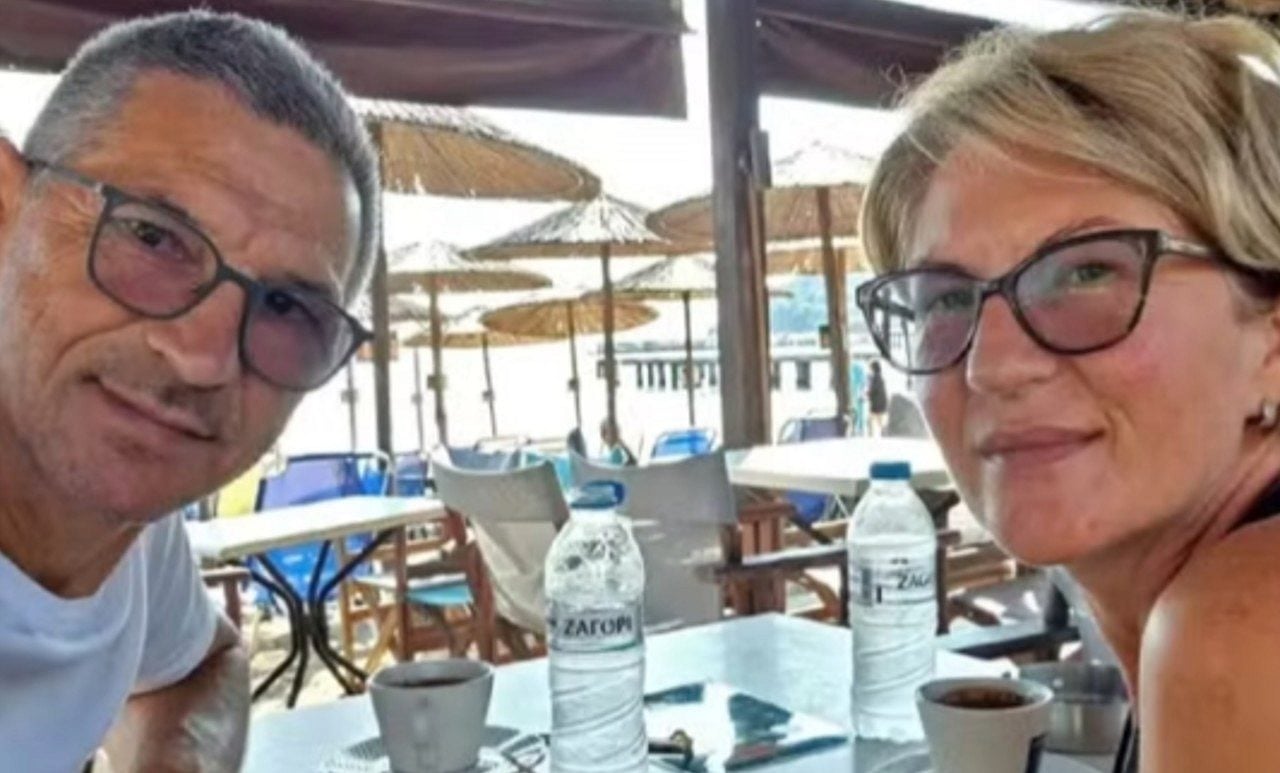
Serbian Ljubisa Karović, an affected passenger, had his head and right shoulder partially sucked out of the window. He was seriously injured and in shock from the decompression and impact.
His wife, Svetlana Grković Maksimović, described the terrifying moments. She and two other passengers acted quickly to hold Karović by the legs, preventing him from being completely ejected from the aircraft.
Mrs Grković said that “half of her husband’s body” was hanging out of the plane. She reported that Karović remained in that position for about two minutes, losing consciousness a few times.
The passenger said she clung to her husband’s legs, thinking: “If we die, we will die together.” This decisive attitude, with the help of other occupants, was crucial in bringing him back into the cabin.
Chronology of events on board the aircraft
The NTSB report details the sequence of events based on the crew’s statements. The incident began with warnings of “high vibration” in the engine during the climb.
In response, the pilots reduced engine power and carried out checks. Initially, the vibrations stopped, and the flight continued on autopilot.
However, the vibrations suddenly increased again. The crew heard a “loud bang”, which led them to declare an emergency and begin an immediate descent.
Flight attendants also reported feeling and hearing the vibrations. They observed a small amount of smoke before the oxygen masks automatically deployed in the cabin.
A flight attendant reported seeing passengers asking for help. One of them was “partially stuck in a damaged window” which had been completely ripped out.
Security measures and what can be learned from the case
An ultrasonic investigation of the engine in May this year had not detected any faults, according to the report. This raises questions about the effectiveness of preventative inspections.
Initially, Michael O’Leary, chief executive of Ryanair, had suggested that the incident could have been caused by “damage from a foreign object”. However, the preliminary report points to an internal failure of the turbine blade.
The fact that Ljubisa Karović kept her seat belt fastened was a vital element in her survival. The other passengers were able to hold him by the legs, preventing a greater tragedy.
The investigation is complex due to the international nature of the flight. As the aircraft is a Boeing 737-800, manufactured in the United States, and the incident occurred in the airspace of North Macedonia, several agencies are involved:
- Boeing, manufacturer of the aircraft;
- The United States Federal Aviation Administration (FAA);
- The European Union Aviation Safety Agency (EASA).
These agencies work together to determine all causes and contributing factors, providing lessons for global aviation safety. The age of the aircraft, 18 years old, may also be a factor in the analysis.
The psychological impact on survivors after the scare
After the rescue, Ljubisa Karović was left with serious injuries, mainly on her hand, as well as burns. He cannot communicate and does not remember all the details of what happened.
Svetlana Grković revealed that her husband “is alive”, which is the most important thing for her. However, the incident left deep scars, and he “starts to shake” whenever he hears about planes.
The trauma was not limited to the injured passenger. Svetlana stated that her own “psychological state is also bad.” She feared for both of their lives and even thought the plane was going to crash.
Another passenger, Sofia, also described the panic on board. She stated that “the decompression was very strong”, causing difficulty breathing among the cabin’s occupants.
Sofia noted that the injured man “was bleeding and lost consciousness several times”, probably due to the lack of oxygen and the shock that the incident caused.