
Leaks anticipate innovations in the iPhone 18 and details of Apple’s first foldable

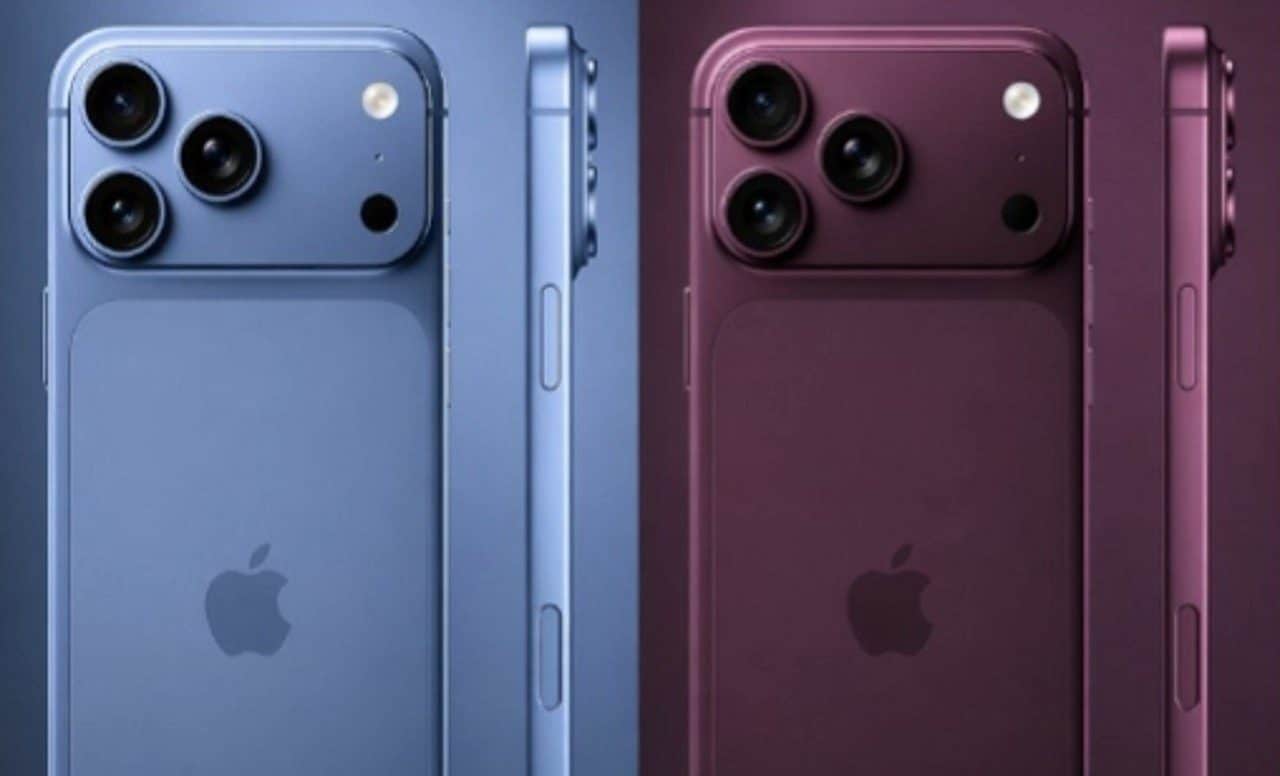
With less than two months to go before the expected presentation of the iPhone 18 Pro models and Apple’s unprecedented foldable iPhone, the technology market is buzzing with speculation. Other versions, such as the standard iPhone 18, iPhone 18e and iPhone Air 2, are expected in spring 2027, following the company’s new split launch strategy. Analysts and informants compiled a series of information, classifying the likelihood of each of these rumors coming true.
The most concrete bets for the next iPhones
Several rumors are considered solid, pointing to significant changes in Apple’s next line of smartphones. One of the highlights is the second generation of the iPhone Air 2, which would be in an advanced testing phase with the addition of an ultra-wide-angle camera, complementing the existing main camera. The general design of the device should remain similar, with the new lens being the main external change.
For the iPhone 18 Pro models, new color options are expected. The Dark Cherry color stands out as the main novelty, alongside Light Blue, Silver and Dark Grey. Images of simulated models circulating on the internet corroborate this information. Additionally, both Pro models should incorporate a variable aperture lens for the 48-megapixel main camera, offering users more precise control over exposure and depth of field in photos.
Other improvements include an increase in the RAM of the standard iPhone 18, which can reach 9 GB or even 12 GB, a jump from the 8 GB of the iPhone 17. This additional memory will be essential to support the advanced artificial intelligence features promised in iOS 27. The battery life of the iPhone 18 Pro should also be increased, with the iPhone 18 Pro Max being able to reach around 5,567 mAh outside of China. Accompanied by a more efficient 2nm A20 Pro chip and an LTPO+ screen, the expectation is for even more remarkable battery life.
Apple’s long-awaited foldable cell phone
Apple’s first foldable device has consistently been described as a book-shaped device with short, wide proportions. It should feature an approximately 5.5-inch external screen and a 7.8-inch internal screen, with a 4:3 screen aspect ratio. The user experience promises to be similar to that of a miniature iPad when opened, with comparisons describing it as “two titanium iPhones Air side by side”.
Connectivity is also a point of attention. The foldable iPhone, and possibly international versions of the iPhone 18 Pro, are expected to use Apple’s second-generation C2 modem, which promises greater speed and support for 5G satellite connectivity. There is, however, the possibility that Apple will opt for a Qualcomm modem for the American market if the C2 does not support mmWave technology.
Features and prices: what is different to expect
The iPhone 18 series should bring some new features that still generate discussions among informants, but have a good chance of coming to fruition. The iPhone Air 2, for example, could have a 3,500 mAh battery, an increase of around 11% over the current model. The combination of a 2nm A20 chip and a potentially thinner screen could guarantee more efficiency or space for that larger battery.
Regarding design, a smaller Dynamic Island on the iPhone 18 Pro is a possibility. Prototypes and CAD images show a Dynamic Island that is about 35% narrower, although other reports suggest that Apple is still evaluating the design or has delayed the change due to challenges with Face ID components. Camera control can also be simplified, with Apple removing the capacitive detection layer and using pressure sensitivity exclusively. This change can eliminate accidental gestures while reducing manufacturing and repair costs.
The internal crease of the foldable model’s screen is another point of improvement, with rumors indicating that Apple has reduced its depth to less than 0.15mm, making it almost imperceptible during normal use. While the promise is of a “nearly crease-free” display, some experts acknowledge that a minimal physical crease may be unavoidable.
In terms of price, the expectation is for increases across the entire iPhone 18 line, driven by memory and storage costs. Analysts estimate that the iPhone 18 Pro and Pro Max could start at $1,299 and $1,399, respectively, $200 more than their predecessors. The foldable iPhone, in turn, should cost more than US$2,000, positioning it as a higher-end product. The name “iPhone Ultra” has been increasingly mentioned for the foldable, reinforcing its status above the Pro Max.
More distant rumors and the launch strategy
Some speculations still seem unlikely, but continue to be discussed in technological circles. The addition of a teleconverter to the iPhone 18 Pro is one of them, cited by a relatively new Apple insider, without clear details of how it would work. The idea of a punch-hole front camera for the iPhone 18 Pro, replacing the Dynamic Island, was quickly contradicted by later reports pointing to a smaller, centralized Dynamic Island, or no change in that regard.
Another little-corroborated rumor suggests that Apple could reduce the screen and chip specifications of the standard iPhone 18 to control costs, sharing more components with the iPhone 18e. This statement meets expectations of a 2nm A20 chip and more RAM for the standard model. The implementation of a 24-megapixel under-display camera (UDC) on the foldable’s internal screen is also viewed with skepticism, as the technology may not be ready for this year, making cameras with visible holes more likely.
Removing the SIM tray for the entire iPhone lineup is another distant possibility. While the foldable iPhone may only be eSIM compatible, physical SIM variants of the iPhone 18 Pro are rumored for markets like China and Hong Kong, indicating that the traditional tray won’t be completely abandoned just yet.





