

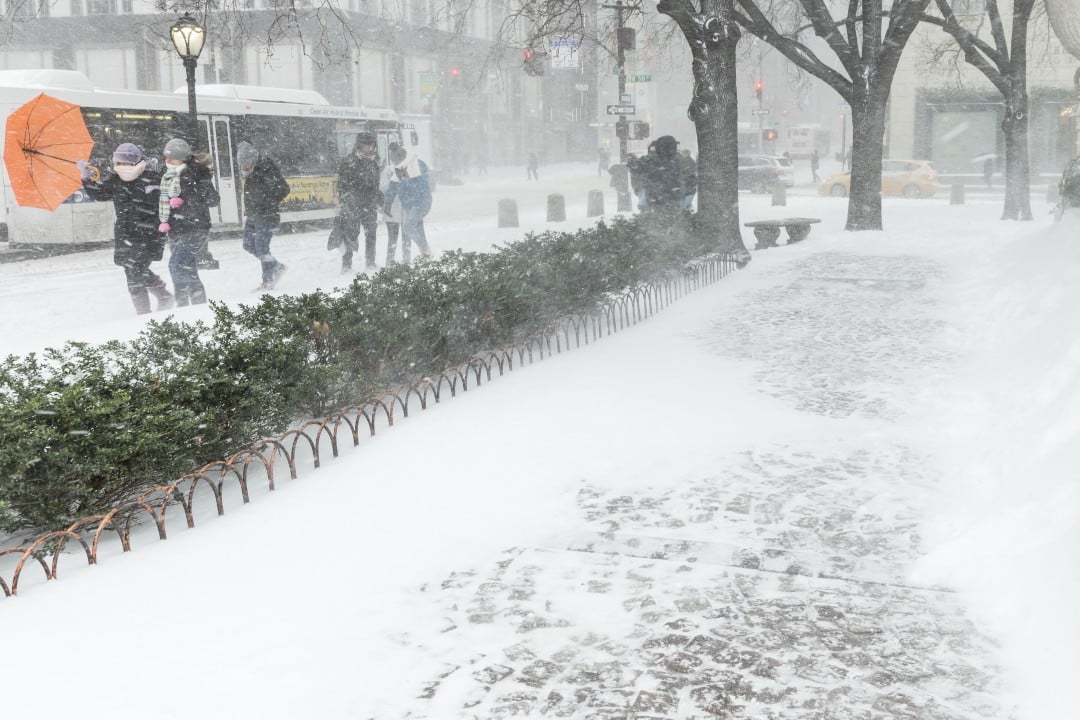
An unusual combination of meteorological factors resulted in snowfall atop Hawaii’s Mauna Kea on August 18, 2026, as Hurricane Lala battered the archipelago with rain and strong winds. This event generated one of the most unusual scenes of the year, contrasting the tropical climate of the islands with a winter landscape on its highest mountain.
Unusual phenomenon in Hawaii: snow in the middle of August
The occurrence of snow on an island known for its beaches and heat, during the passage of a tropical hurricane, seems contradictory at first glance. However, atmospheric physics allows such a phenomenon to happen. What made it exceptional was the simultaneity of a large amount of tropical moisture provided by the cyclone, sufficiently low temperatures at high altitudes, and the presence of Mauna Kea, a volcano that rises nearly 4,200 meters above sea level.
How Hurricane Lala influenced the occurrence of snow
Mauna Kea, at 4,205 meters high, frequently records temperatures close to or below 0°C at its summit, even though it is in a tropical region. During Hurricane Lala’s closest approach, the top of the volcano faced wind gusts exceeding 190 km/h. At that moment, the thermal sensation reached around -4°C, at the same time that the hurricane transported a vast amount of water vapor to the archipelago.
The storm, classified as a category 1 hurricane, passed through the south of Ilha Grande without directly making landfall. However, its external circulation and eyewall reached the island. This was the closest approach to a hurricane recorded on Ilha Grande since the beginning of the modern series of observations, contributing to the extreme conditions.
The importance of altitude and orographic survey for the phenomenon
Hawaii’s imposing relief played a fundamental role in the formation of snow. Upon meeting the mountain slopes, the moist air associated with Hurricane Lala was forced upward. This process, known as orographic lifting, causes air cooling, favoring the condensation of water vapor and intensifying precipitation.
In the case of Mauna Kea, the altitude led to an unusual result. At levels near the summit, the temperature was low enough that precipitation froze and fell as snow rather than rain. Thus, the same storm that caused floods and landslides in the lower areas of the island created a winter landscape a few kilometers above.
Torrential rains and record water accumulation during the storm
In addition to snow, Hurricane Lala was characterized by an extraordinary amount of water. On the windward side of the island, rainfall exceeded 900 millimeters in some places. A notable example is Laupāhoehoe, in the northeast of the Big Island, where a preliminary total of approximately 1,107 millimeters was recorded.
This volume of precipitation could place Hurricane Lala among the wettest tropical cyclones ever documented in the United States. The storm demonstrated the ability of tropical phenomena to carry vast amounts of moisture, which, under the right geographic and altimetric conditions, can generate unexpected results.
The true “bizarreness” of the meteorological event in the Pacific
Snow on Mauna Kea, in itself, is not an entirely rare phenomenon. The top of the volcano can receive snow during the winter months, and even snowstorm warnings are issued. What really caught the attention of meteorologists, and configured the event as one of the great meteorological oddities of the year, was its occurrence in August, at the height of the hurricane season and under the direct influence of a tropical cyclone, generally associated with hot and humid weather conditions.
The mechanism behind this episode did not involve the direct transport of cold air from high latitudes to Hawaii. Instead, it was the convergence of three crucial elements:
- The abundant moisture provided by the hurricane.
- The rise of air promoted by the mountain.
- The cold temperatures of the summit altitude.
This specific combination is what made the Mauna Kea event a notable milestone in meteorology, highlighting the complexity and surprises that weather systems can present.




