
Motorola Razr resistance tests contradict manufacturer’s numbers


The useful life of flexible screens remains the main decision factor for those investing in high-cost devices, such as the Motorola Razr. In Brazil, where this premium equipment often exceeds the seven thousand reais mark, the discrepancy between official statistics released by brands and evaluations made by independent laboratories creates a scenario of uncertainty about the display’s real operating time.
The revival of the iconic flip design by the North American manufacturer took place four years ago and, since then, the company’s engineering has tried to balance the nostalgic appeal with the requirement for robust components. Delivering a mechanism that supports daily opening and closing without presenting premature failures has become the biggest barrier in a sector that demands annual innovations.
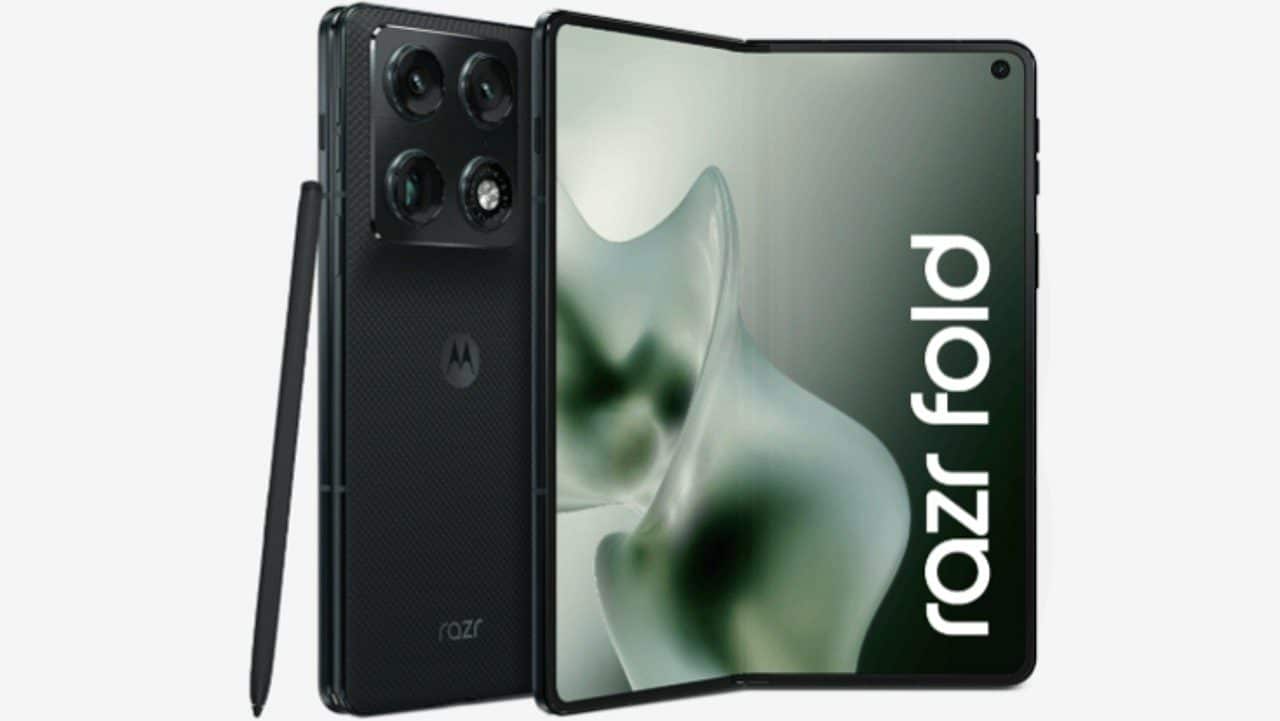
Frustrated expectations marked the brand’s first generation of flexible screens
During the arrival of the pioneering version of the flexible smartphone on the market, the company publicly guaranteed that the display would withstand two hundred thousand openings. The significant number worked as a strong marketing strategy to convince the public that the technological innovation did not break easily during routine use.
The North American portal CNET decided to put the promise to the test and the result exposed an unexpected fragility, with the panel showing a definitive defect in the region of twenty-seven thousand movements. The manufacturer’s official response at the time disqualified the machinery used by journalists, claiming that the robot applied unrealistic mechanical force that did not reflect standard human handling.
Glass suppliers maintain conservative estimates for current panels
The advancement of subsequent generations did not radically alter the resistance ceiling stipulated by basic industries. Japanese manufacturer NEG, which supplies the ultra-thin protective film for the Razr 50 and Razr 50 Ultra editions, continues to certify its components for the same limit of two hundred thousand mechanical actuations.
Direct competitors, including the Samsung Z Flip line, have adopted exactly the same standard of technical communication. The mathematics behind this limit suggests that the owner could open and close the cell phone more than a hundred times every twenty-four hours for half a decade, which theoretically comfortably covers the useful life cycle before switching to a more modern model.
Dispute between giants increases the capacity of hinge mechanisms
The race for an unbreakable device gained a new chapter when South Korean Samsung revealed an OLED display designed to withstand half a million movements, equipping the Galaxy Z Fold 7 launched in 2025. The significant leap in materials engineering became the brand’s main commercial asset to justify investment in its premium devices.
Not to be left behind, the Lenovo subsidiary adopted a more discreet strategy, indicating to specialized vehicles that the 2025 Motorola Razr Ultra would reach the four hundred thousand fold mark, without showing this in advertisements. Experts from the BGR website published a review in 2026 highlighting the smoothness of the hinge as an unbeatable differentiator in the eight-hundred-dollar category, while the expanded Razr Fold model managed to practically eliminate the central mark on the screen, delivering a seamless visual experience.
Lack of brand transparency makes it difficult for consumers to choose
Corporate silence about the exact limits of current hardware still breeds distrust in electronics retail. Motorola itself stopped publishing official numbers for its recent launches, while Samsung focused on publicizing the increase in brightness of the Galaxy Z Fold 8 Ultra, leaving aside any update on the mechanical resistance of the new panel.
Those who pay a lot for this technology demand real guarantees of operation in everyday situations, far from the controlled environment of factories. The telecommunications industry’s big hurdle today is proving that cutting-edge engineering survives the heat, dust and rough handling of the real world, aligning hype with practical durability.
History of promises and tests of the main lines of flexible cell phones
The survey below illustrates how factory estimates have evolved and how they have behaved in the face of independent analyzes over the years:
- Pioneering edition of the Motorola Razr (2020): The manufacturer guaranteed two hundred thousand openings, but CNET’s machinery broke the display after twenty-seven thousand movements.
- Motorola Razr 50 and Razr 50 Ultra Line: The flexible glass supplier, NEG, maintains technical certification stagnant at two hundred thousand cycles.
- First generations of the Samsung Galaxy Z Flip: The South Korean brand also used the standard metric of two hundred thousand folds in its campaigns.
- Motorola Razr Ultra version (2025): Behind-the-scenes information indicates that the mechanism has been reinforced to withstand four hundred thousand movements.
- Samsung Galaxy Z Fold 7 (2025) model: The OLED screen has received an official structural update to support up to half a million openings.





