
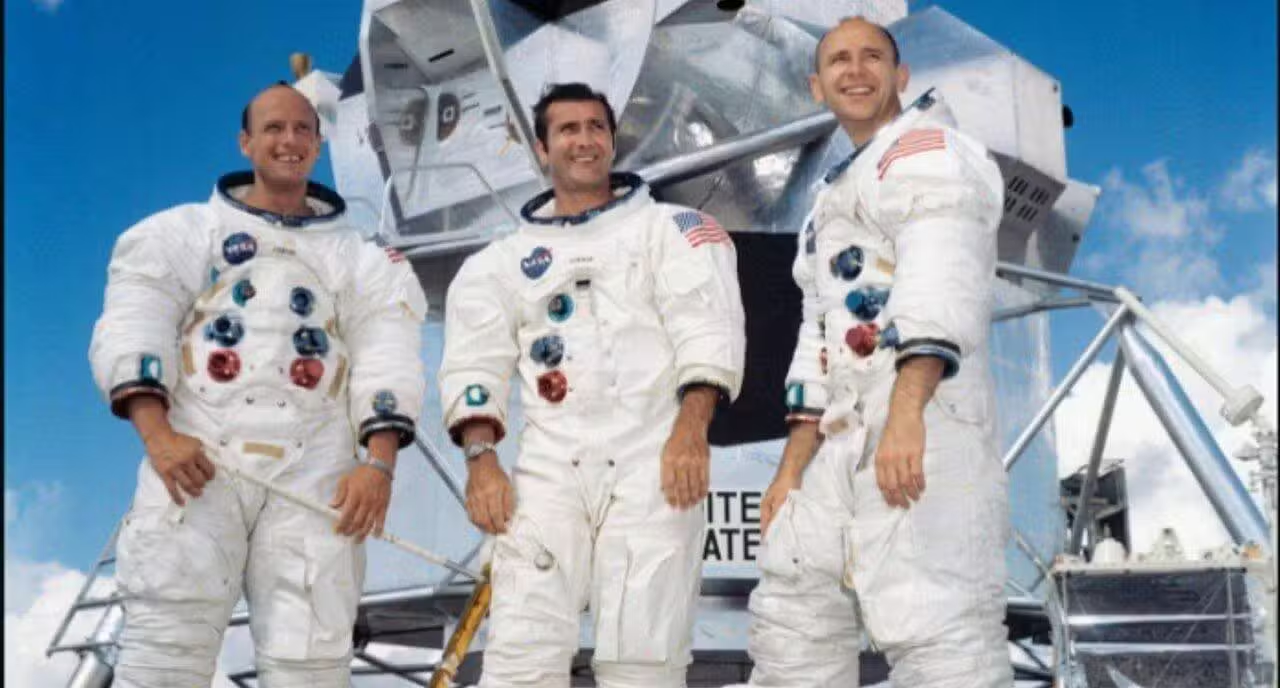
Astronauts Charles “Pete” Conrad and Alan Bean, members of the Apollo 12 mission, returned from their walks on the lunar surface in November 1969 covered in a layer of fine, grayish dust. The amount of dirt was so great that Richard Gordon, command module pilot, prevented them from entering the ship before removing their suits. The material, which looked like powdered graphite, spread across the Intrepid lunar module like a dark cloud, proving extremely difficult to clean up with available tools.
How lunar dust stuck and spread on equipment
During nearly eight hours of extravehicular activity in the Ocean of Storms, Conrad and Bean accumulated a significant amount of dust. This substance adhered to boots, gloves, space suits and even tools used in exploration. NASA reports described a strong, pungent smell when the helmets were removed, and the abrasive texture of the lunar dust spread with surprising ease, complicating the astronauts’ operations.
The problem of floating dirt inside the Intrepid module
After Conrad and Bean returned to the Intrepid and the ascent stage took off, dust that had been sitting on the floor began to float around the cabin due to zero gravity. To avoid inhaling the material, the astronauts kept their suits and helmets on. Historical NASA documents indicate that despite meticulous cleaning efforts, a large amount of fine grain continued to enter the spacecraft, creating an environment of constant contamination and a challenge for the crew.
Richard Gordon imposed conditions for the transfer of crew
Engineers from the space agency cataloged the phenomenon, identifying that the dust originated both from the equipment and suits and from the movement in the landing area itself, being amplified by the engine exhaust. This contamination scenario became critical when Intrepid docked with the Yankee Clipper, the command module. Upon opening the hatch, Gordon was faced with the cloud of dust and declared that his colleagues could not enter before stripping off their dirty suits, so as not to compromise the cleanliness of his ship.
Particles persisted on the return journey, irritating the crew
Gordon’s strict demands led Conrad and Bean to remove their suits while still inside the lunar module. They transferred the suits and valuable moon rock samples to Gordon. Only then did the astronauts float to the command module, using only headsets and, later, clean clothes. This unusual sequence – first the rocks, then the suits and, finally, the astronauts – became one of the most iconic stories of the Apollo program. Gordon, who remained in lunar orbit without landing, maintained the integrity of the Yankee Clipper while his colleagues dealt with the aftermath of the walks.
- It is highly abrasive and electrostatic, sticking to almost everything.
- It can lodge deep in the skin and under the nails of astronauts.
- It irritates eyes and lungs, clogs air filters.
- It wears out equipment and affects seals.
Even after transfer to the Yankee Clipper, fine particles continued to float, causing irritation to the crew’s eyes and lungs and clogging the air filters, which had to be cleaned repeatedly. Technical reviews by NASA revealed that lunar dust settled deeply into astronauts’ skin. Many, when taking off their clothes on the way to Earth, were still covered, and the dirt under their fingernails could take weeks, or even months, to be completely eliminated. Apollo 12 landed in the Pacific Ocean on November 24, 1969.
Moon dust: a persistent challenge for future Artemis missions
The issue of lunar dust was not resolved during the Apollo program. Subsequent missions tried various approaches, including the use of brushes, vacuum devices, and suit modifications, but without definitive success. The material, with its abrasive characteristics and electrostatic charge, adheres to almost all surfaces, causing wear on equipment, compromising seals and posing a significant risk to the respiratory health of astronauts. This is one of the main reasons why NASA continues to invest in research to develop new technologies and mitigation methods.
For the Artemis program and plans for longer stays on the Moon, dust contamination remains one of the biggest engineering hurdles. Astronauts who spend extended periods on the lunar surface will face the same problem on an even larger scale, with dust entering the cabins, irritating the airways and requiring protection and cleaning solutions that are still in the development phase. The Apollo 12 experience serves as a constant reminder of the complexity of operating in an extraterrestrial environment.