
Motorola Razr 2026 review reveals few changes and focuses on cost-benefit
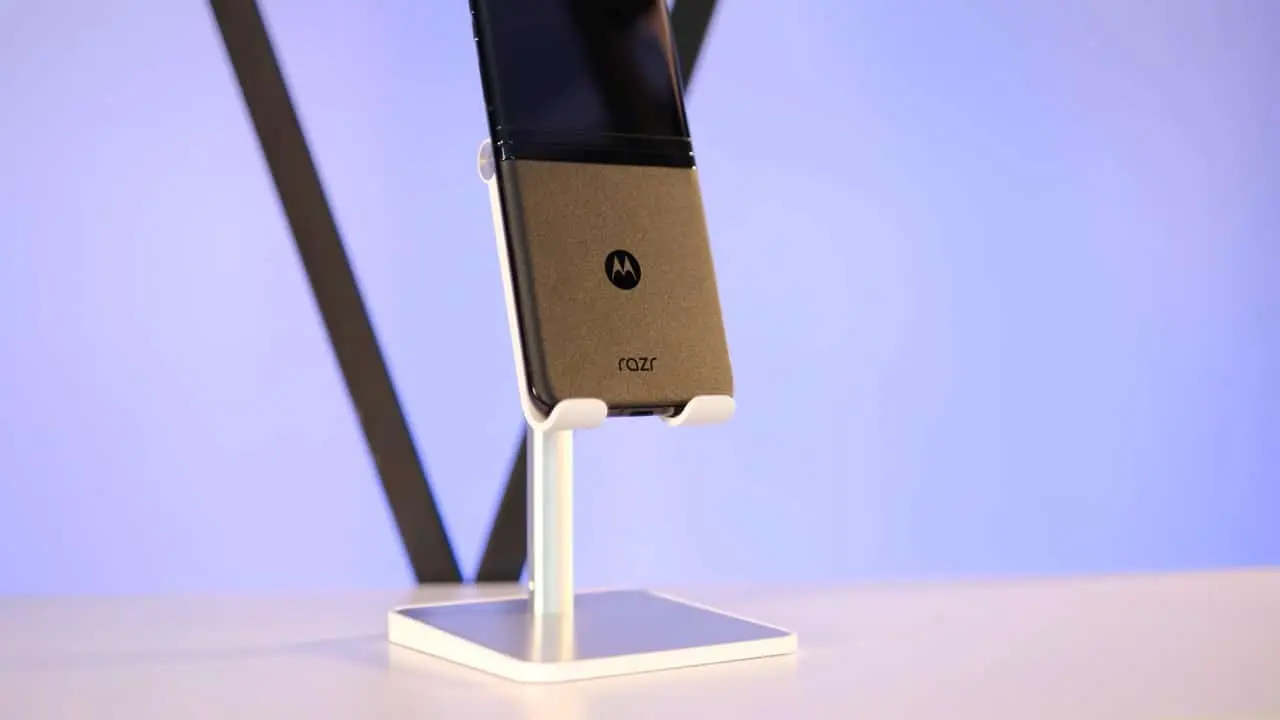
The line of smartphones with flexible screens has gained strong traction in recent years, and the North American manufacturer continues to bet on being the gateway to this segment. The recently launched Motorola Razr 2026 arrives on the international market with a suggested price of US$800, positioning itself as a considerably cheaper alternative to giants in the sector, such as Samsung’s Galaxy Z Fold line. This commercial tactic seeks to democratize access to devices that fold in half, delivering a robust set of specifications without inflating the final cost for the consumer.
Even though it maintains the tradition of offering aggressive values to compete against strong competitors, the new generation of the flip device presents an obvious technological stagnation. In practice, the current edition shares almost all of its DNA with the model launched the previous year. Due to this extreme similarity, technology experts point out that, in the current scenario, the smartest investment is to look for the 2025 version of stock burns. Both generations deliver a very satisfying premium experience for those who want to abandon traditional bar formats without emptying their bank account.
- Processing: Equipped with the MediaTek Dimensity 7450X chipset.
- Displays: 6.9-inch LTPO Extreme AMOLED flexible internal panel (2640 x 1080 resolution) with 120 Hz refresh rate; 3.6-inch Extreme AMOLED external display (1056 x 1066) at 90 Hz.
- Photography: Dual rear set with 50 MP main lens and 50 MP ultrawide lens, in addition to a 32 MP front sensor housed in the main display.
- Capacity: 8 GB of RAM combined with 256 GB of internal space.
- Extras: 4,800 mAh power cell and IP48 certification (which guarantees water resistance and protection against solid particles larger than 1 millimeter).
The look of the new flexible smartphone focuses on continuity and exclusive colors
Apart from the introduction of new color palettes, the physical structure and ergonomics remain unchanged across the generational transition. This lack of boldness in the redesign is not necessarily a defect, as the construction of the device has always received positive reviews. The textured back finish, supported by an exclusive partnership with Pantone, gives an air of sophistication that immediately catches the attention of anyone who looks at the phone up close.
Understand the case: Motorola razr fold impresses by being lighter than iPhone 17 Pro Max
The design’s greatest asset continues to be the 3.6-inch secondary display, present in both the base variant and the most expensive configuration. Thanks to the intense brightness of the AMOLED panel, the user can check alerts, monitor the weather and see the time extremely easily in sunlight. Unlike other competitors that limit the use of this external area to basic widgets, the manufacturer’s interface allows you to respond to complete messages and even browse websites, drastically reducing the need to open the device at all times.
When the hinge comes into action and the phone is fully expanded, it reveals a 6.9-inch main display, an identical proportion to the largest flagships on the current market. This elongated format solves a chronic problem with some foldables, which tend to adopt strange proportions and hinder media consumption. With familiar dimensions, the usability for marathoning series, scrolling through the social media feed or playing gaming sessions flows completely naturally.
On the same topic: New foldable iPhone 18 Pro and Ultra arrive in 2026 with drastic hardware changes
The central crease, a trademark of any screen that folds, is still present in the middle of the luminous panel. However, the engineering applied in the 2026 version managed to smooth out this tactile depression much more effectively than in the category’s pioneers. For consumers who are now switching to this format, the slight unevenness under the finger quickly disappears in the face of the allure of keeping a giant display in your pants pocket.
The opening and closing mechanics are also worth highlighting for ensuring safety during daily handling. The characteristic click when closing the lid sounds firm, indicating that the moving parts are designed to withstand continuous stress. Ensuring structural integrity in a product focused on cost-benefit is a complex challenge, but the brand demonstrates that it has mastered the manufacture of durable hinges.
Internal performance receives discreet processing upgrades
Looking at the technical sheet, the engine that drives the launch has undergone a slight increase in power. The brains of the operation now are the MediaTek Dimensity 7450X, working in conjunction with the UFS 3.1 storage standard, replacing last year’s 7400X and UFS 2.2 combo. Although the numbers promise more speed in theory, everyday use does not reveal noticeable leaps in performance, keeping navigation through the Android system extremely fast and managing background applications without hiccups.
Heavy and graphically demanding titles, such as adaptations like Red Dead Redemption, run with a stable frame rate on the flexible device. However, users who buy cell phones exclusively for virtual competitions should aim for extremely high-performance traditional devices, such as the Samsung Galaxy S26 Ultra. Even though they cost more, bar models offer superior cooling systems and graphics chips dedicated to supporting hours of uninterrupted gaming.
In terms of autonomy, any of the recent generations guarantees enough energy to reach the end of the day away from the socket with moderate use. The updated 2026 processor even delivers slightly more refined energy management, extending screen-on time by a few minutes. However, this marginal gain is far from being a strong enough argument to justify the launch price, reinforcing the thesis that the previous model continues to be a more advantageous deal.
More on this story: Motorola’s new foldable cell phone surpasses the weight of the iPhone 17 Pro Max and gets a discount
Photographic module gains high-resolution ultrawide sensor
This season’s real evolutionary leap is concentrated in the lenses positioned on the outer cover. The photographic module has been updated to house two 50-megapixel sensors, retiring the outdated 13-megapixel wide-angle camera from the previous edition. This drastic change in the ultrawide lens guarantees landscape captures with a much higher level of detail, allowing the user to make edits without losing image sharpness.
In scenes bathed in natural light, the records come out vibrant and ready to feed social networks without the need for filters. The Achilles heel appears at night, when digital noise becomes evident and quality drops compared to conventional premium devices. This nighttime limitation is a physical obstacle in the category, as the thin thickness of the cell phone halves prevents the installation of larger, more light-sensitive image sensors.
The dynamics of self-portraits, on the other hand, are unbeatable thanks to the secondary screen. The owner only needs to perform the traditional wrist-turning gesture to activate the main lens with the phone closed, using the external display as a high-quality mirror to frame the face perfectly.
Despite advances, the optical set is far from being among the best on the global market. The absence of a telephoto lens dedicated to optical zoom restricts creative possibilities in long-distance photos. If professional photography is the deciding factor at the time of purchase, the budget of eight hundred dollars would be better invested in a Google Pixel, an S-line Galaxy or the Motorola Edge itself, which deliver superior results in this department.
Verdict on buying the new foldable in the current market
Evaluating the product in isolation, the manufacturer hit the nail on the head by maintaining the formula that established the modern Razr line. The device perfectly balances the novelty factor of flexible screens with a less daunting entry price for the general public.
The big caveat concerns the exact moment to open the wallet. As hardware and design innovations were extremely timid, the unanimous recommendation from market analysts is to hold back on anxiety and not pay the full amount charged at the official launch.
Learn more: Apple prepares iPhone 18 with flexible screen and 2 nanometer chip for 2026
Historically, the North American brand tends to apply aggressive price cuts a few months after products hit the shelves. As soon as the value of the 2026 edition drops to the US$700 range, the cost-benefit balance turns in its favor, justifying the investment due to the improved camera and slightly superior processor.
For those who urgently need to change their smartphone now, the 2025 version stands out as the absolute savings champion, being found in international retail for around US$550 in mid-July 2026. In addition to delivering much of the experience of the new model, the company has already confirmed that it will send security packages and operating system updates for it until 2029.
Another interesting route for the consumer is to use the same US$800 charged for the basic launch to purchase last year’s Motorola Razr Ultra. This premium variant, which suffered a natural devaluation of 50% in stores, is equipped with the powerful Qualcomm Snapdragon Elite processor and twice as much RAM. The final decision will depend on what the user prioritizes: saving as much as possible with the old base version, having more raw power with the devalued Ultra model, or waiting a few months to get the 2026 edition at a discount. In either scenario, the experience with the flip format is guaranteed with quality.
More news in Latest News (EN)
See more → Sony clarifies launch timing and hardware price plans for PS6
 Sony PlayStation 6 cost nears $950 as memory prices climbAfD state election triumph prompts urgent review of Germany’s democratic foundationsAaron Judge returns to Yankees lineup, igniting playoff push after three-month rib injury absenceHigh-altitude tragedy: Climber perishes after fall on Aspen-area 14er summitEgyptian TV personality and 11 co-defendants condemned to death for large-scale synthetic drug traffickingPlayStation 6 component bills surge to $960 amid memory crunch
 Rockstar North adds canine waste throwing to GTA 6 worldRockstar North details dog mechanics and street combat in GTA 6
 Corporate ChatGPT users gain custom text style replicationWorkplace ChatGPT starts copying individual writing styles
More news on Mix Vale
- 1Trump demands Bombardier relocate production to US for market access, escalating trade tensions
- 2Veteran left-hander Thomas Pannone hurls rare perfect game in Triple-A for Nashville Sounds
- 3Power outage forces FSU and SMU to play college football without modern communication tools
- 4United Kingdom to impose trade restrictions on Israeli settlements, sparking strong U.S. and Israeli opposition
- 5Top Ukrainian prosecutor resigns following probe into vast illegal call center network scheme
- 6Calls intensify for Australia to assert foreign policy independence over extensive US military presence
- 7Saxony-Anhalt results underscore growing momentum for European far-right parties ahead of key votes
- 8Julia Louis-Dreyfus reveals intense creative clashes shaped iconic sitcom ‘Seinfeld’s’ groundbreaking humor
- 9U.S. forces dismantle sophisticated floating drug refueling station tied to Ecuadorian narco-terror group
- 10Giants make unexpected roster move, release longest-tenured player Darius Slayton as Harbaugh era begins