
Prince William blocked King Charles’ demand to change Kate’s name

A recently released biography has brought to light a tense clash behind the scenes at Buckingham Palace, revealing that Prince William reacted with extreme irritation to an unusual demand made by King Charles III and Queen Camilla. Monarchs suggested that Kate Middleton change the spelling of her first name shortly after her official entry into the British royal family. The episode, dated August 10, 2026 in the publication’s records, exposes the crown’s level of control and obsession with the smallest details of its public visual identity.
Researcher Christopher Andersen, responsible for signing the work focused on the trajectory of the current Princess of Wales, explained the motivation behind the peculiar request. The sovereign and his consort already used an official monogram composed of two letters “C” intertwined under a crown, representing Charles and Camilla. The assessment of the royal cabinets was that the inclusion of a third “C” in the family coat of arms would generate unwanted visual excess. Given this, the monarchs explored the possibility of their daughter-in-law adopting the spelling “Katherine”, with the letter “K”, instead of her original baptismal name, “Catherine”.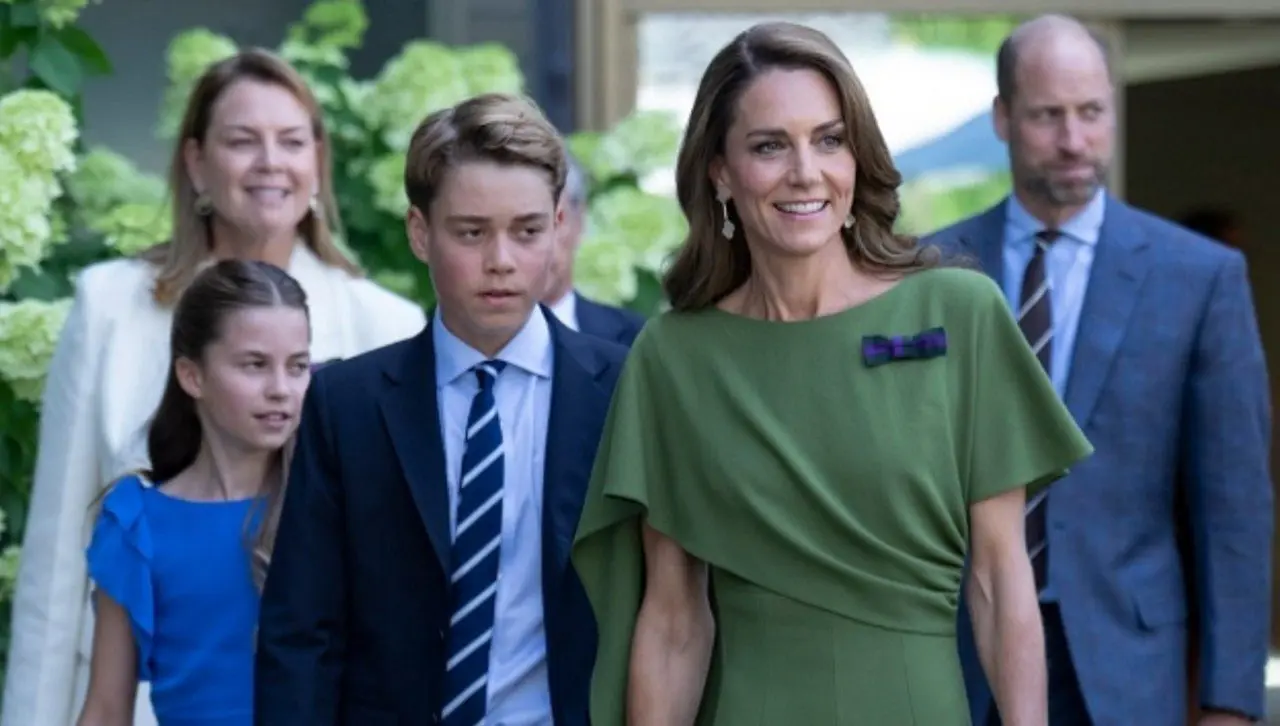
The suggestion fell like a bombshell in the residence of the heirs to the throne. The author reports that the Prince of Wales saw the maneuver as yet another unnecessary hierarchical imposition, designed primarily to stroke Camilla’s ego. Taking the lead in the situation, he responded harshly on behalf of his wife, classifying his own father’s proposal as a profound offense not only to his partner, but to the entire lineage of the Middleton family.
The obsessive construction of the royal brand and the protective stance of the heir
Sought by the press to comment on the allegations contained in the book, official representatives of Kensington Palace maintained the institution’s standard protocol. The press office stated that the communications team does not issue notes on the content of unauthorized biographies.
The expert responsible for the research believes that the concern with the number of identical letters on an official seal perfectly illustrates how the monarchy operates as a high-level marketing tool. In the United Kingdom, royal monograms are emblazoned on letterboxes, military uniforms and state documents, making visual identity a matter of sovereignty. The writer points out that royalty works as a constant game of overcoming influences and that Diana’s eldest son assumed the role of shield for his partner from the first days of their relationship.
The history of protection surrounding the Princess of Wales is long and marked by her husband’s energetic reactions against any threat to his integrity or image. One of the most emblematic episodes of this stance occurred more than a decade ago, when photographers invaded the couple’s privacy during a vacation in the south of France, capturing intimate images of the future queen in 2012.
On that occasion, the heir to the throne demanded that the crown’s lawyers press forward with relentless prosecutions, including seeking criminal convictions for the paparazzi based on strict French privacy laws. This same shield was applied to the domestic routine, with the prince vetoing any attempt by the palace to impose an exhaustive schedule of public commitments on his wife during the first years of motherhood, ensuring that she could prioritize raising her children.
Read also: Prince William takes over royal duties as succession nears
The weight of family tradition and the refusal to change the baptism certificate
The political calculation of the king and his wife failed to underestimate the daughter-in-law’s attachment to her own roots. The monarchs believed that the request would be accepted without resistance, based on the conciliatory profile and team spirit that the princess always demonstrated in her public functions. They completely ignored the fact that she has a deep emotional connection to her parents’ chosen name and prefers to be addressed formally by it.
There is a clear discrepancy between the media persona and the official identity of the future queen consort. While the global press and public have anointed her with the short nickname, her legal documents, court communiques, and her inner circle of friends and family exclusively use the original nomenclature.
Despite the friction generated by the requirement, the relationship between the father-in-law and daughter-in-law remained affectionate. Biographical research indicates that the princess attributed the absurd idea to overzealous palace advisors, sparing the monarch from direct resentment and maintaining harmony in family interactions.
The family scenario has also undergone a drastic turnaround recently, changing the balance of what really matters to the institution. The simultaneous diagnosis of serious health problems faced by central figures of the crown forced a change in perspective, transforming old disputes over space into miniscule issues in the face of medical challenges.
Learn more: King Charles III blocks Harry and Meghan from royal duties
Behind the scenes at the palace reveal a future queen with non-negotiable limits
The image of sweetness and compassion projected by the heir’s wife hides a relentless determination behind the scenes. Analysts who follow the court’s routine describe a woman with an iron will, capable of imposing insurmountable barriers when her principles are tested.
The refusal to modify the birth certificate reflects absolute clarity about his own identity and the way in which he wishes to go down in history. Modifying such a personal trait for a purely aesthetic and heraldic justification was considered an unacceptable line, a red line that she refused to cross to please the royal bureaucracy.
British media professionals endorse the perception that the requirement was a strategic mistake from the start. Photographer and presenter Helena Chard analyzed the monarch’s move as a cold, corporate approach, treating family members like products on a shelf whose brands need to be adjusted to avoid logo conflicts.
Understand the case: Prince William takes over royal duties as Charles battles cancer
The commentator considers that, from the strict perspective of brand management, the concern with the design of the coat of arms has its internal logic. However, the lack of human sensitivity in handling the issue fully justified the prince’s indignation, who felt disrespected by both his wife and her in-laws.
The power dynamics between couples and the focus on bigger challenges
The conflict ended up losing strength in the face of the avalanche of responsibilities that the crown demands on a daily basis. The suggestion was silently shelved by the cabinets, as the wear and tear of an open confrontation between the king and his direct successor would bring incalculable damage to the stability of the monarchy.
Royal experts, such as Ian Pelham Turner, classify the first years of coexistence between the two most important women in the United Kingdom as a minefield. Her husband’s constant, protective presence was instrumental in the princess navigating these initial tensions, adopting the clever tactic of taking a step back at joint events to ensure the current monarchs shined without competition.
The consolidation of the Princess of Wales’s independent image in the current scenario
The current scenario shows a gradual reversal of forces within the institution. At 44, the future queen is actively working on building an autonomous and unwavering public presence, paving the way for the moment when her husband will assume full control of the British monarchy.
The monogram’s revelation of the conflict sparked scathing reactions among veterans of royal coverage. Richard Fitzwilliams was categorical in classifying the palace’s concern as true stupidity, criticizing the superficiality of creating a family crisis based solely on the alphabetical coincidence of initials.
More on this story: Prince William and Kate Middleton expand official agenda during King Charles III’s treatment
The episode, however, serves as a perfect x-ray of the functioning of British royalty. The level of control exercised over the institution’s image encompasses elements that go unnoticed by the common public, but which are treated as matters of national security by courtiers. Among the items strictly monitored by the crown are:
- Typography and the interweaving of letters in official shields and coats of arms.
- The design and conservation of golden carriages used in state processions.
- The exact arrangement of the crown jewels in ceremonies of high symbolic value.
- The color palette of clothing in public appearances to avoid visual clashes between members.
What seems a trivial and almost comical detail to civil society represents the very essence of the monarchy’s survival. For the occupants of Buckingham Palace, the meticulous maintenance of these symbols is what guarantees the mystique and relevance of the crown in the 21st century.
More news in Latest News (EN)
See more → Sony clarifies launch timing and hardware price plans for PS6
 Sony PlayStation 6 cost nears $950 as memory prices climbAfD state election triumph prompts urgent review of Germany’s democratic foundationsAaron Judge returns to Yankees lineup, igniting playoff push after three-month rib injury absenceHigh-altitude tragedy: Climber perishes after fall on Aspen-area 14er summitEgyptian TV personality and 11 co-defendants condemned to death for large-scale synthetic drug traffickingPlayStation 6 component bills surge to $960 amid memory crunch
 Rockstar North adds canine waste throwing to GTA 6 worldRockstar North details dog mechanics and street combat in GTA 6
 Corporate ChatGPT users gain custom text style replicationWorkplace ChatGPT starts copying individual writing styles
More news on Mix Vale
- 1Trump demands Bombardier relocate production to US for market access, escalating trade tensions
- 2Veteran left-hander Thomas Pannone hurls rare perfect game in Triple-A for Nashville Sounds
- 3Power outage forces FSU and SMU to play college football without modern communication tools
- 4United Kingdom to impose trade restrictions on Israeli settlements, sparking strong U.S. and Israeli opposition
- 5Top Ukrainian prosecutor resigns following probe into vast illegal call center network scheme
- 6Calls intensify for Australia to assert foreign policy independence over extensive US military presence
- 7Saxony-Anhalt results underscore growing momentum for European far-right parties ahead of key votes
- 8Julia Louis-Dreyfus reveals intense creative clashes shaped iconic sitcom ‘Seinfeld’s’ groundbreaking humor
- 9U.S. forces dismantle sophisticated floating drug refueling station tied to Ecuadorian narco-terror group
- 10Giants make unexpected roster move, release longest-tenured player Darius Slayton as Harbaugh era begins