
Pixel 11 Pro XL is launched by Google with innovative vision still in development

Current smartphones have been described as uninnovative for a while, with incremental updates and an increasing focus on software services. Modern solutions often leave gaps in the user experience, making disconnecting the device a challenge as many rely on them for many daily tasks.
In this scenario, Google proves to be one of the few manufacturers to reflect on this division. While the Pixel 11 Pro
However, the company appears to be trying to bridge the gap between the always-connected world and the more present life, as noted on August 28, 2026. Features like HiLight aim to make the user turn the device around, using a modernized notification LED in place of the always-on screen. Magic Capture is designed to let you capture photos without focusing on the viewfinder, and Gemini Intelligence is designed to anticipate needs before the user even picks up the phone.
Whether Google managed to achieve this vision with the Pixel 11 Pro XL is another question, but the initiative to try is already a point to be considered.
What the hardware and design of the new Pixel 11 Pro XL are like
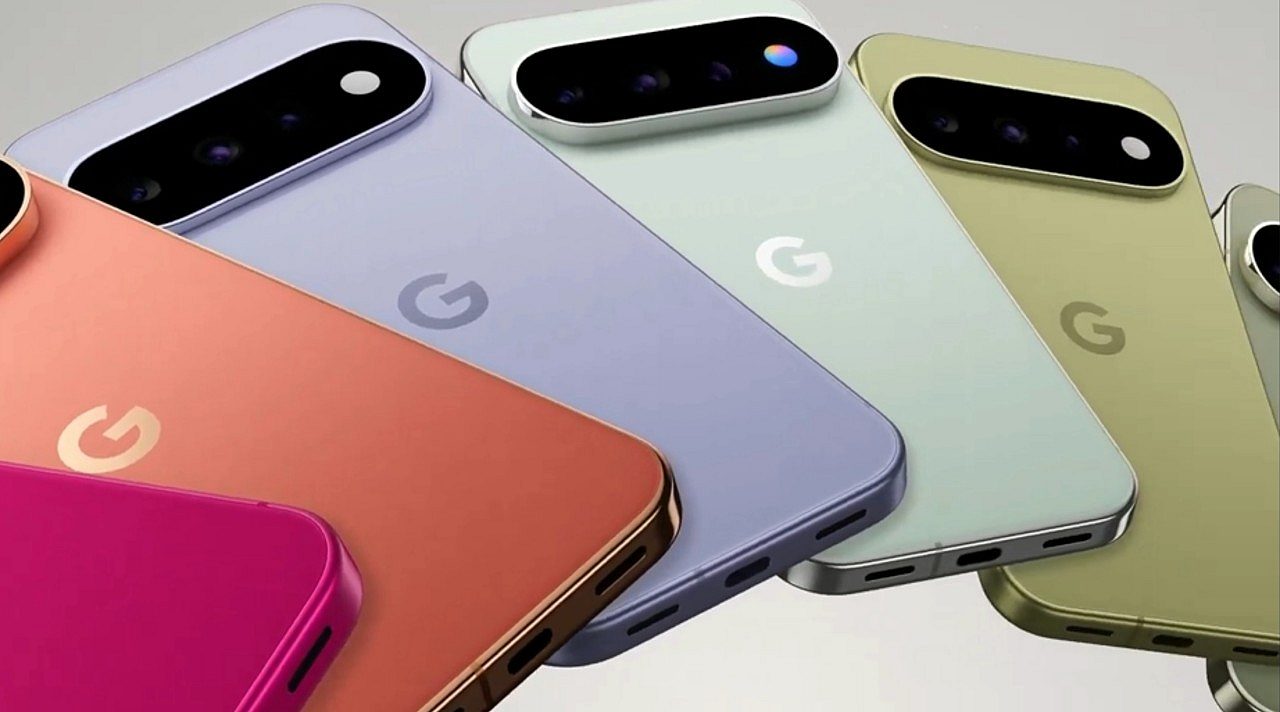
The device’s design starts with remarkable familiarity, recycling the aesthetics of 2024’s Pixel 9, with few improvements that feel more like superficial changes than significant stylistic decisions. It is a few grams lighter than its direct predecessor, but it still doesn’t reach the lightness of the magnet-free Pixel 9 Pro XL or its main competitor, the Galaxy S26 Ultra. The structure is almost identical to the last two generations from Google, but a revamped camera bar requires the purchase of a new cover. The expectation is for a thinner and lighter model in the future, as the current XL model is still perceived as a “brick”, despite being elegant.
The Canyon color of the model under review generated mixed opinions, as it appears less vibrant in person than in Google’s online representations, looking more like a shade of Coral. The polished metal frame featured on both Pro models continues to be a magnet for fingerprints, sweat and scratches. Google remains one of the few companies that has not yet adopted matte finishes across its main line of smartphones, even with the existence of a fully matte Obsidian model, which suggests that the company is aware of the benefits of this feature.
The element that most reveals the changes is the camera bar, which returns uncovered, something not seen since the Pixel 6 series. This choice could be considered risky, given that the 2021 model faced significant lens flare issues. Fortunately, no more reflections than usual were observed, and the all-black look is, undeniably, quite striking. Google was already looking for this aesthetic in 2021 for good reason, and it works in a refined way on this new device.
HiLight and criticism of the Pixel 11 Pro XL’s new flash function
However, the Pixel 11 Pro XL’s new camera flash function did not prove effective. Named HiLight, the tool is described as a flawed product with a bad name, which even evokes nostalgia for the temperature sensor that was removed and was never widely used.
HiLight, in its current version, is considered a waste of time, space, money and research and development resources. Only Google, with its Gemini-focused mindset, could overcomplicate a notification light — a concept as old as computers themselves — and reduce it to something that only alerts you to calls from specific contacts. In addition to not adding value to the overall Gemini experience, using HiLight forces the user to turn the phone over, losing any context displayed on the screen, which translates into a negative review, with the suggestion that Google quickly release an API or scrap the feature on the Pixel 12.
It gets even worse: Google’s new notification light is diffused through a white covering that helps the colored LEDs blend in and dim when Gemini is active. While this may be aesthetically pleasing, it compromises the usefulness of the device’s flashlight. Google’s LED lights, especially in recent years, have long been considered mediocre as quick-use flashlights; the heat they emit is not the problem, but the intensity of the beam is often too weak to identify specific objects. Additionally, before Google finally added a slider to adjust the flashlight brightness, users were limited to half the maximum setting unless they used a third-party app.
Less than a year after introducing this slider in a test version, Google decided to permanently reduce the flashlight’s brightness levels, likely due to the diffusion layer or a smaller LED to accommodate the colored lights. The result is a frustrating regression for those who discarded their old flashlights in the 2010s. The recommendation for Pixel 11 Pro buyers is to consider purchasing a mini USB-C flashlight for a keychain.
It may seem like the focus is excessively on a minor detail that most users would forget within a few weeks. However, in 2026, it’s likely that most people will use their camera flash more as a flashlight than for taking photos, and it’s to be expected that some of these users will be quite unhappy with the experience after the update.
Screen, specifications and performance of the Pixel 11 Pro XL
The good news is that the Pixel 11 Pro XL’s display is of such high quality that users probably won’t feel the need to turn the phone over to use HiLight. Google has come a long way since the problematic Pixel 2 XL panel, launched almost a decade ago. The device now features a maximum peak brightness of 3,600 nits, with a more realistic rate of 2,400 nits in high brightness mode. Even on long walks in the strong late summer sun, there was no difficulty viewing the content on the screen at any time. The benchmark for high-end cell phone screens in direct sunlight has long been surpassed; what comes after is just a bonus.
One caveat, however: Google promotes a new screen coating that supposedly offers “2x scratch resistance.” Without directly questioning that claim, after a year of hearing iPhone 17 users praise the durability of Apple’s Ceramic Shield 2, the tester may have become a little complacent. In less than a week, the review unit acquired a reasonably deep scratch in the top right corner of the screen, likely caused by sharing the same pocket with a USB-C mini flashlight during home renovations, which indirectly reinforces the HiLight issue.
This year, Google is receiving criticism regarding the Pixel 11 Pro’s specifications, and not just because of the Tensor processor. The Tensor G6, like all its predecessors, still leaves something to be desired in terms of pure processing power. However, the efficiency flaws that plagued previous generations have largely been resolved; The device did not heat up more than a little during initial setup and only with prolonged use in direct sunlight did the housing become visibly hot. Despite this, the GPU’s performance will likely disappoint a group of potential buyers.
While Google certainly benefits from controlling much of its hardware stack, especially when trying to compete directly with the iPhone, the Tensor initiative has yet to achieve excellence. The advantages that Tensor initially had in artificial intelligence performance over Snapdragon have been achieved by Qualcomm, which now surpasses Tensor in practically all other metrics. Additionally, local AI models appear to have less use on mobile devices than they did a few generations ago. There is hope that Google will understand this issue; As 9to5’s Damien Wilde mentioned in a recent episode of The Sideload, it’s time for Tensor to have its own “Ryzen moment.”
To worsen the discussion about the relevance of local artificial intelligence, Google decided to reduce the RAM memory of the Pixel 11 Pro base models from 256GB to 12GB. The 512GB variants sent to reviewers still come with 16GB of RAM, making it difficult to accurately evaluate the performance of these versions with less memory. However, coming from almost a year of using the base Pixel 10, this difference is likely not significant in current everyday use. For seven years from now, the forecast is uncertain.
New software and battery performance
As mentioned earlier, the Pixel 11 series represents a major effort by Google to find ways to help people live more in the moment without necessarily ditching their phones or opting for minimalist devices like the Light Phone. Of course, if this is the company’s future strategy, it’s just the beginning, and this doesn’t just refer to criticism of HiLight. It appears to be the beginning of a new chapter that Google is pursuing, and, combined with future improvements to Digital Wellbeing, this is an agenda that deserves attention.
Despite intentions, there is nothing in this field that can be considered a complete success. The Proactive Assistance feature, an update to last year’s Magic Cue, was activated only once for a list of possible birthday dessert recipes saved in Keep. Gemini suggested “Buy groceries,” but when you tapped the action, it created an order for the desserts as if they were real ingredients. For users who rely on third-party chat apps, the experience may be limited, and location-based suggestions in At a Glance have not yet appeared on the device.
Overall, Gemini continues to disappoint. It’s functional for common searches and commands, like those involving paraphrasing Wikipedia, but when you stray off a narrow path, frustration is inevitable. A search for a specific craft beer brand in the Western New York metropolitan area, which seemed like a simple task, resulted in circular information, leading to the need to contact a friend who knew the store personally. Gemini’s big advantage right now is its deep integration into the Pixel experience, but the feeling is that this would all be a little better if Gemini 3.5 Pro wasn’t months behind schedule.
Currently, Google’s vision of saving time and connecting the user to the physical world exists mainly in ads and what-if scenarios. There are exceptions, like Daniel Bader’s in-depth reviews of Magic Capture, but for those hoping for a device that could be easily ignored without having to create an entirely new minimalist experience, the reality hasn’t quite caught up.
It is argued that Google could move in this direction without relying on future models with better artificial intelligence performance, simply by revamping its launcher, which is considered an area in need of an update. It’s surprising that there hasn’t been a reevaluation of the traditional grid of icons and widgets on the home screen. When looking at solutions like Niagara, which offers smart media widgets or integrated notifications for the most used apps, the question arises as to why Google hasn’t incorporated similar experiences into the Pixel launcher. The closest tool is Gemini’s Daily Brief, which attempts to bring together contextual data from services like Gmail into a single list, which is acceptable, but isn’t a leap into the future, nor is it actually integrated into the launcher.
While the Pixel 11 Pro It is important to consider that most of the day’s use is done using a Wi-Fi connection, but even on days with more time away from home, the need to charge the device was not a concern. For an average smartphone user with mixed usage, battery-related anxiety is likely to be minimal.
The Pixel 11 Pro XL’s camera system
If there’s one area where even users of relatively recent Pixel devices might be tempted to upgrade, it’s the camera. The Pixel 11 Pro XL comes equipped with a revamped main sensor and an improved 5x telephoto lens, which now supports 120x Super Res Zoom. While it can still generate images that look like they were produced by artificial intelligence, Super Res Zoom is also capable of capturing a surprisingly accurate image of a bird that barely appears in a photo taken at 1x zoom, which is impressive even if the feature isn’t used at full frequency.
The 1/1.3-inch main sensor, which looks familiar on paper, allowed Google to introduce Instant Night Sight, a long-awaited improvement to the Pixel’s low-light mode, which, believe it or not, has been around for nearly a decade. While we can’t confirm whether the 4.5x speed improvement cited by Google is entirely accurate, in practice the feature is undeniably faster.
One area Google should focus on for the Pixel 12 is Night Sight accuracy. The speed at which the Pixel 11 Pro In one example, a very dark image of Linus the cat in the living room ended up looking like the kitchen light was on, which wasn’t the case. A second attempt, adjusting the exposure manually, produced a result much closer to reality, without being excessively dark.
You could write a thousand words about Camera Looks, considered the Pixel 11’s favorite feature and the best addition to the Pixel camera in a long time. In short, despite some minor interface decisions that raised eyebrows, this functionality is exactly what we’ve come to expect from Google in the Pixel’s camera app since the Pixel 7. The customizable default settings are great starting points, and shooting in more creative, characterful modes like Editorial or Digi is a lot of fun.
The word “fun” might be the best description for Camera Looks. It brought a sense of joy and experimentation to the Pixel 11’s camera system that was sorely missed during the Tensor era, and the expectation is that Google will continue to improve that experience in future generations. It’s unfortunate, however, that the feature isn’t made available for older hardware.
A few minor complaints aside, this is the most tester-satisfied Pixel camera in a long time. There’s been no need to adjust photos in the Photos app once they’ve been captured in the two weeks of using the device, and that’s not expected to change anytime soon. It’s gratifying to see Google offering more freedom to its photographer fans, after half a decade of images considered safe, sterile and lacking contrast.





