
Brazil records partial lunar eclipse with reddish tones

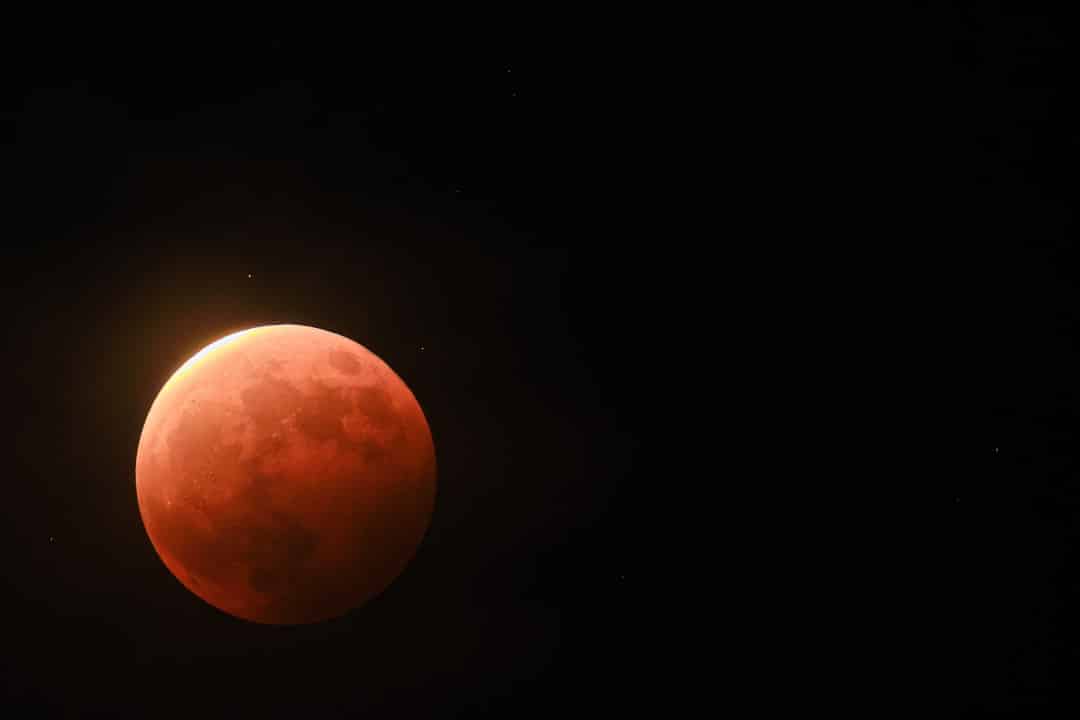
In the early hours of August 28, 2026, the last eclipse of the year was partial lunar and attracted the attention of many. The phenomenon stood out due to the intense darkness on the Moon’s surface, which presented color variations between brown and coppery red, characteristics that made it appear almost like a total lunar eclipse.
This astronomical event, even though it was partial, offered an excellent observation opportunity for all of Brazil, depending on local weather conditions.
The National Observatory was one of those responsible for broadcasting the phenomenon live, allowing a large number of people to follow the details in real time.
Features that made the eclipse appear almost total
According to data from the Starwalk.space platform, the shadow covered more than 96% of the lunar disk, which resulted in a view that was close to a total eclipse.
Despite the reddish color and high coverage, the event does not fit the definition of “Blood Moon”, a term popularly used for total lunar eclipses. This is because a small portion of the Moon remained outside the densest part of the Earth’s shadow, still receiving some direct sunlight, although this difference was imperceptible to the naked eye at the height of the phenomenon.
How the partial lunar eclipse was observed in Brazil
The beginning of the eclipse was recorded at 10:23 pm, when the Moon entered the penumbra, the outermost area of the Earth’s shadow. At this early stage, changes in the natural satellite’s brightness are subtle.
The partial phase, the moment when the darkest shadow began to directly cover the Moon, began at around 11:33 pm. The peak of the event occurred at 1:12 am, when around 96% of the lunar surface was covered. The partial phase was completed at approximately 2:52 am.
Brazil provided an ideal setting for monitoring the eclipse. The Moon remained high in the sky for much of the morning, facilitating observation in different regions of the country.
The explanation for the Moon’s color change during eclipse
The reddish hue observed on the Moon during the eclipse is the result of the interaction of sunlight with the Earth’s atmosphere. As light from the Sun travels to the Moon, it needs to pass through the layer of gases that surrounds our planet.
During this journey, the atmosphere disperses the blue light with greater intensity, allowing the red and orange tones to continue and reach the shadowed region of the Moon. Subsequently, part of this light is reflected by the lunar surface and returns towards Earth.
This same principle is what explains the reddish color of the sky at sunrise and sunset. However, the appearance of the Moon during an eclipse can vary depending on the concentration of dust, smoke, pollution and humidity present in the atmosphere.
In this way, in locations where the sky was clearer, it was possible to have a clearer perception of the phenomenon and appreciate in more detail the copper tones of the natural satellite.





