
Microbes from Earth can survive in shadowed areas of the Moon, NASA reveals

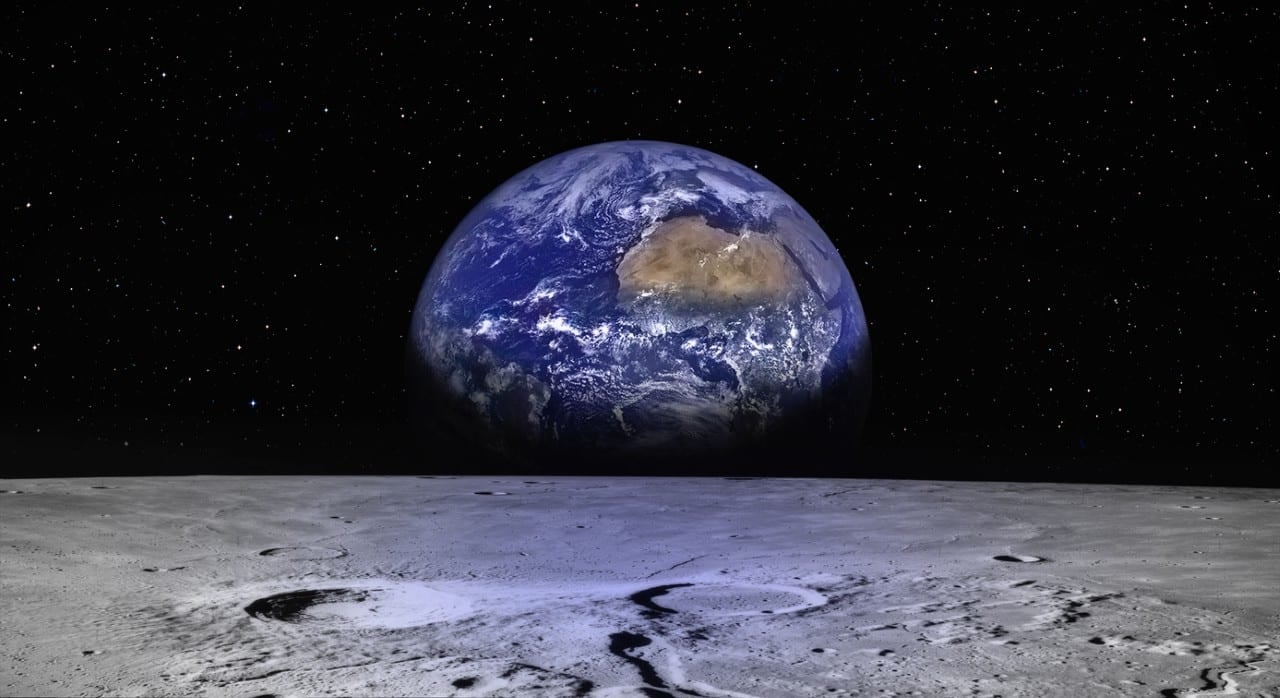
New research indicates that microorganisms carried by human explorers have the ability to survive in shadow zones near the Moon’s south pole. The discovery is from researchers at NASA and the University of Maryland.
Even in a lunar environment marked by extreme temperatures and high ultraviolet (UV) radiation, which make it hostile to life, some terrestrial microorganisms can find temporary shelters. A recent model points out that dark pockets at the Moon’s south pole would allow certain bacteria and fungi to remain for up to a week.
This study, led by NASA and published in the journal Science Advances, gains relevance as human exploration extends to the lunar surface and, in the future, to Mars.
Stefano Bertone, associate research scientist in the Department of Astronomy at the University of Maryland and co-author of the study, expressed surprise at the results. He commented that by creating colorful lunar maps to represent surviving microbe species, the view that ‘nothing can survive on the Moon’ was challenged.
The risks of biological contamination during human missions
The findings reinforce how microorganisms react in different ways to the extreme conditions of the Moon and the importance of their persistence for future space journeys. With the growing human presence on the natural satellite and future trips to Mars, biological material from Earth could make it difficult to distinguish between the original chemistry of the site and the contamination brought by astronauts, compromising the search for life.
Humans continually release microorganisms into their environments. A small portion of skin, the size of a little fingernail, for example, can harbor around a million bacteria. In this way, an astronaut’s footprint could deposit hundreds of millions of live bacteria on the lunar surface. Even with strict sterilization protocols, there is ‘potential for a lot of human contamination of the lunar landscape and, inevitably, the science we do there,’ Bertone explained.
It is essential to understand and plan to mitigate this contamination in all future human missions.
Prabal Saxena, planetary scientist at NASA’s Goddard Space Flight Center and leader of the new study, highlighted the need to understand what previously existed. He said that when looking for signs of life beyond Earth on Mars, it is crucial to ensure that it is not biological material brought by us.
How the Moon’s shadowy areas can protect microorganisms
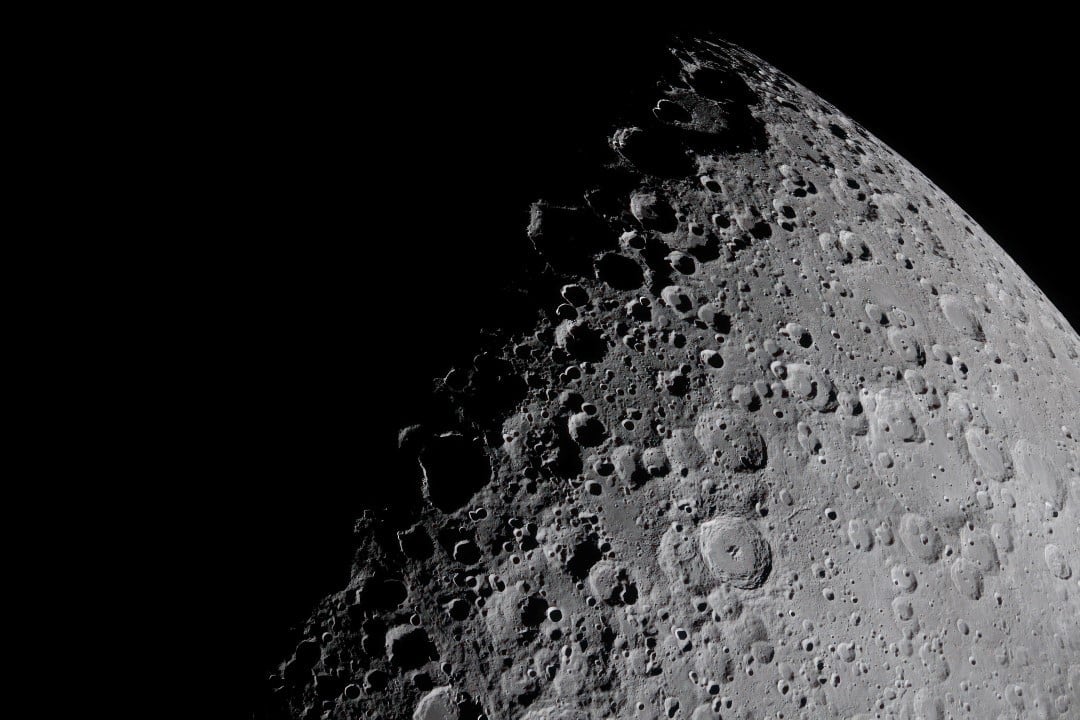
To determine where microbes persist, it is necessary to understand how sunlight falls on the lunar polar terrain. Due to the Moon’s small axial tilt, the Sun remains very low on the horizon near the poles. In this way, modest elevations in the landscape can block sunlight from depressions and lower areas, forming cool shadows that conserve water and decrease exposure to harmful radiation.
Previous studies indicated the unlikelihood of microbial survival in lunar regions already explored by humans, especially near the equator. However, these models did not consider how local topography altered environmental conditions. This omission becomes relevant in the vicinity of the lunar poles, where craters, slopes and other surface features generate extensive areas of shadow, precisely where human exploration will focus in the future.
Bertone explained that the inclusion of ‘hills and craters was crucial to this study’. He asked about the effectiveness of the Moon’s surface topography in protecting certain areas from UV radiation and whether this protection would be sufficient to keep the analyzed organisms alive.
Microbial survival capacity in the polar regions of the Moon
The researchers simulated microorganisms often associated with spaceflight environments or human skin in three regions near the lunar south pole, candidate areas for the future Artemis III mission. They created detailed environmental maps using elevation and temperature measurements taken by instruments aboard NASA’s Lunar Reconnaissance Orbiter, combining that data with models that describe how radiation reaches the lunar surface.
Bertone also employed ray tracing, a technique that tracks the movement of light and can model effects such as reflection, refraction, and soft shadows. He combined this approach with measurements from the Lunar Orbiter Laser Altimeter, which provides precise topographic information including surface brightness, slopes and roughness.
He detailed that it is possible to ‘trace the path of light from the Sun to the Moon, considering the solar position and each irregularity or rock that causes a ray to bounce and change direction before reaching the surface’. Bertone added that even areas called permanently dark regions receive light and, consequently, UV, indirectly. According to him, the entire process is ‘extremely subtle, and this method allows us to consider small details’.
The persistence of some microorganisms for several days on the Moon
The simulations identified ‘survival niches’ of different sizes, where microbes could remain for up to seven days. The Aspergillus fungus stood out for its resistance to UV radiation, with the potential to survive in 15% to 30% of areas that receive some sunlight during the lunar winter.
All microorganisms studied presented sites of possible survival in all three modeled regions. Aspergillus demonstrated the ability to persist for at least seven days in 3% of the mapped terrain, and the five species of microbes could survive in parts of the permanently shadowy regions of De Gerlache Rim Crater, even after accounting for stray UV light.
Persistence, however, does not imply that microbes would be able to develop. Organisms that persist under such conditions would remain in a cryptobiotic state, where growth would only be possible if favorable conditions subsequently emerged. There is currently no evidence that the Moon provides the essential requirements for microbial growth and reproduction, such as liquid water, which generally requires a moderate atmosphere and temperatures.
Still, survival is a prerequisite for growth, which makes microbial persistence an important consideration for both exploration and scientific research, as Bertone stated.
The Moon as a natural laboratory for testing the resistance of microbes
The lunar south pole could also serve as a natural laboratory for researchers to study the limits of microbial survival. Carefully controlled experiments in shaded terrain could reveal how terrestrial organisms react to environmental conditions that are difficult to replicate accurately in laboratories on Earth.
The researchers next plan to develop more detailed lighting models, employ high-resolution topography, and expand experiments with microorganisms. One technique, called ‘shape from shading’, can reconstruct planetary terrain in 3D, including craters and slopes, from 2D photographs, analyzing light intensity, shadows and surface angles. Taken together, these efforts could offer a clearer picture of the persistence of human-associated microorganisms after their arrival on the Moon.
Bertone concluded by stating that ‘when planning human operations for the Moon or other locations, we need to know everything we can about what was left behind’.





