
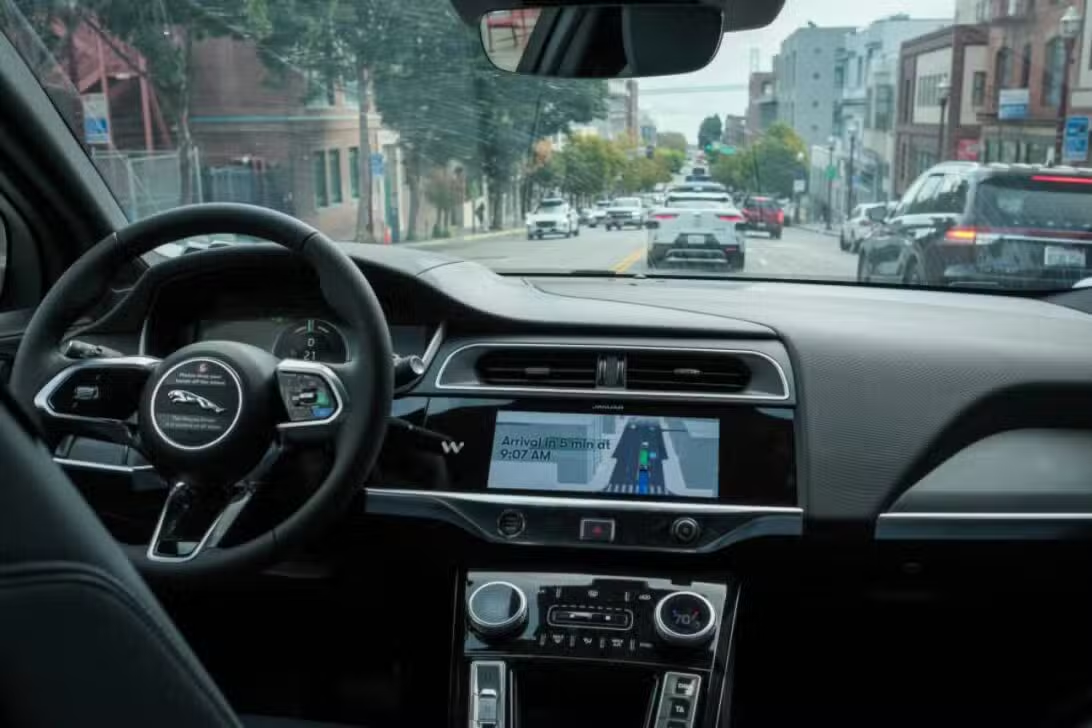
The urban transport landscape in the English capital is about to undergo a profound transformation with the arrival of a new technological fleet. In a decision confirmed on August 6, 2026, Transport for London (TfL) granted long-awaited operating licenses for rental vehicles aimed at autonomous driving. This strategic partnership involves app giant Uber and British artificial intelligence startup Wayve, which will use fully electric Ford Mustang Mach-E models. The movement places the European metropolis in the global race for traffic automation, rivaling cities that are already testing similar systems.
First operational steps and the dynamics of experimental trips
The interest of the British public in the new product exceeded the initial expectations of the companies involved in the mobility project. More than 100,000 residents have already signed up to a waiting list for the chance to take the first experimental routes, scheduled to begin at the end of the European summer. During this inaugural stage, the user experience will be identical to that of a traditional app-requested ride, but with the difference of onboard technology taking over directional control most of the time.

To guarantee the physical integrity of passengers and pedestrians, the initial phase will not dispense with human presence in charge of daily operations. A professional, trained driver will remain behind the wheel throughout the entire journey, acting as a full-time safety supervisor. This professional will be responsible for monitoring the behavior of the software and taking over immediately if the system faces unforeseen situations or situations that are too complex for the algorithms to resolve.
The regulatory breakthrough in the UK comes at a crucial time for the global autonomous vehicle industry. While some American and Asian cities already have driverless commercial fleets, Europe has adopted a more conservative and cautious stance in relation to traffic legislation. The London initiative serves as a real-time laboratory to evaluate how artificial intelligence copes with the region’s dense traffic, narrow streets and often rainy weather, factors that challenge traditional optical sensors.
Technical requirements and adaptations made to electric vehicles
The choice of the Ford Mustang Mach-E as the basis for the fleet was not accidental, as the electric model offers the ideal architecture for the integration of complex hardware. Wayve engineers made substantial modifications to the cars, installing a set of six high-resolution cameras that feed the artificial intelligence system with images of the surroundings. Vehicle safety experts rigorously analyzed these physical changes and certified that the additional equipment does not compromise the original structure of the car or the protection of the occupants.
Even with municipal approval already secured, the transition to a completely driverless business model will require overcoming new bureaucratic obstacles. When companies are able to prove the effectiveness and absolute safety of artificial intelligence on London streets, a new licensing process will begin. Final approval to remove the human supervisor will depend on strict approval from the Driver and Vehicle Standards Agency (DVSA), the national body that regulates road rules across the UK.
The technological implementation schedule will follow steps well defined by local and national regulatory authorities:
- Release of initial licenses for the category of private rental vehicles to operate in the capital.
- Start of trips with selected passengers and mandatory presence of a safety driver at the wheel.
- Massive collection of urban traffic data to improve the machine learning of the developed system.
- Submission of performance reports to DVSA to claim fully independent operation in the future.
Corporate vision on the evolution of urban mobility in Europe
The companies’ leadership sees government authorization as a watershed for the passenger transport industry. Sarah Gates, vice president of global affairs and assurance at Wayve, highlighted that the license represents a historic milestone for local technological innovation. According to the executive, the responsible introduction of this intelligent fleet has the potential to transform urban dynamics, resulting in public roads that are cleaner, quieter and considerably less prone to accidents caused by human inattention. The startup is betting on an artificial intelligence model that learns to drive through observation and continuous experience.
On the travel platform side, the excitement about popular support dictates the pace of the next structural investments. Annie Duvnjak, global director of autonomous mobility operations at Uber, highlighted that the partnership uses technology developed entirely on British soil. The executive classified Londoners’ response to the waiting list as impressive, highlighting a strong pent-up demand for modern transport solutions. Uber’s strategy aims to consolidate its platform as the main ecosystem for deploying robotaxis in large urban centers.
Labor impacts and goals for reducing traffic accidents
The municipal government conditioned approval of the project on strict alignment with policies to preserve street life. Representatives from Transport for London emphasized that any innovation introduced into the road system needs to directly contribute to the city’s road safety target. This ambitious government plan sets 2041 as the deadline for completely eradicating deaths and serious injuries resulting from accidents in the capital. Under current license rules, legal responsibility for any infractions or incidents during trial trips will rest entirely with the qualified driver on board.
In contrast to the enthusiasm of the technology sector, representatives of the working class raised a warning signal about the socioeconomic consequences of automation. Matthew Wright, regional organizer for the GMB union, expressed deep concern about the transport authorities’ decision. The entity, which defends the interests of thousands of app and private taxi drivers in London, argues that the rush to adopt artificial intelligence could destabilize the job market. The union leader demands a broader and more transparent debate on the topic.
The app-based economy represents a significant share of the workforce in the contemporary European metropolis. With the prospect that algorithms could eventually replace human labor in passenger transport, experts in labor economics point to the need for professional retraining programs. The challenge for public authorities will be to balance encouraging companies’ technological innovation with maintaining social stability, ensuring that the transition includes protection measures for professionals who depend on driving for their daily livelihood.