
Discovery in Argentina anticipates the birth of live offspring by 90 million years


Research conducted by experts in Argentine soil and released on August 13, 2026 brought a turnaround to evolutionary biology. The detailed analysis of the remains of a cynodont dating back 236 million years has revealed the most remote evidence ever documented of viviparous reproduction, pushing the emergence of birth of already formed young to almost 95 million years earlier than science calculated.
The researcher from the National Council for Scientific and Technical Research (CONICET), Leandro Gaetano, detailed alongside his team that giving birth to live offspring was a decisive adaptive leap. According to the scientist, this reproductive capacity shaped the trajectory of the so-called modern therians, ensuring the survival and expansion of these animals throughout the ages.
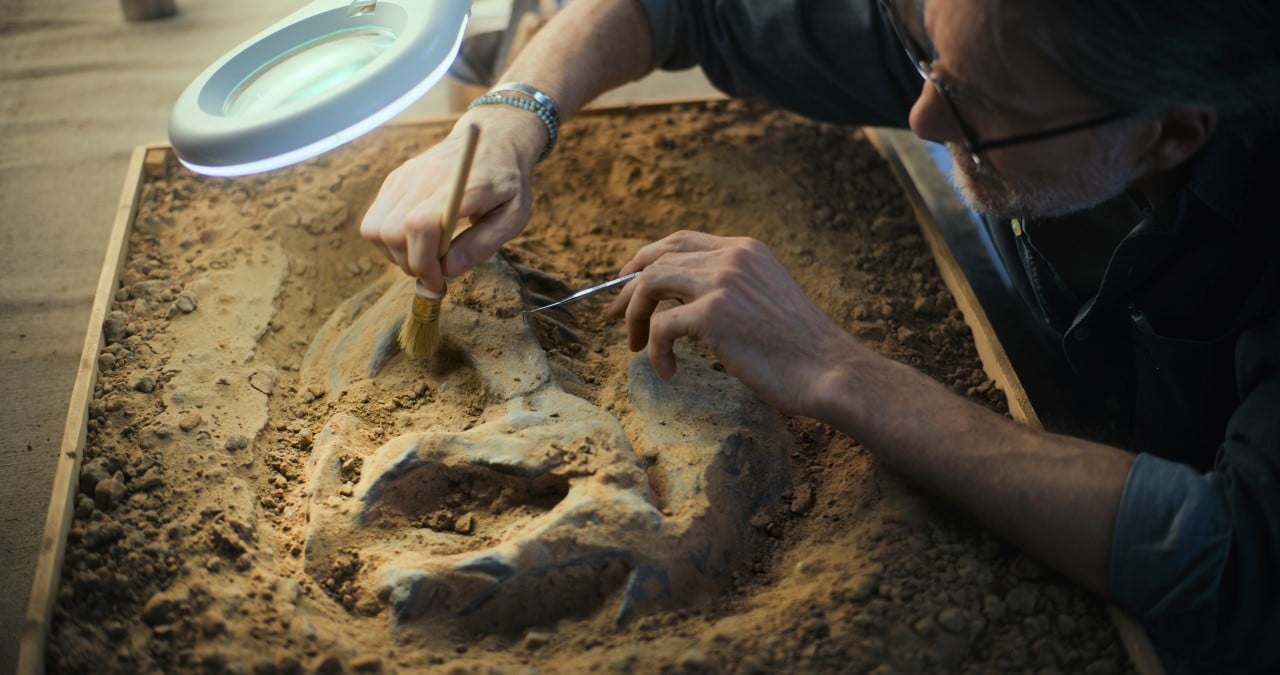
The specialist also pointed out that internal gestation drastically breaks with egg laying. This oviparous model reigned as the most archaic and common biological norm among the first vertebrates that inhabited the planet.
Interestingly, nature has found parallel paths to this biological innovation. The data collected by the academics shows that the ability to give birth to live offspring emerged autonomously in more than a hundred and a half different moments in the vertebrate family tree.
Reproductive characteristics that separate biological groups
Currently, the large group of therians, which ranges from marsupials to placental mammals, shares a highly sophisticated biological package. Elements such as the formation of the placenta, lactation and specific hormonal regulation serve as proof that internal pregnancy is a consolidated inheritance among these beings.
Contrary to this structural process, monotremes present a peculiar dynamic. Animals such as the platypus even develop a primary type of nutrient exchange via reproductive secretions, but maintain the ancestral tradition of laying eggs, distancing themselves from the classic placental model.
To reach these unprecedented conclusions, scholars focused on the remains of Chiniquodon theotonicus, a cynodont — a transitional group known as “dog teeth” — that had dimensions similar to those of a current domestic feline. This small predator roamed the northwestern region of Argentina during the Triassic period, a hostile time that marked the dawn of the first dinosaurs, making the survival strategy of its offspring even more fascinating.
Bone imprints reveal the secrets of fetal development
The big revelation came during microscopic observation of ultra-thin slices of the fossil’s arm and leg bones. The researchers identified an abrupt change in bone microstructure, known in scientific jargon as the “neonatal line”, a physical record of the stress of birth that is common in current fauna, but which had never been detected in a relative so distant in time.
Using the exact dimensions of this growth scar, the team was able to calculate the animal’s mass at the exact moment it came into the world. The numbers indicate that the baby weighed approximately 1.68 kg, a significant value when compared to the almost 12 kg that the species reached in its mature phase.
This weight ratio, where the newborn represents a slice of 10% to 20% of the adult’s total size, perfectly mirrors the biology of placental mammals that we know today. It is a radically different proportion to that seen in birds, reptiles or marsupials, whose offspring reach the external environment in a much smaller and more fragile form.
Statistical comparison with thousands of modern species
To validate the discovery, the research group applied a rigorous statistical model that compared the fossil’s measurements with a vast database of biological data. The crossing of this information placed the ancient inhabitant of Argentina directly in the same reproductive category as placental mammals, after analyzing:
- About 1,900 varieties of contemporary mammals.
- Approximately 2,600 different types of reptiles.
- More than 780 cataloged species of birds.
The leader of the study highlighted the novelty of the finding by stating that the work proves, definitively, that complete pregnancy already operated in the biology of at least one direct precursor of our lineage. Chiniquodon theotonicus thus becomes the proven pioneer of this practice more than two hundred million years ago.
Gaetano complemented the line of reasoning by highlighting the chronological impact of the research. The finding pushes back the evolutionary clock of complex reproduction, adding nearly a hundred million years to the history of viviparity in the mammalian family tree.
New theories about the evolution of animal reproduction
This entire volume of evidence undermines an ancient dogma of paleontology. Until then, the scientific community firmly believed that any cynodont outside the modern mammal umbrella depended on eggs, and that direct birth had been a unique evolutionary event, restricted to the ancestors of placentals and marsupials.
With the breaking of this paradigm, academics designed two viable hypotheses to explain the past. The first suggests that internal gestation emerged in isolation in Chiniquodon theotonicus and, eons later, was repeated in therians. The second proposes that the characteristic was born only once at the base of the lineage, which would transform the platypus’ egg laying into a curious biological setback.
The Argentine scientist made a point of highlighting that the current scenario opens doors for new investigations. For him, the chances that other species from the same period also gave birth to ready-made offspring are extremely high.
This single piece of the fossil puzzle has the power to signal a large-scale change in reproductive behavior. The specialist assesses that the period may have been home to a massive and widespread transition, abandoning the calcareous shells in favor of intrauterine development.
Next steps for South American paleontology
Despite the enthusiasm with the data collected, scientific caution prevails in the team’s statements. The paleontologist recognizes that the absolute validation of this broad theory will depend on future excavations and new skeletons that corroborate the thesis.
In any case, the balance of the expedition already rewrites the textbooks. The group’s irrefutable conclusion is that certain prehistoric creatures already paraded around the Earth with biological machinery surprisingly familiar to that of the animals that dominate the modern world.
All the technical details, graphics and measurements that underlie this paleontological revolution were made available to the global community through an article in the prestigious scientific publication Frontiers in Mammal Science, dated August 13, 2026.





