

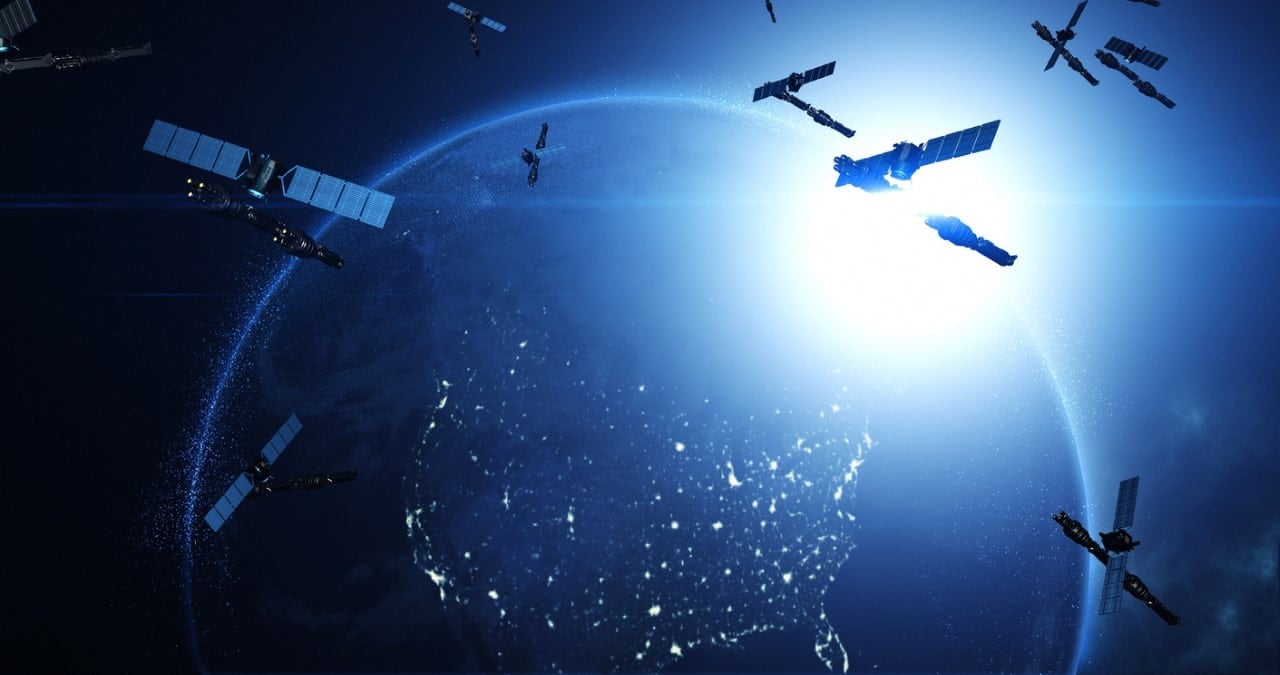
Low Earth orbit, a vital area for various space operations, faces an overcrowding scenario that worries scientists and companies. With more than 34 thousand objects, including satellites and debris, circulating at extreme speeds, the risk of accidental collisions increases significantly, potentially compromising future missions and global space infrastructure.

Heavy traffic in the low orbital region
The region known as low Earth orbit extends approximately 100 to 1,930 kilometers above the surface. Objects at this altitude travel at speeds of up to 28,000 kilometers per hour, completing a trip around the planet in just 90 to 120 minutes. SpaceX, with its Starlink constellation, is one of the main contributors to this density, maintaining more than 10 thousand artifacts in operation. These satellites are designed to perform autonomous diversion maneuvers when the probability of collision exceeds a pre-defined threshold.
The growing danger of space debris
Collisions in space, although still rare, have severe consequences. A notorious incident in 2009 involved an Iridium Communications satellite and decommissioned Russian equipment, generating around 1,800 fragments measuring 10 centimeters or larger. Mark Matney, a planetary scientist with NASA’s orbital debris program, points out that even particles smaller than a softball, which are difficult to track, can cause catastrophic damage due to their high speed. For Jonny Dyer, CEO of Muon Space, the number of objects is not the only risk, but also the possibility of negligent or intentional actions.
Alarming projections for the next decade
The expectation is for an even greater growth in the number of orbital objects. It is estimated that at least 41,000 new satellites will be launched into low orbit between 2026 and 2034, with SpaceX, Amazon and Chinese companies leading the race. Additionally, a new frontier is emerging with orbital data centers, which could bring the total number of satellites up to 1.5 million, according to analyst Dallas Kasaboski of Analysys Mason.
Key points of attention include:
- Constant increase in satellites entering orbit;
- Growth in diversion maneuvers carried out by Starlink;
- Existence of debris too small to be monitored by radar;
- Fragments resulting from possible chain collisions;
- Launch of new constellations and orbital data centers with artificial intelligence.
Understanding what it means to operate at the edge of safety
Experts warn that Earth’s orbit may already be operating at its maximum safe capacity. Jonathan McDowell, an astrophysicist, expressed concern that we are at maximum density for safe operation. SpaceX itself recognizes the problem in its public documents, indicating that the increase in objects increases the probability of accidents and fragmentation events. The challenge is not just to launch more equipment, but to ensure that they coexist without turning orbit into an insurmountable barrier of debris, essential for the future of space exploration and communication.




