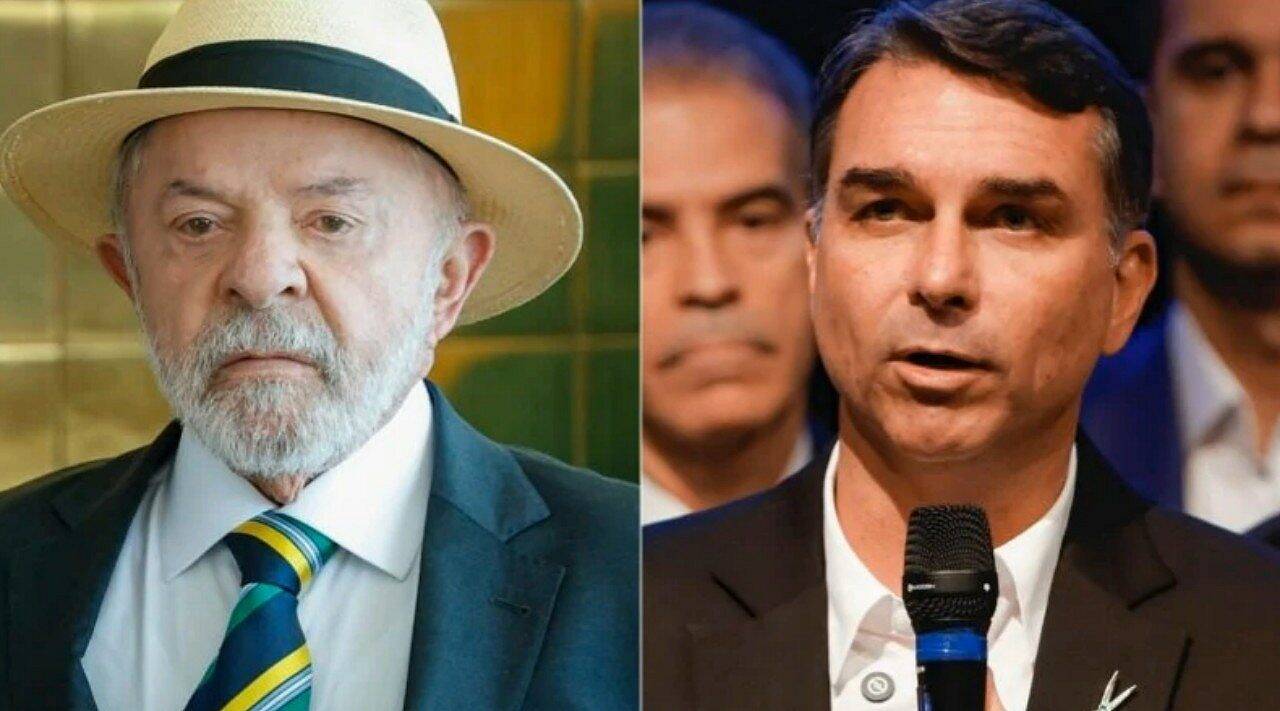
Scenario of the presidential race for 2026
A new survey by the Real Time Big Data institute, released on September 1, 2026, revealed that President Lula (PT) has a higher voting potential than Senator Flávio Bolsonaro (PL), considered his main competitor in the race for the Presidency.
In the scenario without the participation of Pablo Marçal (PRTB), Lula appears in the lead with 38% of voting intentions for the first round, while Flávio Bolsonaro registers 30%.
In a projection that includes the name of Pablo Marçal, the PT candidate maintains the same 38%, and the PL candidate reaches 29% of the electorate’s preferences.
The poll also simulated a possible second round, indicating a technical tie between Lula and Flávio Bolsonaro, with both scoring 44% of the preference.
Details about candidates’ voting potential
The Real Time Big Data study went beyond voting intentions and measured the “votability” of each candidate, that is, the percentage of voters who consider voting for them. For Lula, 30% of those interviewed stated that they would definitely vote, and another 19% indicated that they could vote, resulting in a total voting potential of 49%.
Flávio Bolsonaro, in turn, registered 20% of voters who would definitely vote for him and 24% who could vote, adding up to a potential of 44%.
In the two cases analyzed, half of the participants, or 50%, declared that they would not vote for either candidate.
The research was carried out based on 2,000 telephone interviews, collected between August 27th and 31st. The survey’s margin of error is two percentage points, with a confidence level of 95%, and its registration with the Superior Electoral Court (TSE) is BR-03490/2026.
Understand how CartaCapital’s research aggregator works
The Carta/Colectta Aggregator, a CartaCapital tool, brings together surveys registered with the Electoral Court and establishes a daily updated trend. To do this, it considers elements such as the date of completion, the sample size and the methodology used, aiming to simplify the comparison of results, monitor the evolution of voter preferences and identify trends in the electoral scenario.