
Space rock will cross Earth’s orbit in 2026 below satellites

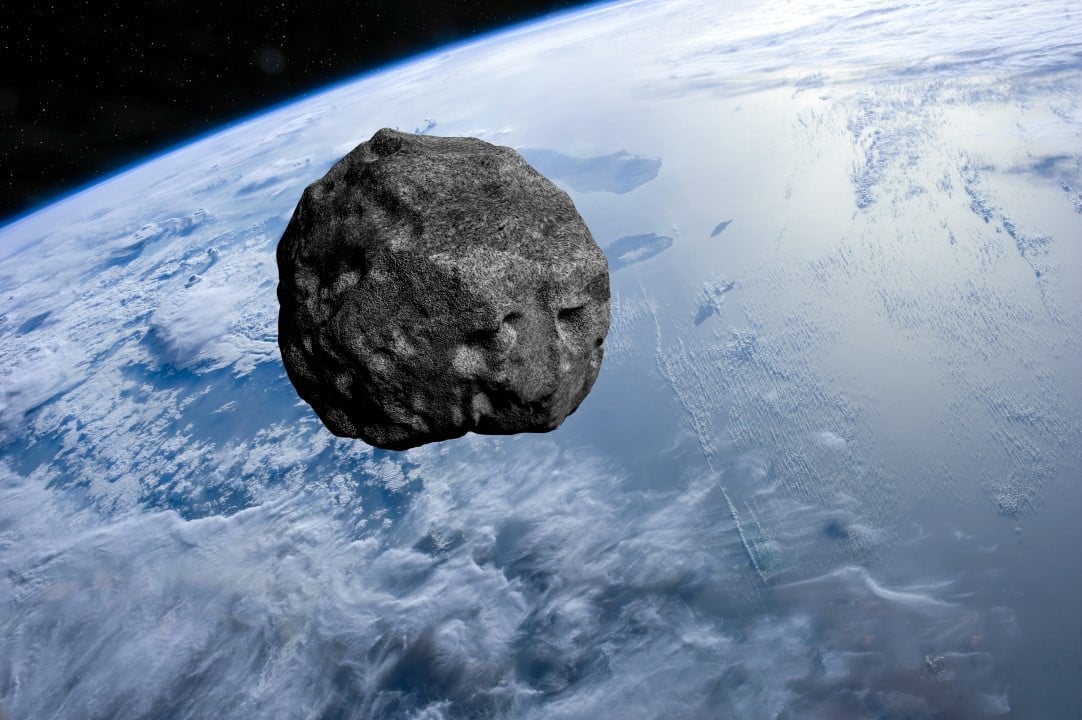
A massive rocky body is scheduled to meet our planet in two years, promising to cross space at a distance shorter than the route of telecommunications equipment. This astronomical phenomenon is already treated as one of the great milestones of the current decade, requiring increased attention from government agencies and researchers in the aerospace sector. Tracking the exact route of these cosmic fragments has become a key piece not only in unraveling the mysteries of the formation of our system, but mainly in structuring protective shields for humanity.
Details about the historic surge predicted for the coming years
Astronomy experts keep their eyes on this unusual visitor who promises an extreme close-up spectacle. The fragment, which is still awaiting an official nomenclature from the scientific community, has been tracked by very high-resolution sensors capable of tracing its millimetric route. Mathematical projections indicate that the rock will pierce the bubble where several artificial communication devices operate, creating an unprecedented scenario for observatories. The alert level for any celestial body is measured precisely by this distance margin, and current coordinates place this event at the top of global priorities.
The Real Risks to In-Orbit Telecommunications Infrastructure
When a piece of space rock invades the artificial equipment zone, the debate about the vulnerability of our technology gains strength. Geostationary devices, responsible for transmitting TV signals and meteorological data, are positioned in the so-called Clarke Belt, exactly 35,786 kilometers from the Equator. Even if current calculations rule out a direct impact against the Earth’s surface, the situation highlights how congested our orbital neighborhood is. Anticipating the intruder’s exact path is the only way to maneuver billion-dollar satellites in time, avoiding communication blackouts and irreparable financial losses.
How ground-based radars form a monitoring shield
Mapping the dark sky has gone from being just a curiosity to becoming a matter of national security for world powers. Complex networks made up of infrared telescopes and radio antennas scan the vacuum of space 24 hours a day in search of so-called Near-Earth Objects. This constant scanning is what provides the data supercomputers need to simulate future routes and calculate impact probabilities decades in advance. Without sharing information between different countries, it would be impossible to maintain an up-to-date catalog and cover all the blind spots in outer space.
History of giant rocks that have kept scientists up at night
The catalog of potential threats houses an extensive list of cosmic boulders that often make close visits to our globe. Analyzing the behavior of each of them serves as a practical laboratory for calibrating lenses and testing route prediction software. Below, we highlight some of the most emblematic cases that helped shape current defense protocols:
- The famous Apophis, with its 340 meters wide, has an appointment scheduled for April 13, 2029, when it will pass a mere 31 thousand kilometers from our soil, becoming visible without the use of binoculars in several parts of the world and serving as a full plate for researchers.
- The giant 2001 FO32, measuring up to 680 meters, crossed our path on March 21, 2021 at a distance of 2 million kilometers, which is equivalent to five times the journey to the Moon, delivering a massive volume of data on its composition.
- The intriguing 2023 DW, a 50-meter block that initially raised a red alert for a possible shock in the year 2046, but which had its risk downgraded to almost zero after weeks of additional observations that refined its trajectory.
Kinetic Impact Technologies Created to Deflect Threats
Looking up and cataloging flying rocks is just the first step in the work of protecting our world. Cutting-edge laboratories already carry out practical defense plans, as was proven in 2022 with the American space agency’s DART mission, which purposely crashed a probe into an asteroid to change its speed and direction in space. This type of practical testing ensures that if radar detects an object on a true collision course, humanity has the tools ready to push it away. The astronomical event expected in two years serves as a reminder that investment in these diversion missions needs to be continuous.
What space dust teaches about the origin of our system
Having a celestial body passing so close to our orbital backyard presents a golden chance for modern astrophysics. Telescopes can analyze the light reflected from the surface of the rock to discover what it is made of, how it rotates around its own axis and whether it has particular moons. This information acts like time capsules, revealing the exact ingredients that were present when planets began to form billions of years ago. Ultimately, each documented flyby makes warning software smarter, ensuring that planet Earth remains a safe haven amid the chaos of the universe.





