
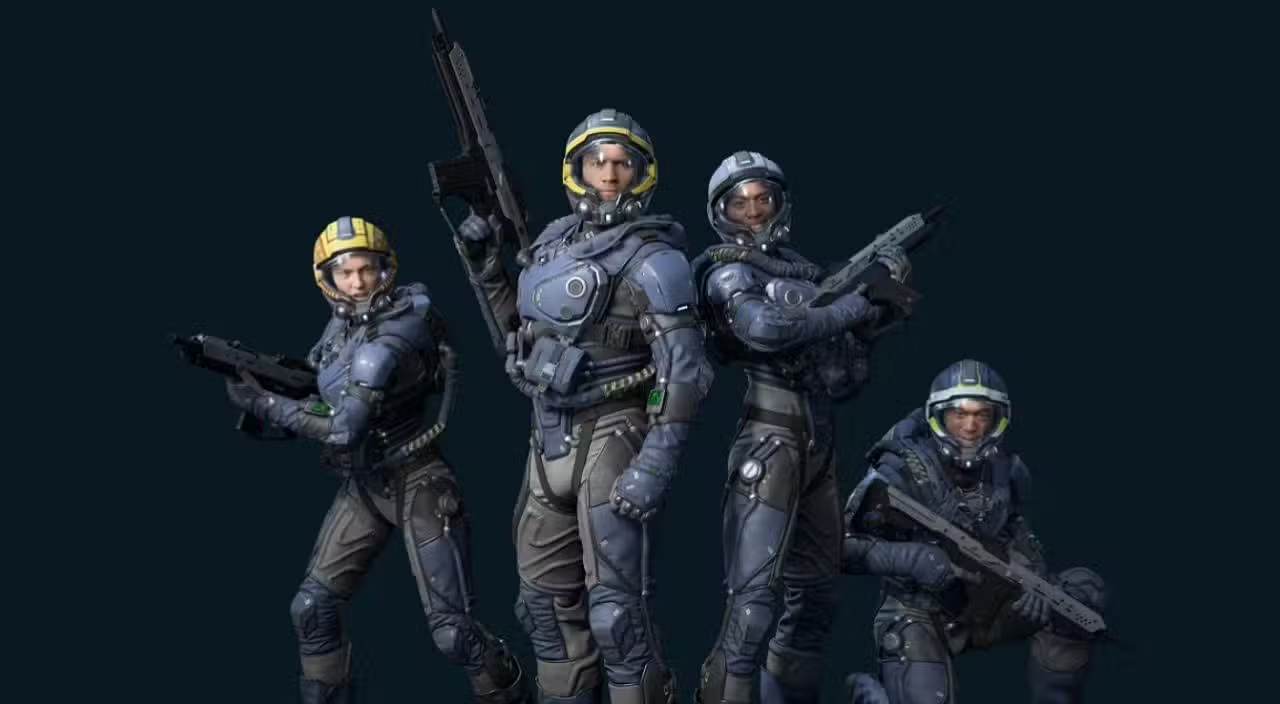
The launch of the game Squadron 42, the long-awaited single-player campaign separate from the Star Citizen MMO universe, has been rescheduled from 2026 to the second quarter of 2027. The information was revealed in a letter from creator Chris Roberts to the project’s supporters.
Chris Roberts, known for creating the Wing Commander series and founder of Cloud Imperium Games, the studio behind both titles, reiterated that, despite sharing the same universe and technology, Star Citizen and Squadron 42 have been distinct products since the company’s restructuring in 2016. The initial forecast, presented at CitizenCon 2024, indicated the launch for the fourth quarter of 2026.
In his statement, Roberts explained that the decision to move the date aims to prevent the Star Citizen campaign from competing directly with the launch of GTA 6, scheduled for November 19th. The reason given is linked to the visibility and coverage strategy, and not to the current stage of development of the game.
CEO’s reasons for avoiding confrontation with GTA 6
Roberts’ main concern lies with the inevitable saturation of media and content creator channels during the month of November. He anticipates that the vast majority of press attention will be focused on Rockstar Games’ launch, which would leave little scope for visibility for any other title.
In his words, Roberts was emphatic: “There is no chance of me launching into the attention grinder of GTA 6.”
Interestingly, there would be no direct platform competition, as GTA 6 will not be released for computers in November. However, even with this distinction, the analysis was that the launch window would be “contaminated” by the repercussion of Rockstar’s title.
In the letter, Roberts also revealed that the choice of the second quarter of 2027 was made after analyzing other options at the beginning of the same year, a period that already includes releases such as Fable, Tomb Raider, God of War Laufey, Metro 2039 and Lords of the Fallen 2. The conclusion was that the selected period provides a more favorable scenario for the debut of your game.
History of long postponements of the Squadron 42 project
Squadron 42 began production in 2014, a year after Cloud Imperium Games established its studios and assembled its team. The original launch date was 2015, but since then, the project has faced several postponements, often attributed to unforeseen technological challenges.
2015 marked the initial target for the announcement, followed by CitizenCon in 2024, where a 2026 launch was promised. More specifically, the work plan indicated the fourth quarter of this year, coinciding with IAE, and now the deadline has been extended to the second quarter of 2027.
Roberts also revealed an internal reason for the delays that diverges from common explanations. According to the letter, the team dedicated to Squadron 42 was frequently reassigned to work on Star Citizen updates, a crucial factor that pushed the individual campaign’s schedule forward.
This scenario came to fruition in 2024, when, after CitizenCon 2023, a large part of the gameplay engineering team dedicated the following year to integrating resources developed for the Squadron 42 campaign directly into Star Citizen, resulting in yet another extension in the calendar.
Although the influence of GTA 6 justifies the recent change from November to the second quarter of 2027, this explanation does not cover the previous eleven years, in which the game remained with little news. The current justification, although valid, appears late in the project’s chronology.
By acknowledging that the Squadron 42 team was constantly directed to solve problems in Star Citizen, Roberts exposed a cause that spans all twelve years of development, an explanation that competitors’ release schedules could never fully cover.
Exclusive trials for selected backers in October
Before the official debut, Cloud Imperium Games will allow a limited group of early backers and long-time community content creators to try out the game. Test sessions are scheduled for October 9th and 10th.
During these test days, the company plans to reveal release details, including a specific date, marking the first time the game will be made available outside of the studio in this format.
Development and operation data disclosed in the letter
The letter also brought data that Cloud Imperium Games rarely shares, offering insight into the current state of projects:
- Peak concurrent players in 2026: 35,890
- Average daily number of players in the first half of the year: 7% increase
- Active players per month: 11% increase
- Technology team: 146 people, 106 of whom are engineers
- Other teams in four studios: 611 people
- Effort split: approximately 50% for each game
A common criticism in the community pointed out that Star Citizen was being developed by a smaller team, while most of the financial resources would be directed to the Squadron 42 campaign. However, the numbers released by the company contradict this perception.
In response to the second criticism, which blamed the graphics engine for the delays, Roberts explained that the Star Engine stopped receiving CryEngine updates in October 2015. Since then, essential components such as the entity system, renderer, physics, audio and networking have been completely rewritten.
With around half of the company’s more than 750 employees dedicated to developing the MMO for several years, the prolonged delay of Squadron 42’s campaign is actually a direct consequence of strategic choices, reiterated with each new Star Citizen update.
Releasing details about the payroll and player base, in a period of intense criticism, is a legitimate and calculated measure. However, none of this data offers a satisfactory answer to the question that supporters have been asking since 2015: when, in fact, they will have the final product in their hands.
Financial comparison: investments from Rockstar Games and CIG
In an attempt to justify the costs of his own project, Roberts’ letter makes a publicly accessible comparison. He argues that Rockstar Games invested more than $2 billion in staff and office infrastructure in the United Kingdom between 2019 and the end of 2025. This data is public, found in the balance sheets of Rockstar Games Ltd, as well as in the records of Cloud Imperium’s British subsidiary.
The point raised by Roberts is that games of this magnitude require financing at this level to come to fruition. He mentions that Cloud Imperium Games surpassed the US$1 billion mark in fundraising at the beginning of 2026, accumulated over thirteen years of continuous fundraising campaign.
The comparison presented by Roberts benefits his argument initially, but creates a dilemma in the second part. Rockstar Games invested twice as much over a period of six years and will deliver its game in November, while CIG took thirteen years to raise half the amount. This suggests that mentioning a competitor’s budget would be more effective if the product itself was already available to the public.
In reality, the central issue behind Squadron 42’s delays was never linked to the release schedules of other games, but rather the recurring practice, over the years, of reallocating part of the campaign team to the development and maintenance of the MMO.
As long as this dynamic persists, the deadline of the second quarter of 2027 has the same weight as the dates promised in 2015, 2016 and 2026.