

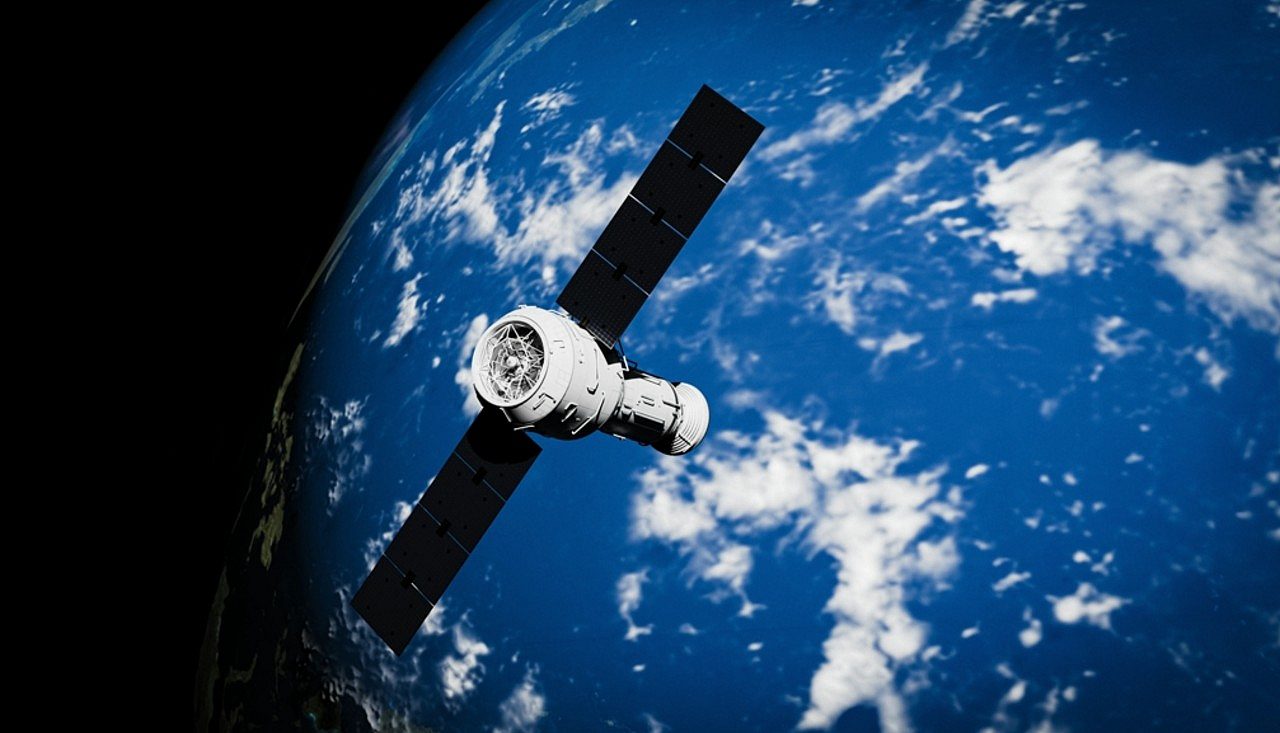
The space around the Earth has reached a critical level of congestion, as experts have warned, with the proliferation of more than 34,000 satellites and fragments in its low orbit. This intense movement of objects, which move at speeds exceeding 27,000 km/h, raises serious concerns about the occurrence of chain collisions and puts the continuity of space missions and the safety of spacecraft at risk. The topic was addressed in an international publication on August 31, 2026.
Accelerated growth of space traffic and the risks generated
The number of objects in orbit has increased dramatically in recent decades. Nearly 70 years after the launch of the first Soviet satellite, low orbit has become a space traffic corridor, littered with satellites and debris. This overpopulation in the region has generated debates about the sustainability of the use of space and the risk of accidents.
Starlink’s contribution to orbital congestion
Elon Musk’s company Space X is one of the main factors behind the unprecedented increase in objects in Earth orbit. With more than 10,000 items connected to its Starlink fleet, used to offer high-speed internet, the company significantly contributes to making this area one of the most congested ever recorded in the history of space exploration.
Defense mechanisms against collisions and impacts already recorded
To mitigate the risk of accidents, many satellites use autonomous systems. Starlink equipment, for example, relies on GPS, diversion software and internal propulsion to automatically change its routes when the probability of collision exceeds an established limit. Despite these mechanisms, collisions are rare, but they have happened and had important consequences:
- Four records:The European Space Agency has cataloged only four significant collisions to date.
- Hazardous debris:Even in isolated cases, these shocks fragment spacecraft, creating thousands of new debris that continue to circulate at high speed, increasing the risk to other objects.
Tiny fragments: an invisible threat in space
While scientists can monitor larger objects, such as those the size of a softball, microscopic debris poses a silent threat. A tiny piece, similar to a flake of paint, is capable of causing severe damage to a satellite due to the extreme speed at which they both move. Mark Matney, a planetary scientist with NASA’s orbital debris program, said that “a piece of debris the size of a paint flake can damage a satellite, as both travel at very high speeds.”
Future expansion ambitions and traffic management challenges
The future indicates an even more dense scenario. Governments and companies, including organizations in the United States and China, plan to launch tens of thousands of new satellites by 2034, with projections of reaching up to 1.5 million units in the distant future. This global ambition intensifies the need for more rigorous and efficient space management.
For Jonathan McDowell, an astrophysicist who maintains a renowned catalog of space objects, the situation is worrying. He stated, “in my opinion, we are operating at the maximum density that can be operated safely.” The main challenge, according to experts such as Jonny Dyer, CEO of Muon Space, is not only in the volume of satellites, but also in coordination between operators and preventing negligence or malicious actions that could lead to more accidents.
Consequences of congestion for space exploration and life on Earth
The growing risk of collisions in space not only threatens operating satellites, but could also slow the advancement of future space exploration. The large amount of debris could make certain areas of orbit impractical for new manned or unmanned missions, limiting humanity’s ability to access and use space. This has direct implications for essential everyday technologies such as global communications, weather monitoring and GPS systems, which depend directly on satellites in orbit. The scientific community warns that inaction could lead to a cascade effect, known as Kessler Syndrome, where each collision generates more debris, which in turn causes new collisions, potentially rendering space useless for centuries. The lack of clear and harmonized regulation for space traffic poses a growing risk to the long-term sustainability of the orbital environment.




