

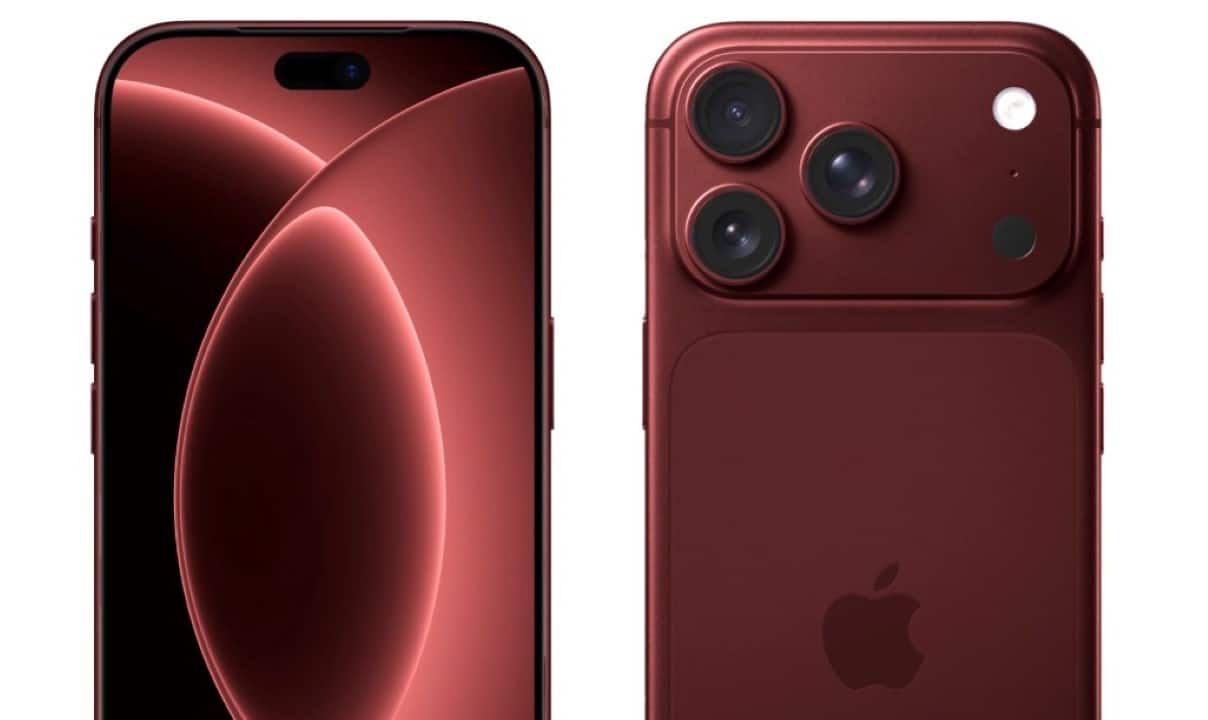
The Cupertino giant is preparing an aesthetic revolution for the month of September with the arrival of the iPhone 18 Pro, a smartphone that promises to redefine the visual standard of the premium category. The highlight of the launch is an unprecedented translucent rear panel, allowing users to view the device’s internal components. To sustain intense use, the manufacturer incorporated a 5,200 mAh power module, a significant leap compared to previous generations that tended to focus on smaller batteries. The external structure maintains the focus on aerospace titanium — a material introduced in the 15 Pro line — combined with extremely high-resistance glass, ensuring protection against daily impacts.
Material engineering guarantees protection against water in the new translucent chassis
Creating a housing that reveals the cell phone’s interior required the formulation of an exclusive glass, subjected to rigorous chemical processes in Asian industrial complexes. This meticulous engineering prevents the finish from suffering from premature yellowing, ensuring that the transparency remains intact even after months of exposure to ultraviolet rays. To join this glass plate to the metal frame without compromising security, engineers developed a high-performance sealing glue, completely blocking the infiltration of liquids and dust. With these implementations, the model achieves the highest resistance certification rates available on the current electronics market.
Exposing the smartphone’s innards transformed the main board and internal circuits into true works of technological art. Apple’s design team had to restructure the entire cable and processor architecture, seeking a perfect symmetry that would please the consumer’s eyes. This drastic change in paradigm highlights the need for manufacturers to seek new ways to stand out in an increasingly saturated and visually repetitive mobile phone market. Industry analysts believe that this raw, industrial aesthetic has strong appeal among technology enthusiasts who value exclusivity and apparent innovation.
Performance leap with 2 nanometer lithography and offline processing
The heart of this new ecosystem is driven by a chip built on unprecedented 2-nanometer lithography, setting a new limit for miniaturization in the semiconductor industry. This microscopic architecture makes it possible to house a monumental number of transistors in a tiny area, which translates into a brutal gain in speed combined with energy savings. The component brings entire sectors dedicated exclusively to artificial intelligence processing directly on the device, optimizing energy expenditure. This way, the user can perform complex machine learning tasks without any dependence on connecting to cloud servers, ensuring greater privacy and speed.
To handle so many simultaneous operations, the RAM memory capacity was increased to 12 GB, an essential volume to keep advanced language models running silently in the background. In practice, this means that functions such as real-time conversation translation and text generation occur instantly, without causing those annoying interface crashes. The transition between social media platforms, image editors and browsers happens extremely fluidly. All this firepower works in perfect harmony with the operating system, intelligently managing battery charge during prolonged gaming sessions with realistic graphics or recording clips in 4K resolution.
Unprecedented thermal solutions prevent internal components from overheating
Fitting such a robust power cell into a compact chassis created a huge thermal puzzle for the development team. The extreme heat generated by cutting-edge processing needed to be expelled quickly, or risk cracking the rear glass or melting vital connections. To overcome this physical obstacle, the manufacturer had to redesign the heat dissipation structure from scratch, introducing conductive materials that until then had never been applied on a large scale in the production of commercial smartphones.
- Sheets of very high-density graphene were strategically positioned to pull heat from the main chip in fractions of a second.
- A vapor chamber mechanism works to spread the temperature evenly throughout the titanium frame.
- The design of the motherboard has undergone geometric changes to facilitate the passage of microscopic air currents between the components.
- Specific metallic compounds surround the power module, shielding the part against temperature spikes during ultra-fast charging.
This state-of-the-art thermal management ensures that the cell phone delivers its maximum processing capacity for hours on end, without suffering sudden drops in performance. Anyone who uses the device to edit heavy videos will not feel that uncomfortable heating in their hands, something common in past generations. In addition to providing tactile comfort, this efficient dissipation is essential to stop the chemical wear of the battery, considerably extending the useful life of the equipment before an eventual need for replacement.
Advances in professional photography and carrier-free global communication
In the photographic department, the main sensor features a sophisticated variable aperture mechanism, capable of physically contracting or expanding the lens to control the entry of light, adapting to the scene. This technology emulates the operation of professional DSLR cameras, delivering a much more authentic and smooth background blur in portraits. During the night, captures gain an impressive level of detail, drastically reducing grain in almost dark environments. The image processor acts within milliseconds to apply precise color corrections, while intelligent algorithms calibrate white balance and remove optical distortions before the photo even appears in the user’s gallery.
The network infrastructure has also taken a giant leap forward, offering improved support for satellite connections, which makes it possible to send short audio and compressed photos even in the middle of the ocean or in dense forests, far from conventional antennas. Following a trend started in the North American market, the device completely abandons the drawer for physical chips in favor of the eSIM, freeing up precious space inside the housing. Assembly lines on the Asian continent are already operating at a fast pace to adjust production robots and guarantee the necessary stock. The company’s strategy involves a simultaneous global debut in dozens of markets, seeking to reaffirm its absolute hegemony in the ultra-luxury telephone segment.




