
September holds a spectacle in the sky with occultations of the Moon and retrograde planets

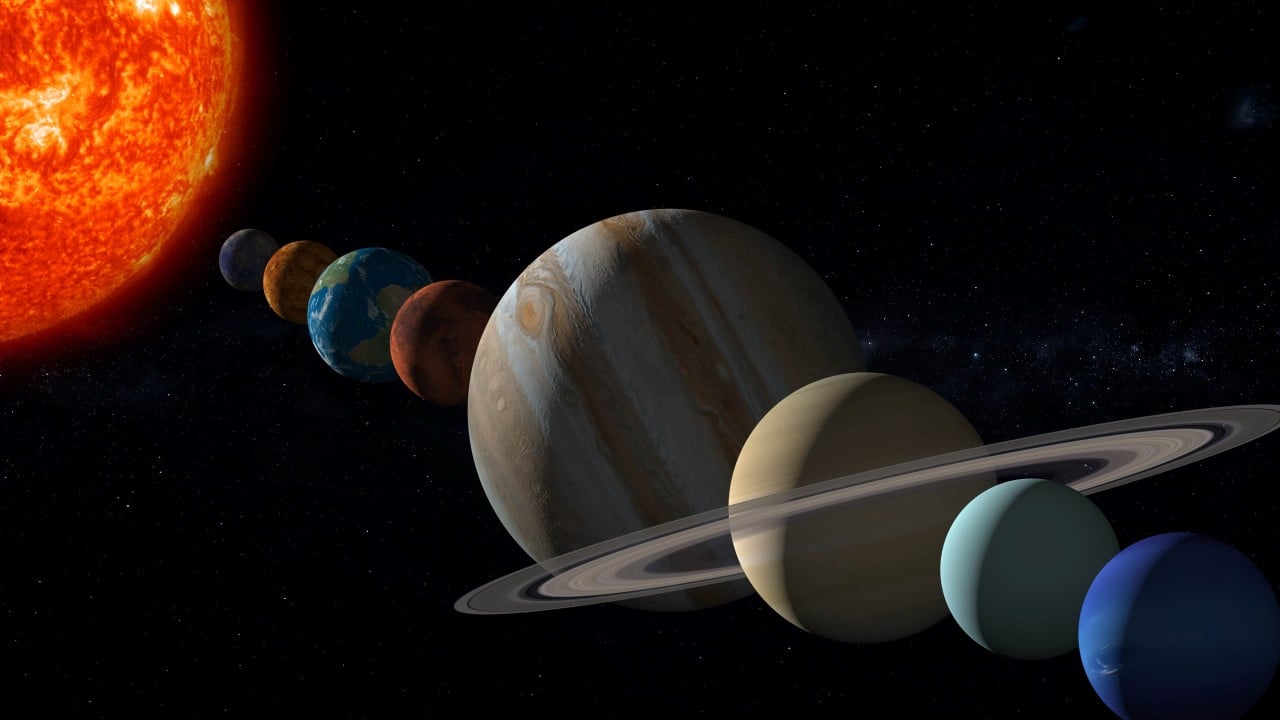
The month of September will bring fascinating celestial events for astronomy enthusiasts. Lunar occultations of planets, the beginning of the retrograde movement of a gas giant and the best time of year to contemplate another planet from Earth will be observed.
The dates and times mentioned are based on the federal capital, Brasília, but may vary slightly depending on the observer’s location. For accurate viewing, it is recommended to use specialized applications such as Star Walk, Stellarium or SkySafari, which adapt the positions of the stars to the geographic point.
Moon occults Jupiter in phenomenon visible in part of the world on September 8
The Moon’s passage in front of Jupiter will constitute a lunar occultation, popularly referred to as a type of “eclipse”. This spectacle will be noticeable in specific regions, including the United States, Canada, Greenland and eastern Russia. Due to different Earth observation perspectives, visibility will not be universal. However, in areas like Brazil, it will be possible to follow an astronomical conjunction, with both celestial bodies appearing very close in the sky.

Uranus begins retrograde movement on September 10th
On September 10, Uranus will begin a period in which its usual rotation towards the east will be momentarily reversed towards the west, a phenomenon popularly known as “retrograde movement”. Astronomy experts, however, prefer the term retrograde “loop,” describing the apparent curve that the planet traces across the sky during this period.
A sequence of images, captured in 2018 at intervals of 5 to 9 days between the end of April and the beginning of November, illustrated the retrograde path of Mars, revealing the “loop” shape that these celestial bodies exhibit during such movement.
According to information from astronomical guidance guides, the gas giant will begin its reversal of direction at 4:28 pm, considering Brasília time. The planet will return to its conventional trajectory on February 8, 2027.
Moon approaches Venus on September 14 for another occultation
In a similar phenomenon, the Moon will make an apparent “eclipse” of Venus, in a lunar occultation that will be seen in portions of Asia, Africa, Europe and western Russia. This restricted geographic visibility occurs due to the terrestrial observation perspective. In Brazil, observers will, however, be able to witness an astronomical conjunction, with both celestial bodies visible in close proximity in the night sky.
Equinox marks change of seasons on September 22
The equinox represents an astronomical event where the sun’s rays fall directly on the Equator. This condition ensures that both hemispheres of the planet receive an equivalent distribution of sunlight, resulting in days and nights of almost identical length globally.
This annual phenomenon manifests itself on two occasions: in March, marking the beginning of spring in the Northern Hemisphere and autumn in the Southern Hemisphere; and again in September, when the Northern Hemisphere begins autumn, while the Southern Hemisphere celebrates the arrival of spring.
A conceptual representation shows the equinox, illustrating the annual occurrence of this event on two dates, when the length of day and night are almost equal.
Neptune reaches its best visibility on September 25th
On September 25, Neptune will reach its point of greatest annual brightness and visibility. Despite its vast distance from Earth, which makes it imperceptible to the naked eye, this period presents itself as the ideal opportunity to observe it with the help of a telescope or astronomical binoculars.
The Jupiter Icy Moons Explorer (Juice) probe, developed by the European Space Agency (ESA), will fly over Earth sometime in September. This maneuver aims to adjust its trajectory and optimize the conditions to continue its journey through the Solar System. Such a procedure is crucial, integrating a series of gravitational assists designed to propel the spacecraft towards Jupiter, minimizing fuel consumption.
After this initial contact, the Juice probe will return close to Earth in January 2029, for a final flyby. Only after that will it continue its journey towards the gas giant, expected to arrive at Jupiter in July 2031.





