
Spiteful? Crows memorize human faces and warn the flock for years

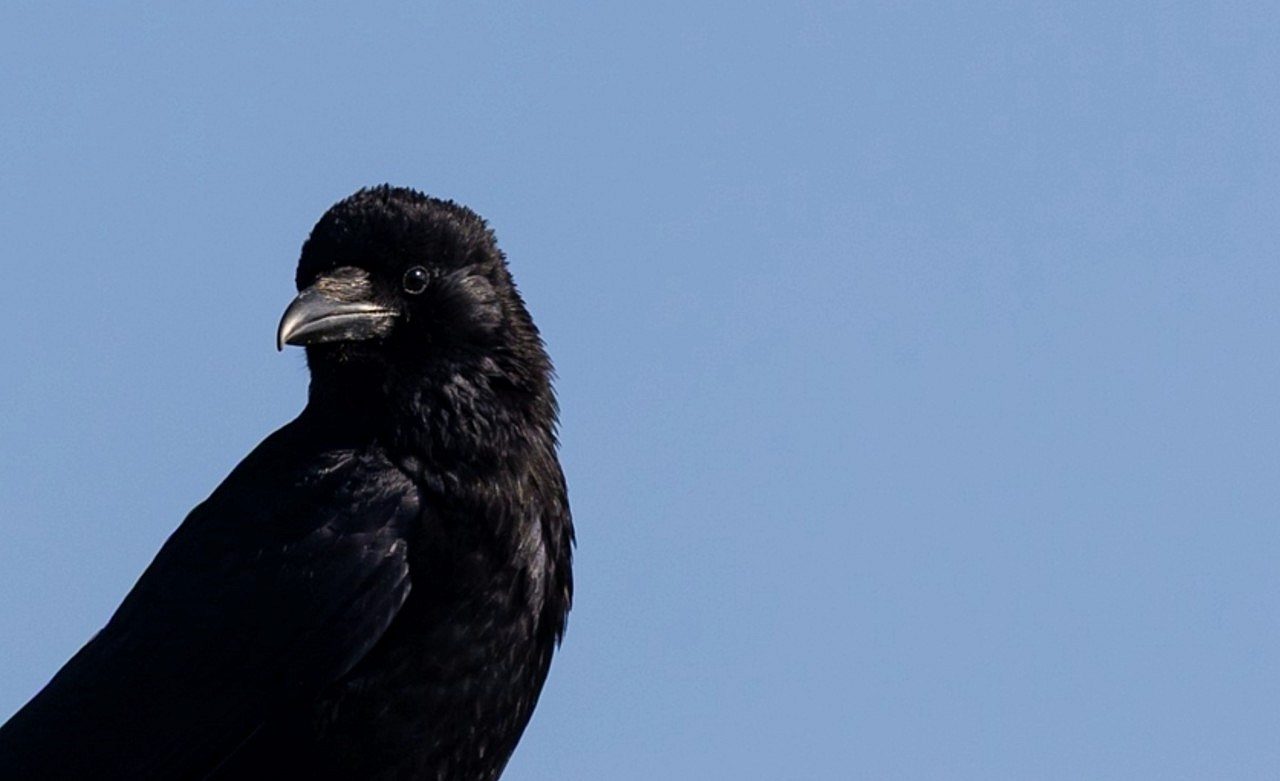
Research revealed that crows of the speciesCorvus brachyrhynchosThey are able to memorize faces of individuals associated with threats and maintain this hostility for years. The study, conducted by the University of Washington in the United States, used masks to simulate the capture and release of birds, proving their lasting recognition capacity.
The most surprising aspect of the investigation was the discovery that never-captured crows expressed the same hostility towards ‘danger’ masks. This behavior demonstrates the remarkable ability of these birds to transmit information about ‘threatening faces’ throughout the flock.
Scientists use masks in experiment to simulate threat
The experiment was carried out at five sites near Seattle, in the United States, under the leadership of biologist John Marzluff and his team at the University of Washington. In each selected area, a total of seven to 15 crows were captured using nets appropriate for the research.
After capture, the birds were marked with an identification ring on the leg and immediately released. During the process, the scientists wore a rubber mask, designated as ‘dangerous’. In different situations, researchers moved through the same area with a different mask, considered ‘neutral’, without taking captures. Initially, the crows’ reaction to both masks was minimal.
However, the birds’ behavior has changed drastically. They began to emit warning shouts and fly low to anyone wearing the ‘dangerous’ mask, regardless of the individual’s clothing, gender or mode of movement.
The ‘neutral’ mask, in turn, continued to be ignored by the crows, as well as researchers who did not use any type of mask. The complete research findings were disclosed in two scientific articles by the same team, published in the journals Animal Behavior in 2010 and Proceedings of the Royal Society B in 2012.
Understand other discoveries about the intelligence of crows
- Ability of crows to imagine solutions and anticipate events, similar to primates
- Five notable and unusual facts about crow behavior
- Reasons why crows are considered the most intelligent after humans
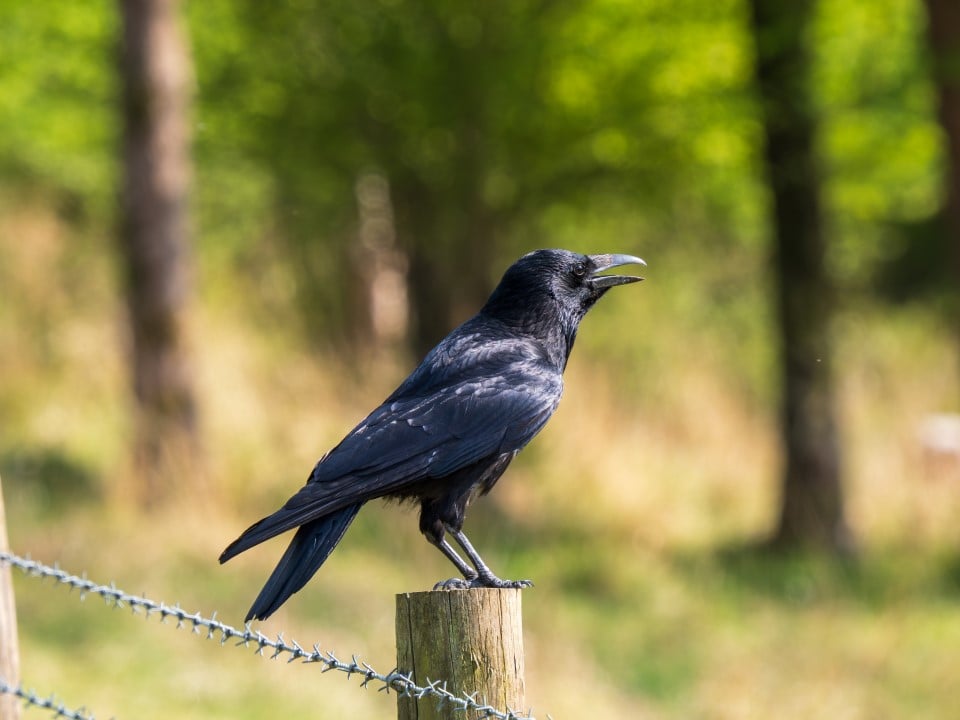
Unraveling alert transmission among crows
The second phase of the research delved deeper into understanding how the alert propagates within the crow community, identifying two main mechanisms of information transmission.
The first method observed is vertical transmission: puppies that had never witnessed a capture reacted to the danger mask, indicating that they were instructed by their parents. The second method is horizontal transmission, which occurs between crows of the same generation.
When a crow is captured, other individuals in the neighborhood approach, attracted by the species’ typical distress calls. Even without direct physical contact, these neighbors associate the entire event, including the image of the attacker, with imminent danger.
There is a crucial distinction in learning between groups. Crows that have been directly captured demonstrate a much more accurate ability to differentiate the ‘dangerous’ mask from the ‘neutral’ mask compared to those that have learned just by observing the behavior of others.
It is essential to clarify that this is not a literal ‘conversation’ between the birds. The learning process occurs because a crow’s alarm behavior serves as a signal to neighbors, a communication mechanism that has been documented in several other animal species.
The persistence of memory and resentment for years and generations
In the initial investigation, researchers found that facial recognition lasted for at least 2.7 years after a single capture experience. Subsequent reports from the same team indicate that this effect may be even more prolonged.
Years after the study, Marzluff himself, on one occasion, walked around the university campus wearing the ‘dangerous’ mask. He was harassed by 47 of the 53 crows found, a number significantly higher than the total number of birds initially captured in the experiment.
This observation suggests that information about threats is preserved and transmitted by the group over time, even with the renewal of its generations. The practical implication for anyone who interacts with crows is clear: disturbing just one bird can result in lasting hostility from the entire flock, even affecting those who never had direct contact with the original incident.





