
Rare total solar eclipse will bring record darkness in 2027

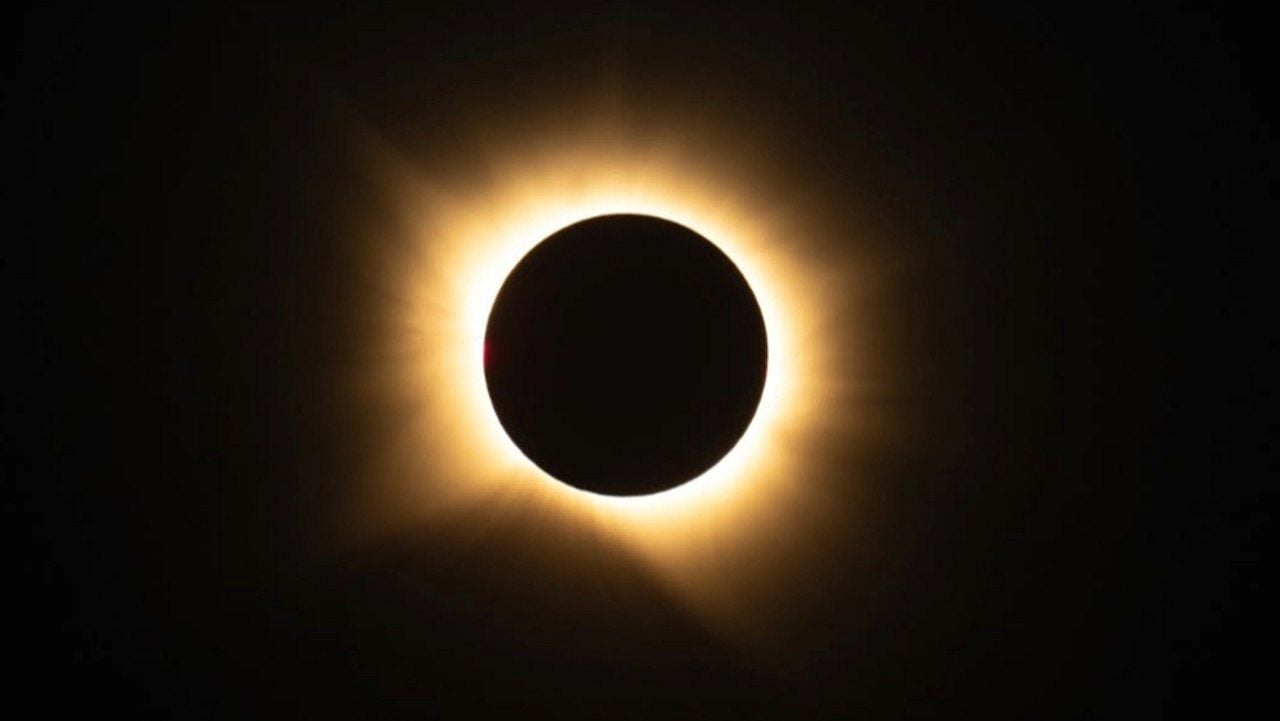
A total solar eclipse will extinguish daylight across a 258-kilometer-wide corridor between southern Spain and Somalia on August 2, 2027. Calculations published by Nasa demonstrate that the Moon will completely obstruct the Sun for up to 6 minutes and 23 seconds along this equatorial pathway, establishing the longest duration of midday terrestrial darkness recorded anywhere on dry land since 1991.
Orbital alignment stretches the duration of the celestial shadow
Orbital positioning drives the timing. The Moon will approach perigee on the date of the event, which places it closest to Earth and increases its apparent disk size. Earth will simultaneously sit near aphelion, resting further from the Sun and shrinking the apparent solar diameter.
This orbital geometry lengthens the shadow cast by the Moon and slows its travel across equatorial ground until a similar alignment occurs in 2114.
Path of totality spans the Atlantic and North African territory
The lunar umbra begins over the Atlantic Ocean before crossing the Strait of Gibraltar into southern Spain. From there, the trajectory cuts across Morocco, Algeria, Tunisia, and Libya before entering Egypt.
- Starting point: Atlantic Ocean
- Transit corridor: Strait of Gibraltar and southern Spain
- North African path: Morocco, Algeria, Tunisia, and Libya
- Maximum duration point: Surroundings of Luxor, Egypt
Luxor marks the center of peak totality near ancient monuments
Darkness will reach its longest terrestrial span near the Nile River in the Luxor region. The surrounding desert houses prominent archaeological monuments and benefits from August cloud cover that historically remains below 10%. Astronomers cite these clear meteorological conditions as an ideal vantage point.
Travelers have already reserved more than 90% of city accommodations for the date.
Oxford astrophysicist highlights visual adaptation to prolonged totality
University of Oxford astrophysics professor Roger Davies outlined the scientific value of this extended event. Davies noted that because 6 minutes and 23 seconds allows human eyes to adapt to darkness, observers can expect to see significantly more stars and planets during totality.
South American observers must rely on online broadcasts
No Brazilian city falls within the path of totality or the zone of partial visibility. Anyone following the eclipse from South America must rely on digital coverage. Nasa and Observatório Nacional plan to provide digital transmissions throughout the passage.
A total solar eclipse of comparable magnitude will not reach Brazil until August 12, 2045, when totality crosses the northern and northeastern regions of the country.





