
China selects eight candidate landing sites for Tianwen-3

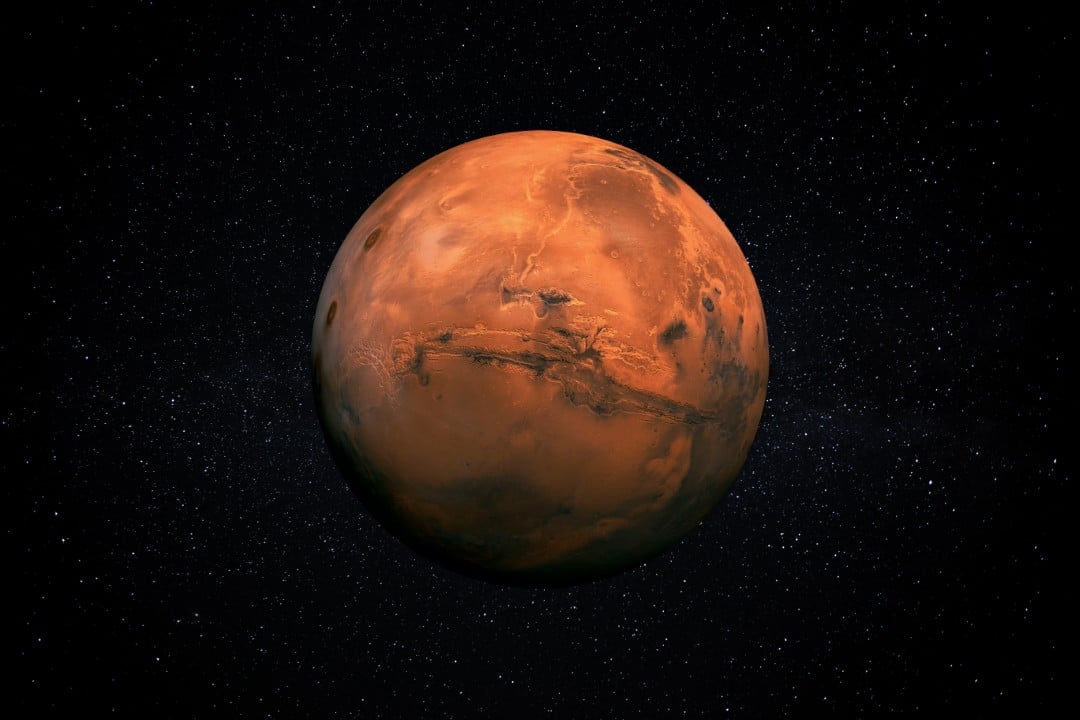
Chinese aerospace authorities reduced the list of potential touchdown areas for the Tianwen-3 Mars sample return mission down to eight locations on 3 September 2026. The move brings the country closer to pinpointing ground capable of preserving ancient signs of habitability on the red planet.
Chief mission scientist Hou Zengqian confirmed that engineers plan to finalize the ultimate landing target before the end of 2026, coordinating ground selection with prototype testing designed for a late 2028 departure.
The chosen coordinates will directly dictate which Martian geological strata the mission can access. That selection decides what physical materials return to laboratories and governs how effectively researchers can study whether the planet ever maintained biological life.
Scientific parameters narrow the list of Martian landing spots
Hou Zengqian announced the tactical reduction during the Tiandu International Deep Space Exploration Conference in Hefei, located in Anhui province, on 3 September 2026.
The chief scientist characterized the ground selection as an exacting technical obstacle rather than a routine landing exercise. Mission leaders prioritize chemical preservation potential over mere landing convenience.
“Site selection is the primary threshold for determining the scientific value of returned materials,” Hou stated on 3 September 2026. “We evaluated geological age, hydrologic history, past habitability, and biosignature preservation capacity to isolate eight candidate areas that maximize research quality.”
Officials kept the names secret.
The current selection follows a rigorous vetting operation that initially examined 86 candidate locations across diverse Martian terrains. Researchers eliminated dozens of formations that failed preservation criteria.
Specialists targeted regions where environmental transitions deposited durable chemical markers millions of centuries ago.
Terrain bearing clay deposits represents the highest scientific priority for the program. These specific mineral structures shield ancient organic compounds and microscopic traces from chemical destruction.
Flight controllers must continually align scientific ambitions with physical navigation realities.
A location might hold exceptional rock layers while presenting excessive operational hazards. Steep slopes or erratic surface winds can instantly disqualify a scientifically rich area.
Tianwen-3 faces stricter mechanical requirements than standard exploration rovers. The vehicle must perform complex maneuvers long after its arrival.
The spacecraft must successfully execute a controlled descent onto the Martian soil, gather carefully designated core samples from the surrounding ground, launch an ascent vehicle carrying the container into orbit, and finally transfer that payload to an awaiting return module for the return voyage to Earth.
Every single step remains crucial.
Three primary geographical regions defined the earlier search
Chinese specialists previously confined their primary search parameters to Amazonis Planitia, Chryse Planitia, and Utopia Planitia. Utopia Planitia already holds operational importance for the national planetary program.
The Zhurong rover landed in Utopia Planitia during the Tianwen-1 deployment in 2021. Planners picked all three lowlands due to balanced scientific profiles and physical characteristics that assist spacecraft deceleration.
Elevation requirements restrict candidate sites to zones deep below the mean Martian surface altitude. Thicker atmospheric layers at lower elevations generate vital aerodynamic friction that stabilizes descending hardware.
This altitude restriction removes numerous elevated scientific targets from real consideration.
Specialists subsequently searched inside viable low-elevation regions for ancient sedimentary formations. They focused on valleys and impact structures showing documented hydrological records.
Top candidate locations identified within the zones included Ma’adim Vallis, McLaughlin Crater, and Oxia Planum. Each zone exposes distinct stratigraphy from the early developmental eras of Mars.
Oxia Planum also represents the destination for the European Space Agency rover Rosalind Franklin, planned for arrival in 2028. Distinct space programs could therefore cross-reference findings from the same regional environment.
Tianwen-3 expands that scientific value by returning intact Martian dirt directly to terrestrial labs.
Subsurface drilling system targets preserved organic material
The investigation centers on confirming whether Mars hosted microbial organisms during its wetter phases. Ancient Martian conditions featured thick atmosphere shields and liquid surface water before drying out.
Evidence shows Mars possessed an active magnetic field and abundant water systems billions of years ago. Hou noted that Earth, Mars, and Venus developed as planetary triplets 3.5 billion years ago before climate changes altered their surfaces.
Tianwen-3 seeks to uncover why Mars lost its protective envelope. Tracking potential biological signatures dictates both vehicle architecture and coordinates selection.
Tianwen-3 will use a drone with a range of a few hundred metres to supplement samples collected by the lander's scoop and drill. https://t.co/7pqWqZi4wX pic.twitter.com/Fh7yAftNvS
— Andrew Jones (@AJ_FI) March 12, 2026
The lander incorporates a mechanical drill designed to penetrate two meters into the regolith.
That depth serves science. Deep materials avoid surface solar damage.
Topsoil remains exposed to severe solar radiation and cosmic weathering that eliminate biological markers over millennia. Deep drilling allows the hardware to retrieve subsurface material protected from modern atmospheric breakdown.
The system pairs drilling equipment with an autonomous flight drone for sample gathering across peripheral zones. Combining stationary extraction with mobile collection provides researchers with diverse geologic specimens.
Prototype testing begins ahead of planned dual-rocket departure
Engineering teams in China simultaneously moved the mission into the prototype assembly stage while geologists evaluated coordinates.
Development transitioned from theoretical blueprints into tangible equipment intended for spaceflight. The operational plan relies on two Long March 5 launch vehicles scheduled for blastoff in late 2028.
One Long March 5 rocket will lift the descent and ascent craft, while the second carries the orbiter and Earth return apparatus.
The touchdown unit will collect subsurface and surface cores shortly after reaching the surface. Robotic components will package the payload directly into the ascent vehicle.
The ascent module will lift off from Martian soil to dock with the orbiter awaiting overhead. China plans to deliver at least 500 grams of pristine Martian material back to Earth in 2031.
Every operational transition between surface operations and the Earthward voyage hinges entirely on the environmental layout of the chosen landing coordinates.





