
Heel-first walking enabled early human travel despite forces

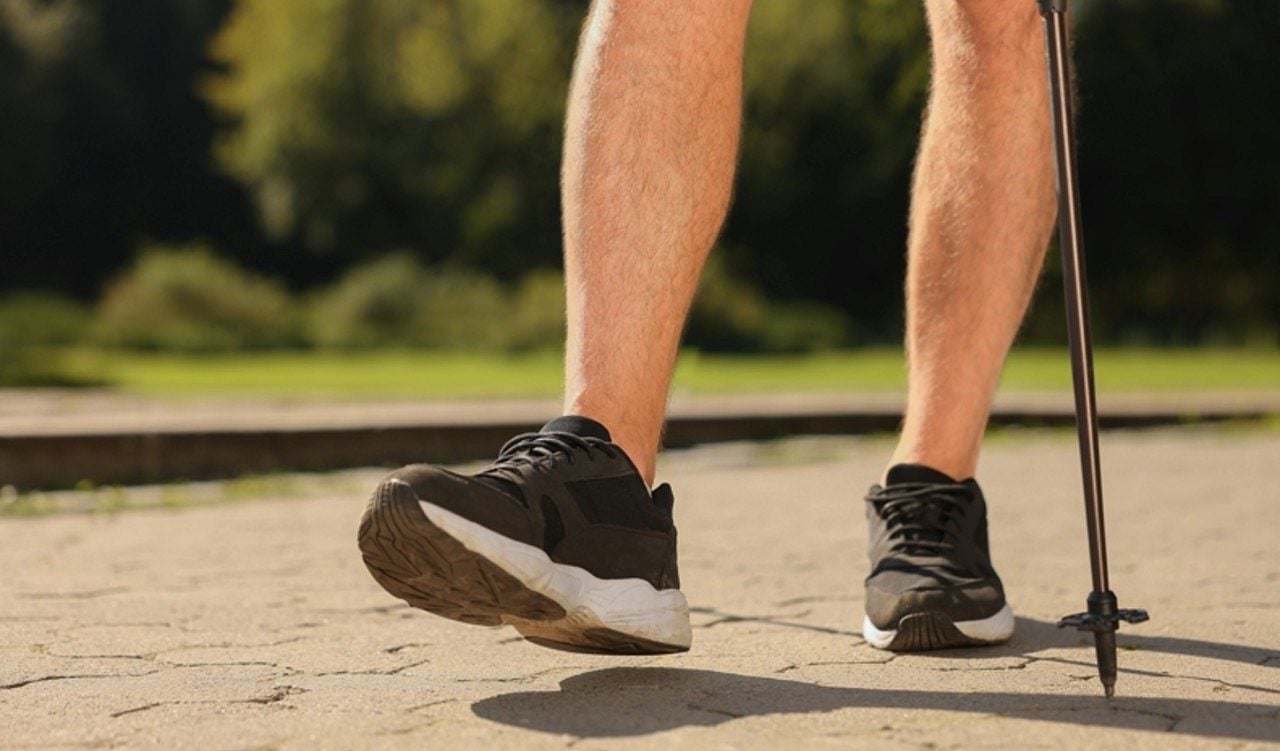
Scientists at Penn State revealed on September 8 that the human habit of striking the ground heel first allowed early ancestors to travel longer distances with greater efficiency, even though it subjected joints to intense physical stress. Humans walk heel first.
The investigation, published in the Proceedings of the National Academy of Sciences, demonstrates that this mechanical trait shaped early hunting and foraging methods as populations expanded across diverse continents.
Past anatomical records suggested that our lineage shared this gait with related primates such as chimpanzees. To test the hypothesis, investigators used high-speed video systems alongside a ground runway fitted with force-measuring plates.
Differences in foot placement between species
Chimpanzees landed predominantly on the sides or balls of their feet rather than their heels when walking on two limbs.
This heel-down movement pattern cuts human energy consumption by 26% to 41% compared to landing on the ball of the foot. Larger skeletal structures developed later to support those loads.
“When people think about what makes human walking unique, they talk about upright walking our backs are straight and our legs are extended,” said study author Nicholas Holowka, assistant professor of anthropology at Penn State. He explained that landing on the heel is a distinctive trait that had been underappreciated. Holowka affirmed that the project offers the most rigorous direct comparison with chimpanzees to date.
Metabolic gains paired with physical strain
Early hominins moved with less uniformity and frequently landed on the forward parts of their feet, which restricted how far groups could roam. Holowka stated that this ancestral locomotion lacked the efficiency found in modern individuals.
Heel strikes enable a smooth transition from back to front across the sole, although the sudden contact transfers severe loads upward through the leg skeleton.
“Imagine you are trying to sneak across a creaky wooden floor,” said study co-author Nathan Thompson, an associate professor at the New York Institute of Technology College of Osteopathic Medicine. “You tend to walk on the balls of your feet, because this reduces the rate of loading on the floor and creates less creaking. It’s a softer way to walk.”
Repeated high impacts risked injury, which drove structural changes across lower limbs.
“It seems like humans needed to evolve anatomical adaptations thicker heel bones and bigger knee and ankle joints—to cope with these high forces,” Holowka said. The researcher noted that these traits supported long daily foraging routes.
Laboratory measurements of primate locomotion
The team recorded three male chimpanzees moving bipedally and quadrupedally along an 11-meter track at Stony Brook University, while also analyzing previous walking datasets taken from three other subjects as well as records encompassing an additional 15 animals from earlier studies to establish an exhaustive kinematic profile. These trials relied on high-resolution cameras to capture precise foot contact angles.
At the University at Buffalo, researchers gathered 12 human volunteers for comparative trials. Nine barefoot participants navigated a 7.6-meter runway fitted with force plates and reflective markers.
Volunteers alternated between their customary gait and a midfoot chimpanzee strike landing behind the outer toes.
Participants also walked on treadmills while wearing respirometry gear to track oxygen intake and carbon dioxide output. These metrics determined exact energy use.

Angles and impact rates during contact
Chimpanzees displayed varied foot strikes and used fewer heel contacts during upright bipedal motion than during four-legged movement. The animals shifted technique regularly.
“It seems that when walking on two legs, chimpanzees prefer the ‘softer’ way to land on their feet,” Thompson said.
Human participants landed on their heels on every recorded step, keeping a uniform landing angle throughout the tests. Chimpanzees produced foot-strike angle ranges between 2.4 and 8.6 times wider.
Striking heel first raised impact loading rates up to 138% in bipedal chimpanzees and up to 162% in human subjects. Despite that collision penalty, the heel strike reduced energy use by 26% to 41% in humans. The savings lowered the physical effort required for travel.
How modern pavements challenge ancient anatomy
“We humans have evolved to use this high-impact walking style in a way that is safe and natural for us,” Holowka said. “The novel environments that we currently live in, with their hard, paved surfaces, might upset the evolutionary balance in some ways. It’s something that we’d be interested in looking at in future research. Still, walking a lot is a very healthy exercise and, although high impact, our bodies evolved to cope with it, so we shouldn’t avoid it.”
Penn State doctoral researchers Zacchariah Apolito and Kevin Palmisano assisted in the study along with Matthew O’Neill from Midwestern University, Vincent Bhandal, Otto Lam, and Brigitte Demes from the Renaissance School of Medicine at Stony Brook University, Caleb Massimi from the Icahn School of Medicine at Mount Sinai, and Steven Worthington from Harvard University.





