
Hubble and Webb locate hidden black hole in Omega Centauri


Astronomers identified the first stellar-mass black hole inside the Omega Centauri cluster on July 13, 2026, combining historical observations from the Hubble Space Telescope with measurements from the James Webb Space Telescope. The findings appeared in The Astrophysical Journal Letters following an investigation that spanned two decades of astronomical archives.
Omega Centauri contains roughly 10 million stars bound together by their mutual gravitational attraction. Previous theoretical models indicated that the massive stellar cluster should host approximately 10,000 smaller black holes left behind by stellar explosions. Those predicted compact remnants eluded direct observational confirmation during earlier survey efforts across the region.
Astrometric tracking uncovers hidden binary system
By analyzing more than 20 years of archival data collected by the Hubble Space Telescope alongside high-precision tracking from the James Webb Space Telescope, researchers measured tiny positional shifts to confirm that a visible star orbits an unseen massive companion.
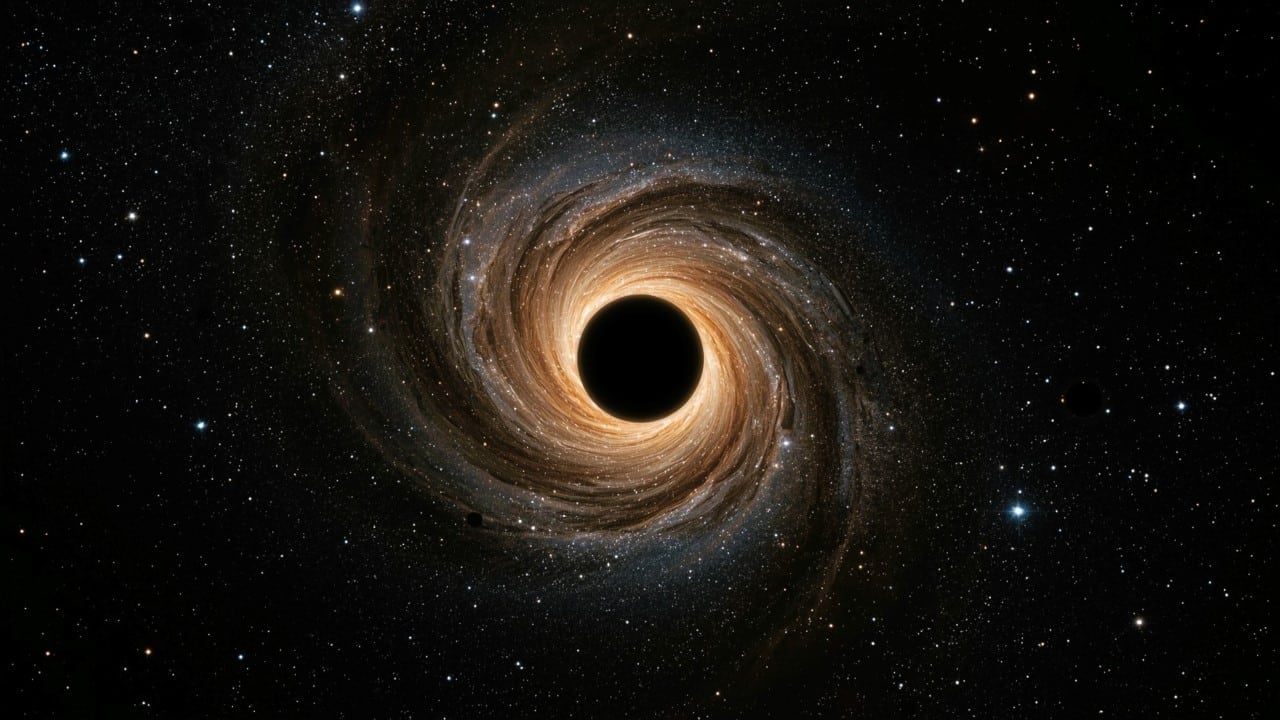
The newly identified object, designated oMEGACat BH-2, possesses a lower mass than astronomers anticipated for stellar remnants in this environment. Its luminous companion star takes 94 years to complete a single orbit around the core.
Cluster dynamics explain binary star interactions
The system formed dynamically.
Anil Seth of the University of Utah stated that densely populated clusters serve as primary cosmic locations where black holes merge and generate gravitational waves throughout the fabric of space-time. Astronomers plan to search for additional hidden systems in the Milky Way using the future Nancy Grace Roman Space Telescope.





