
Solar storm brings northern lights across northern US skies


A series of coronal mass ejections from the Sun propels charged particles toward Earth, opening visibility for the aurora borealis across northern regions of the United States through September 8, 2026. The incoming plasma streams trigger minor G1 geomagnetic storm conditions, allowing observers in multiple northern jurisdictions to spot luminous night sky displays.
The disturbance follows elevated solar activity that produced several M-class flares alongside a C9-class eruption that directed plasma straight at Earth.
Successive coronal mass ejections propel geomagnetic activity toward Earth
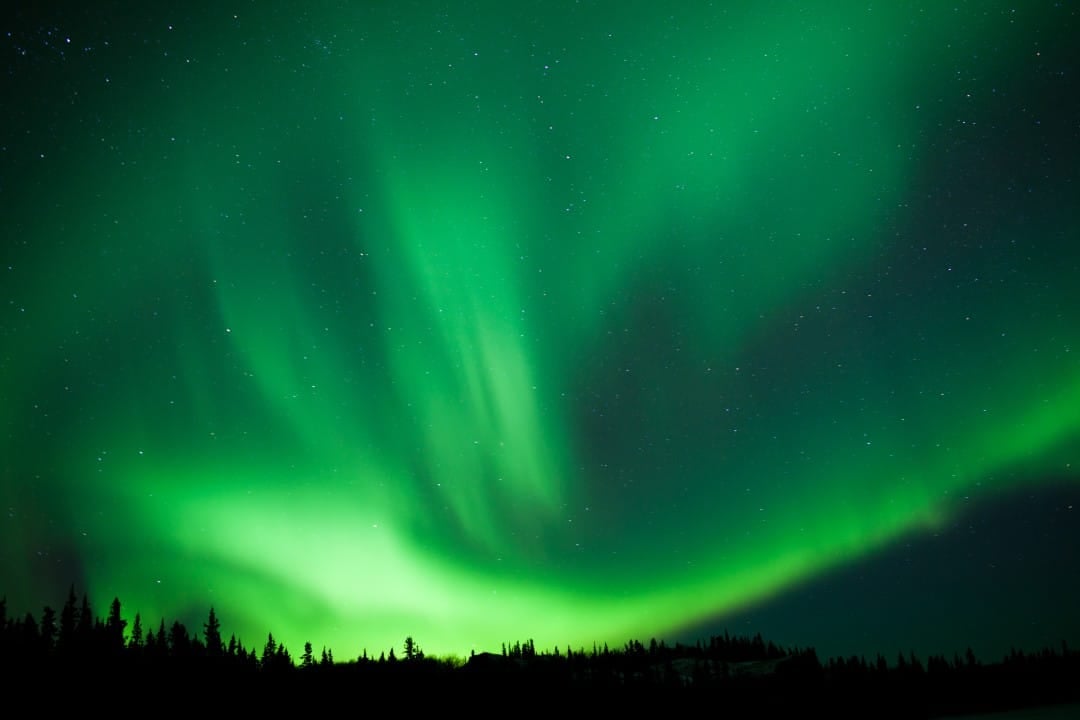
Solar magnetic disturbances launched the current space weather wave after a coronal mass ejection on September 2 traveled toward Earth to arrive around September 7. A subsequent blast on September 4 threatened either a weaker hit or direct interaction with existing solar plasma between late September 7 and early September 8.
While solar flares travel at the speed of light to reach Earth within eight minutes, coronal mass ejections move far slower as expanding clouds of charged plasma that require several days of transit through space depending on speed and trajectory.
Activity originating near sunspot 4524 produced the coronal mass ejection driving the current geomagnetic event across the planet. When these energetic particles collide with Earth’s magnetosphere, they destabilize local magnetic fields and produce visible auroral curtains.
Peak visibility centers on the hours preceding sunrise on September 8 before daylight across the United States reduces viewability.
Federal forecasters track atmospheric disturbances across upper American states
The National Oceanic and Atmospheric Administration and its Space Weather Prediction Center expect G1 minor geomagnetic storm levels around September 8. Forecast models show that geomagnetic activity could strengthen later in the week if additional solar plasma strikes Earth.
Government aurora maps include viewing opportunities across Alaska, northern Washington, Idaho, Montana, North Dakota, South Dakota, Minnesota, Wisconsin, Michigan, northern New York, and Maine.
Observers located in Montana, North Dakota, and Minnesota hold the strongest possibilities of witnessing the aurora borealis during pre-dawn darkness. Cloud coverage, local meteorological conditions, light pollution levels, and geomagnetic strength dictate actual sighting conditions.
NOAA tracks potential space weather disruptions to orbiting satellites, terrestrial radio communications, and electrical power grids.
Collisions between atmospheric gases and solar particles generate colorful night skies
Charged particles from the Sun interact with atmospheric gases in Earth’s upper atmosphere to ignite the aurora borealis. These energetic collisions transfer energy to atmospheric molecules, causing them to emit photons of visible light.
Atmospheric gases determine display colors. Oxygen interactions generate green and red hues, whereas nitrogen produces blue and purple tones across the sky. Stronger solar activity pushes auroral visibility farther south from polar zones.
Solar flares fall into classifications A, B, C, M, and X, and the recent C9 event generated sufficient coronal mass to disrupt Earth’s magnetic envelope.
The Sun currently progresses through an active phase of its roughly 11-year solar cycle. Scientists analyze these space weather events to understand how solar eruptions interact with Earth and orbital technology.
Dark rural locations offer optimal viewing opportunities for northern lights
Stargazers aiming to view the aurora borealis must locate dark rural zones facing the northern horizon during the pre-dawn hours of September 8.
Final visibility depends on the precise intensity of the coronal mass ejection as it strikes Earth’s magnetic shielding. Updates from NOAA and the Space Weather Prediction Center track real-time conditions as the solar material makes landfall.
These recurring geomagnetic storms supply critical empirical data that allow researchers to refine forecasts protecting communication networks, satellites, and electric power infrastructure on Earth.
Skywatchers across the northern tier of the United States retain a rare opportunity to observe natural atmospheric lights fueled by energetic bursts from the Sun. Clear night skies and low ambient light remain necessary to view the incoming auroral bands.





