
Apple launches iPhone 18 and foldable Duo device in Cupertino

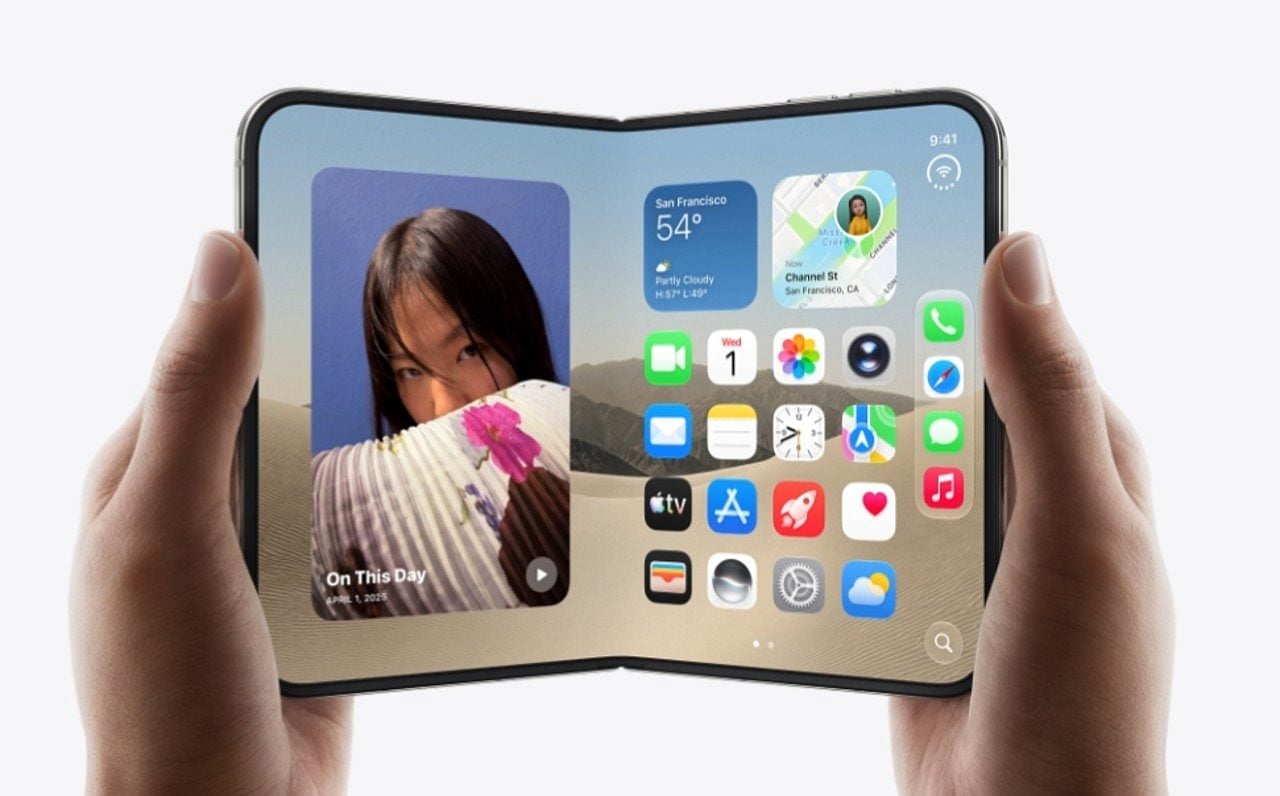
Apple unveiled the iPhone 18 and the foldable iPhone Duo at its headquarters in Cupertino, California, on September 9, 2026.
The presentation introduced flexible display technology into the company catalog nearly two decades after Steve Jobs demonstrated the original model in 2007. More than forty variants reached consumers across the globe over the intervening nineteen years of operation. The commercial lineup now includes hardware across multiple price points and form factors.
Origins in a California garage and personal computer growth
Steve Wozniak and Steve Jobs founded Apple Computer Company alongside Ronald Wayne in a Los Altos garage on April 1, 1976, financing their earliest Apple I circuit board production by selling a Volkswagen van and an advanced scientific calculator before releasing the assembled unit for 666.66 dollars. Wayne relinquished his ten percent equity stake shortly after for 800 dollars.
Annual sales climbed from 770,000 dollars in 1977 to nearly 8 million dollars the following year following the launch of the color-capable Apple II.
The Lisa computer debuted in the early 1980s with a mouse-driven interface but suffered poor adoption due to a price tag reaching almost 10,000 dollars. Apple launched the Macintosh during the 1984 Super Bowl with an 8 MHz Motorola 68000 processor and 128 KB of RAM. Steve Jobs departed in 1985 following disputes with chief executive John Sculley, leaving the manufacturer to endure a decade of losses against Microsoft operating systems.
Reorganization under Jobs and the shift to handheld devices
Steve Jobs regained corporate control in 1997 and eliminated floppy drives by introducing the translucent iMac G3 designed by Jony Ive in 1998. The company entered the portable audio sector on October 23, 2001, when it launched the 5 GB iPod with FireWire connectivity before creating the iTunes Store in 2003.
Steve Jobs unveiled the original iPhone at the Moscone Center in San Francisco on January 9, 2007.
The device reached retail shelves on June 29, 2007, offering a 4 GB configuration for 499 dollars and an 8 GB edition for 599 dollars under an exclusive agreement with AT&T. The capacitive multi-touch screen discarded the physical keyboards championed by BlackBerry and Nokia. Apple logged 1 million unit sales within 74 days inside the United States.
- Display measuring 3.5 inches with 320 by 480 pixel resolution
- Samsung ARM 11 processor operating at 412 MHz
- System memory of 128 MB RAM
- Rear camera of 2 megapixels without video recording
- Internal battery rated at 1,400 mAh without fast charging
- Connectivity via 2G EDGE cellular networks and integrated Wi-Fi
Evolution across high-speed mobile networks and industrial design
The iPhone 3G debuted on July 11, 2008, introducing assisted GPS and launching alongside the App Store with an initial catalog of 500 third-party software programs. The subsequent iPhone 3GS arrived on June 19, 2009, with a 600 MHz Cortex-A8 processor, a 3-megapixel autofocus camera, and digital video capture.
Apple altered its industrial styling on June 24, 2010, by deploying stainless steel and aluminosilicate glass in the iPhone 4. That handset delivered a 326 pixel-per-inch Retina display, the proprietary Apple A4 processor, and a front camera dedicated to FaceTime. Tim Cook assumed executive leadership after Steve Jobs died at age 56 in Palo Alto on October 5, 2011, one day after the voice-activated Siri debuted on the dual-core A5-powered iPhone 4S. Displays stretched to 4 inches on September 21, 2012, with the Lightning-equipped iPhone 5 before the iPhone 5s introduced 64-bit mobile computing and the Touch ID fingerprint sensor on September 20, 2013.
Apple released larger form factors.
The company sold over 10 million units during the debut weekend of the 4.7-inch iPhone 6 and 5.5-inch iPhone 6 Plus in September 2014 while rolling out contactless Apple Pay. Subsequent updates brought 3D Touch and 4K filming on the iPhone 6s in 2015, followed by the elimination of the 3.5-millimeter audio jack and the addition of IP67 water resistance on the iPhone 7 in 2016.

Full-screen redesigns and camera system upgrades
The anniversary iPhone X arrived on September 12, 2017, removing the home button to accommodate an edge-to-edge OLED panel and the Face ID infrared sensor array. Apple integrated triple 12-megapixel camera modules and Night Mode photography into the iPhone 11 Pro line in September 2019. Modems supporting 5G networks alongside MagSafe magnetic alignment launched with the iPhone 12 family on October 23, 2020.
ProMotion displays reached the iPhone 13 Pro in September 2021 with adaptive refresh rates up to 120 Hz.
The Dynamic Island pill-shaped interface and 48-megapixel primary imaging sensors arrived with the iPhone 14 Pro on September 16, 2022. Global adoption of standard USB-C ports and grade 5 titanium structural frames occurred on September 22, 2023, across the iPhone 15 Pro series.
The iPhone 16 debuted on September 20, 2024, featuring a capacitive Camera Control key and local artificial intelligence hardware powered by the A18 processor. Apple broadened 48-megapixel sensors across all three lenses and installed internal vapor chambers in the iPhone 17 Pro on September 19, 2025. Those thermal enhancements stabilized graphics operations on the TSMC 2-nanometer architecture.
Technical specifications of the iPhone 18 generation
The newly revealed iPhone 18 operates on the ten-core Apple A20 silicon manufactured through the second-generation 2-nanometer process from TSMC. The Pro model incorporates 12 GB of unified RAM to process machine learning models locally without incurring excessive battery depletion.
The primary lens on the iPhone 18 Pro switches physically between f/1.4 and f/4.0 mechanical apertures.
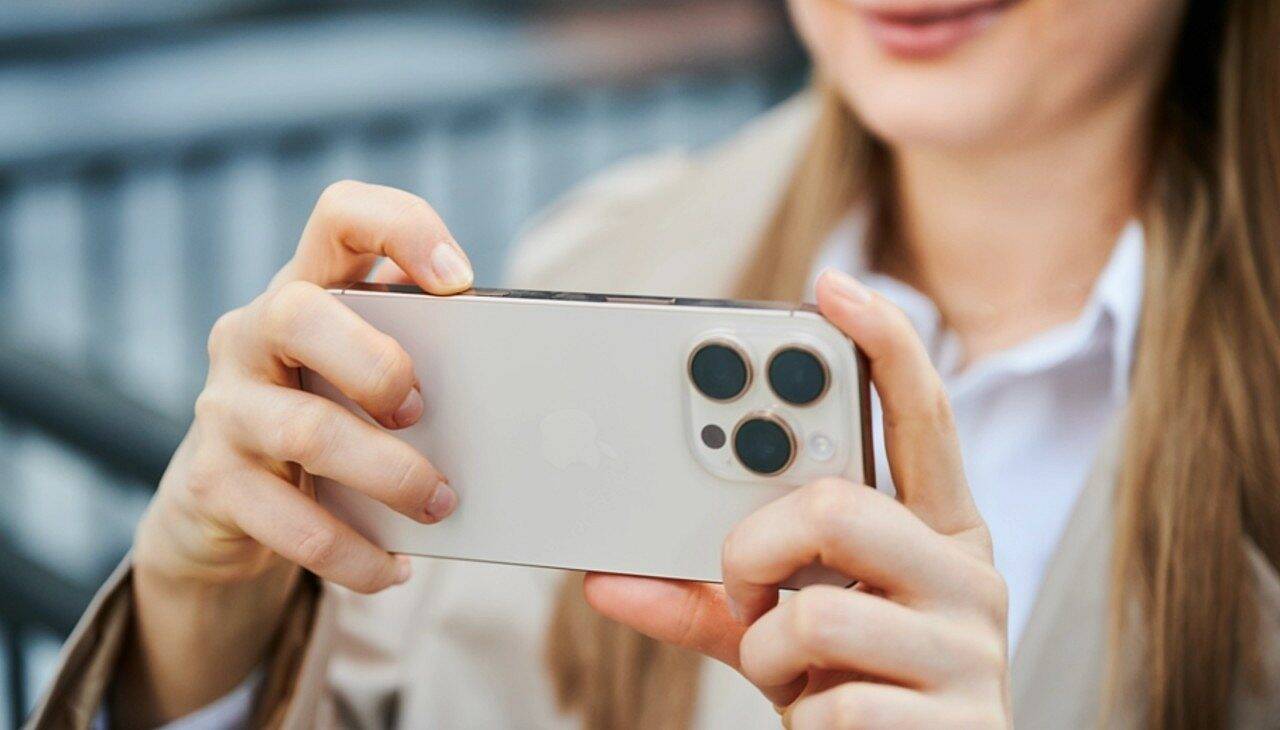
The iPhone 18 Pro Max pairs that sensor with a retractable periscope mechanism providing up to 10x continuous optical magnification. Power is supplied by a 4,800 mAh silicon-anode battery that supports 45-watt wired charging and 25-watt MagSafe inductive transfers.
- Apple A20 processor built on a 2-nanometer ten-core architecture
- Unified memory capacity reaching 12 GB RAM with expanded bandwidth
- Main 48-megapixel sensor equipped with variable mechanical aperture from f/1.4 to f/4.0
- Continuous periscope telephoto mechanism offering 10x real optical magnification
- High-density silicon-anode cell with 4,800 mAh capacity
- Wired charging at 45 watts and MagSafe wireless charging at 25 watts
Flexible hardware debut with the iPhone Duo
The iPhone Duo represents Apple’s first production smartphone equipped with a foldable display structure. The device incorporates a central articulated hinge built from liquid metal and titanium gears that eliminates surface creasing when fully unfolded. Enclosed within an IP68-rated chassis, the hardware functions as a 6.3-inch standard phone measuring 9.8 millimeters in thickness before unfolding into an uninterrupted 7.9-inch internal workspace.
Internal glass measures 4.9 millimeters unfolded.
Corning developed the flexible ultra-thin glass layer, which features an energy-absorbing polymer coating to shield the interior screen from impact damage. Software adaptations allow two separate applications to run simultaneously in split-screen arrangements or turn the bottom panel into a dedicated keyboard when positioned upright on a desk.
Power delivery relies on dual interconnected batteries totaling 5,200 mAh split between the two halves of the metallic housing.
Internal magnets dampen the closing motion to prevent collision between the rubberized protective perimeter rims. Industrial assembly of the hardware remains concentrated at Foxconn facilities in Zhengzhou and operational plants in Chennai.





