
Astrophysicists find Venus likely destroyed its own moon

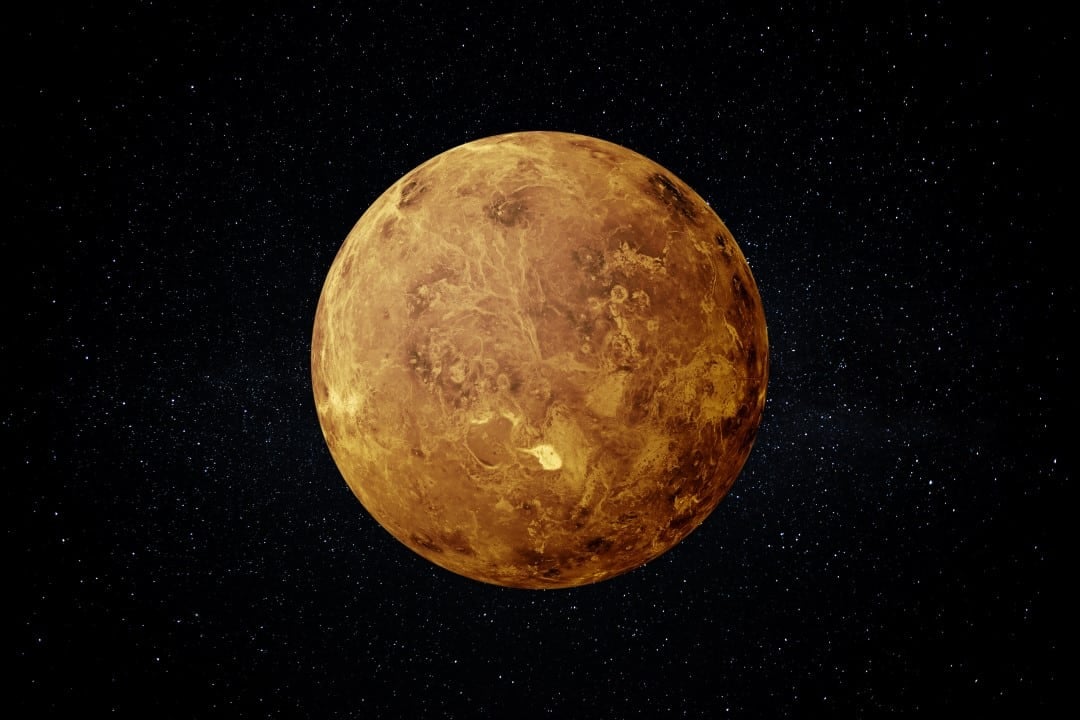
Astrophysicists identified evidence explaining why Venus has no orbiting natural satellite, concluding the planet pulled down and devoured its own moon. Gravitational forces caused the destruction.
Venus shares similar dimensions, mass, rocky geology, and solar proximity with Earth, yet the world sustains molten-lead temperatures, severe atmospheric pressure, violent winds, and corrosive sulfuric acid clouds. Unlike Earth, which retains a permanent lunar companion, Venus and Mercury remain the only planets in the entire solar system without any natural satellite. Telescopes confirm this emptiness.
A research group resolved the historic astronomical mystery regarding whether Venus formed without a natural satellite or lost an original moon over cosmic history by calculating the exact orbital fate of a hypothetical body around the hottest planet.
“I have always had a fascination with moon formation and evolution in the solar system, and particularly with Venus since my research is centered around its evolution and potential for past habitability,” said lead investigator Stephen R. Kane from the University of California, Riverside. He noted that both Earth and Venus share almost identical physical properties, yet Venus lacks even a captured rock. “Venus undoubtedly experienced large impacts, just as Earth has, and so has had as much, if not more, opportunity to form a moon similar to what we see in our own skies,” Kane said.
To verify this celestial trajectory, Stephen R. Kane and his collaborators developed a computer model evaluating the historical movements of an ancient Venusian satellite.
“The work involved going back to fundamental physics and creating the simulation from the ground up, which I validated by ensuring I could reproduce the evolution of the Earth-moon system,” Kane stated. The researcher confirmed that matching the observed absence of a satellite at Venus validated the newly formulated physical mechanism.
Gravitational tidal forces forced ancient moon into inward death spiral
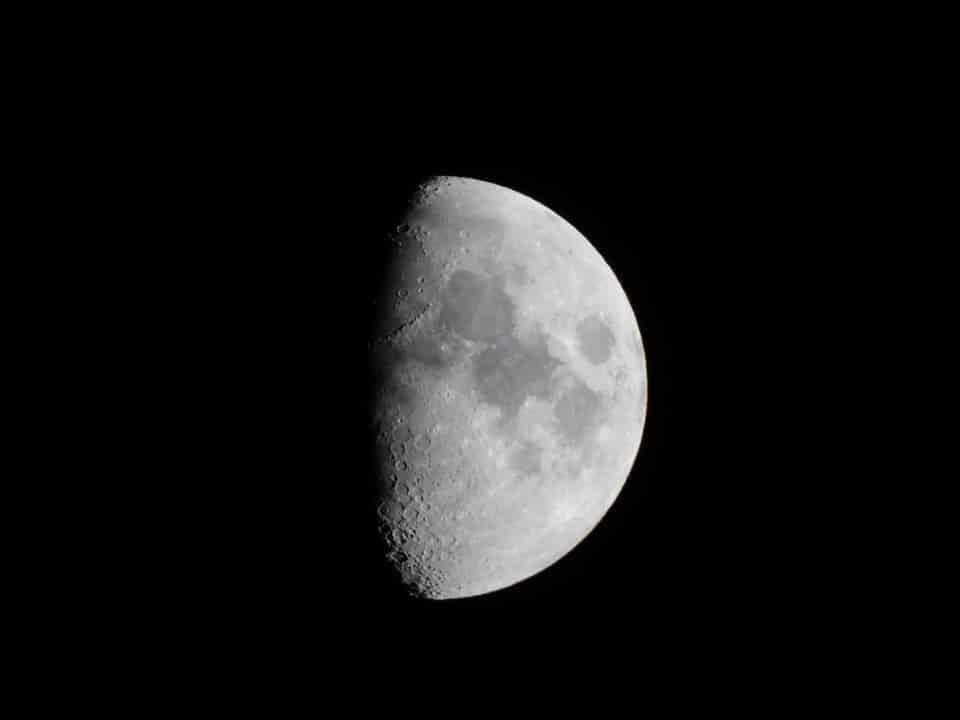
The scientists tracked the gravitational competition between Venus, a hypothetical satellite, and the sun across billions of years of orbital interaction.
“This is the same physics that governs our own moon, which is slowly drifting away from Earth,” Kane explained regarding the tidal mechanics applied in the study. By utilizing two distinct mathematical calculations while examining varying rotation velocities of Venus alongside different hypothetical lunar masses over billions of years, the scientists demonstrated that the satellite inevitably reversed direction, spiraled closer toward the planet, and suffered total disintegration under immense gravitational forces. Survival was impossible.
A larger satellite diameter offered no protection against orbital collapse during the simulation runs. “An interesting aspect is that a heavier moon is destroyed faster, since a massive moon would drain Venus’s spin so efficiently that it hastens its destruction,” Kane added.
Survival required extremely precise planetary dynamics during the initial formation epoch. “Survival came down to two main things: Venus had to be spinning fast when the moon formed, with a day shorter than about 12 hours, and the moon couldn’t be too massive, up to roughly the mass of our own moon,” Kane reported. An object meeting those parameters would migrate outward to safety. “Outside that range, the moon is unfortunately doomed to be consumed by Venus,” the researcher stated.
Those preservation conditions do not match current scientific models of early Venus, which featured slower planetary rotation rates. Securing direct visual proof of this ancient cataclysm from ground observatories remains improbable according to the research team.
“Finding direct observational evidence is pretty tough,” Kane said, pointing out that a moon destroyed billions of years ago left no direct traces for modern telescopes. He noted that fallen debris might leave chemical remnants on the surface or inside the atmosphere, which NASA’s DAVINCI probe will evaluate during its forthcoming mission. “There’s a broader test beyond our solar system because our results predict that slowly rotating, Venus-like planets around other stars should generically lack large moons, so as astronomers begin searching for moons around exoplanets, that’s a prediction that can eventually be checked against real data,” Kane said.
The astrophysicists plan to extend their tidal modeling to analyze impact dynamics on Mercury and Mars, while also examining collision remnants across extrasolar systems. The complete research findings were deposited as a preprint on the arXiv scientific server.





