
Cupertino debuts foldable iPhone Duo alongside iPhone 18

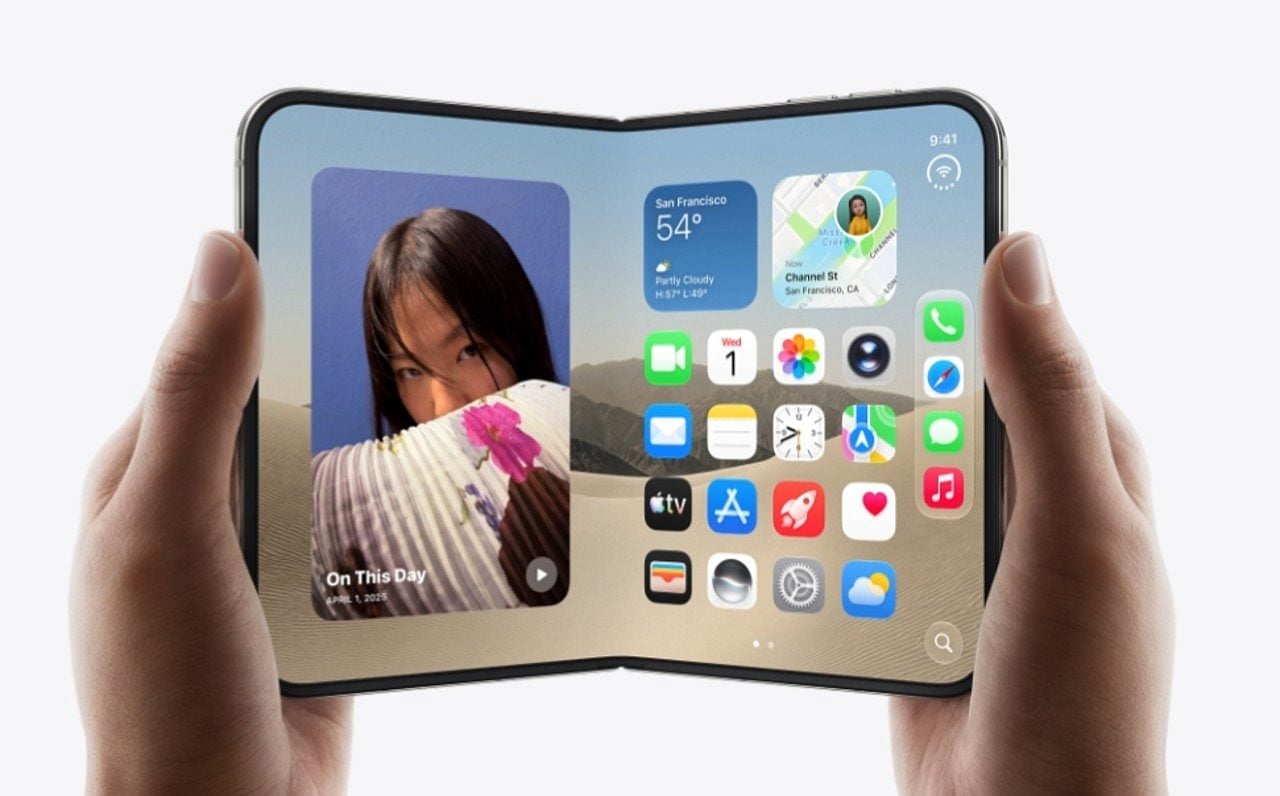
Apple introduced the iPhone 18 family and the foldable iPhone Duo handset during an official presentation in Cupertino, California, on Wednesday, September 9, 2026. This move represents the company’s initial entry into flexible screens nearly two decades after presenting its first handheld telephone to retail customers. More than forty hardware iterations now compose the brand’s catalog since the original product debuted in 2007.
The operation started in 1976.
Steve Jobs, Steve Wozniak, and Ronald Wayne founded the Apple Computer Company on April 1, 1976, inside a garage in Los Altos, California, where Jobs sold a Volkswagen bus and Wozniak sold a calculator to fund their earliest machine. The initial Apple I consisted strictly of an assembled circuit board devoid of a monitor, keyboard, or chassis, retailing for 666.66 dollars. Wayne relinquished his 10 percent equity stake for 800 dollars shortly thereafter. Wozniak handled engineering while Jobs pursued retail distribution channels across regional electronics stores.
The Apple II reached consumers in 1977 with integrated color graphics support and cassette tape reading capabilities, driving annual sales from 770,000 dollars to nearly 8 million dollars. That commercial momentum established the venture as a viable personal computing competitor before its public stock offering.
Engineers completed the Lisa system in the early 1980s with an attached computer mouse, yet a sticker price near 10,000 dollars suppressed sales before the Macintosh debuted in 1984 with an 8 MHz Motorola 68000 processor and 128 KB of RAM promoted during the Super Bowl broadcast. Steve Jobs exited executive operations in 1985 following governance disputes with chief executive John Sculley, triggering financial contraction against competitive operating systems from Microsoft. Subsequent platform fragmentation eroded retail margins across the following decade.
Steve Jobs returned in 1997.
The cofounder guided industrial designer Jony Ive in creating the all-in-one iMac G3 in 1998, which omitted floppy disk drives to prioritize USB ports under translucent plastic shells. The company launched the iPod audio player on October 23, 2001, pairing a 5 GB Toshiba hard disk with a battery rated for 10 hours of playback. The opening of the iTunes Store two years later turned the hardware manufacturer into the largest music distributor in the United States.
Debut of the original smartphone at Moscone Center
Steve Jobs took the stage at the Moscone Center in San Francisco on January 9, 2007, to present an aluminum device that unified an audio player, a cellular phone, and an internet browser. The unit arrived at American stores on June 29, 2007, priced at 499 dollars for the 4 GB edition and 599 dollars for the 8 GB version under carrier agreements with AT&T.
The 2007 handset eliminated mechanical keyboards.
Eliminating hardware front buttons broke industry conventions established by rivals Nokia and BlackBerry, replacing plastic styluses with a capacitive glass screen that registered multi-touch gestures such as pinch-to-zoom. Retailers logged 1 million unit sales within 74 days across the United States market.
- Display measuring 3.5 inches with a resolution of 320 by 480 pixels
- Samsung ARM 11 application processor clocked at 412 MHz
- System memory capacity fixed at 128 MB
- Rear camera sensor of 2 megapixels without video capture capabilities
- Internal lithium-ion battery rated at 1,400 mAh without quick charging
- Wireless networking through EDGE 2G cellular frequencies and Wi-Fi
Integration of faster cellular modems and App Store software
The iPhone 3G went on sale on July 11, 2008, featuring plastic rear shells in black and white finishes alongside the App Store containing 500 launch applications. The hardware incorporated a standalone GPS chip to pinpoint geographical coordinates directly inside navigational software. Developers subsequently received programmatic access to build native third-party utilities.
Apple presented the iPhone 3GS on June 19, 2009, bringing digital video capture, an internal compass, and a 600 MHz Cortex-A8 chip supported by 256 MB of RAM. The protective front glass gained an oleophobic layer to resist fingerprint residue, while the 3-megapixel rear optics added automated focus adjustments and auto white balance.
- ARM Cortex-A8 central chip running at 600 MHz
- Onboard flash storage configurations of 8 GB, 16 GB, and 32 GB
- Cellular data networking across 3G UMTS and HSDPA reaching 7.2 Mbps
- Battery run time reaching up to 5 hours of voice calls on 3G links
- Video recording capability in VGA resolution at 30 frames per second
Glass enclosures and leadership transition under Tim Cook
The iPhone 4 arrived on June 24, 2010, introducing a flat industrial design constructed with two aluminosilicate glass plates bound by a perimeter stainless steel band. Its Retina screen achieved a pixel density of 326 pixels per inch, operating alongside the custom 1 GHz Apple A4 processor and a front-facing lens configured for FaceTime video calls. The industrial restructuring repositioned internal antennas directly into the metallic rim.
The updated 4S model debuted on October 4, 2011, incorporating the cloud-based Siri voice assistant.
Steve Jobs died on October 5, 2011, at age 56 in Palo Alto, leaving chief executive Tim Cook in command as the dual-core Apple A5 processor delivered up to seven times faster graphics rendering. The transition consolidated corporate supply lines ahead of escalating global component demand.
- Retina IPS LCD measuring 3.5 inches with 960 by 640 pixel resolution
- Dual-core A5 system on a chip built on a 45-nanometer process
- Rear 8-megapixel imaging sensor capable of 1080p video recording
- External steel frame acting as an antenna divided by three isolation slits
- Maximum internal storage boundary increased to 64 GB
Taller display profiles and biometric security through Touch ID
Apple lengthened its handset form factor on September 21, 2012, when the iPhone 5 introduced a 4-inch 16:9 screen, a reversible Lightning socket, a 7.6-millimeter profile, and a total mass of 112 grams compatible with 4G LTE towers. The company subsequently revealed the iPhone 5s and iPhone 5c on September 20, 2013, adding a sapphire-covered Touch ID fingerprint scanner, the 64-bit A7 processor, and the M7 motion coprocessor. The plastic 5c variant targeted intermediate retail tiers through multiple bright enclosure options.
- Retina panel of 4 inches with a native 1136 by 640 pixel resolution
- 64-bit A7 processor operating alongside dedicated M7 motion silicon
- Capacitive Touch ID biometric sensor scanning at 500 points per inch
- Five-element camera lens assembly backed by a True Tone dual LED flash
- Metallic color options produced in gold, silver, and space gray
Shift toward larger screens and retail expansion with iPhone 6
Apple delivered the 4.7-inch iPhone 6 and the 5.5-inch iPhone 6 Plus on September 19, 2014, surpassing 10 million combined retail sales across their opening three days on global shelves. The Plus variant added optical image stabilization to counteract hand tremors during handheld low-light photography. The manufacturer deployed the Apple Pay contactless payment protocol by pairing near-field communication chips with its 20-nanometer A8 processor.
- Screen dimensions of 4.7 inches on the standard build and 5.5 inches Full HD on Plus
- A8 graphics architecture engineered with a four-cluster compute structure
- NFC component enabling tap-to-pay transactions at commercial checkout terminals
- Storage ceiling raised to a top capacity of 128 GB
- Internal power cell of 2,915 mAh fitted into the Plus chassis
Pressure sensing hardware and removal of the headphone connector
The iPhone 6s generation launched on September 25, 2015, using 7000 series aluminum, 3D Touch pressure-sensitive display sensors, and a 12-megapixel sensor capable of recording 4K video clips alongside Live Photos. The internal structural redesign reinforced the aluminum housing against mechanical bending under physical stress.
Engineers dropped the headphone jack.

Hardware designers eliminated the 3.5-millimeter audio port on the iPhone 7 on September 16, 2016, freeing internal volume for a larger Taptic Engine and securing an IP67 water-resistance rating, while the dual-lens iPhone 7 Plus debuted Portrait Mode photography. The revision coincided with the rollout of wireless AirPods accessories.
- A10 Fusion quad-core central processor using asymmetric core clusters
- Dual 12-megapixel photographic setup on the 7 Plus hardware configuration
- Mechanical chassis ingress protection rated at IP67 for immersion up to 1 meter
- Solid-state home key providing simulated tactile feedback via internal haptics
- Removal of legacy audio jacks alongside the commercial introduction of AirPods
OLED display panels and facial authentication through Face ID
The iPhone X launched on September 12, 2017, alongside the iPhone 8 and iPhone 8 Plus to commemorate ten years of the smartphone lineup, eliminating the physical home button for an edge-to-edge Super Retina OLED panel with a top sensor notch. The device shifted biometric authentication to Face ID, which casts 30,000 infrared dots onto the user’s face to verify identity. Surgical-grade stainless steel reappeared along the side rails, complementing a glass rear panel configured for Qi-standard wireless power pads.
- Super Retina OLED screen measuring 5.8 inches supporting HDR10 and Dolby Vision
- Face ID biometric scanning managed by infrared sensors and a TrueDepth camera
- A11 Bionic system incorporating a dual-core neural computation engine
- Inductive battery charging using the Qi standard alongside wired fast charging
- Dual rear camera lenses with independent optical stabilization hardware
Triple camera arrays and the introduction of Pro branding
The iPhone 11 family debuted in stores on September 20, 2019, introducing Pro and Pro Max branding through a triangular cluster housing wide, 120-degree ultra-wide, and telephoto optical assemblies. The A13 Bionic silicon enabled algorithmic Night Mode exposure capture without utilizing the flash, while the 11 Pro Max extended operational battery endurance by five hours over the previous XS Max edition.
- Three 12-megapixel rear imaging sensors configured in wide, ultra-wide, and telephoto roles
- Automated computational Night Mode managed through processing algorithms
- Single-piece matte textured glass back panel construction
- Included 18-watt power adapter supplied directly inside retail packaging
- A13 Bionic processor featuring an eight-core neural acceleration engine
Fifth-generation wireless networking and flat frame styling
The iPhone 12 arrived on October 23, 2020, reinstating squared aluminum edges while adding 5G modems, Ceramic Shield cover glass, and MagSafe rear magnetic arrays delivering up to 15 watts of inductive power. Apple subsequently rolled out the iPhone 13 lineup on September 24, 2021, providing the 13 Pro and 13 Pro Max with 120 Hz ProMotion panels, denser battery chemistry, and Cinematic Mode video recording with real-time focus racking.
- Cellular transceivers compatible with sub-6 GHz and millimeter-wave 5G bands
- Ceramic Shield front glass protection embedded with nano-ceramic crystals
- Rear MagSafe magnetic mounting system delivering wireless charging at 15 watts
- ProMotion refresh displays shifting between 10 Hz and 120 Hz on Pro editions
- Onboard flash storage options scaling up to a 1 TB boundary
Titanium chassis manufacturing and Dynamic Island alerts
The iPhone 14 Pro launched on September 16, 2022, introducing the interactive Dynamic Island cut-out, a 48-megapixel primary camera sensor utilizing quad-pixel binning, and Emergency SOS satellite connectivity. Apple implemented standard USB-C ports on September 22, 2023, across the iPhone 15 range to satisfy European Union directives, swapping out Lightning and encasing Pro models in Grade 5 titanium alongside an assignable Action Button.
- Dynamic Island display cutout hosting interactive software alerts and activities
- Primary 48-megapixel camera sensor outputting 2x optical-quality crop photos
- Structural outer chassis forged from Grade 5 aerospace titanium alloy
- Universal USB-C data interface offering transfer rates of up to 10 Gbps
- Mute switch replaced by a programmable solid-state Action Button
Dedicated camera buttons and silicon lithography advances
The iPhone 16 series arrived on September 20, 2024, adding a capacitive Camera Control key along the frame for manual optical adjustments, A18 processors with machine learning engines, and spatial video recording designed for the Vision Pro headset. The iPhone 17 lineup debuted on September 19, 2025, adding vapor chamber cooling plates and 48-megapixel sensors across all three lenses on Pro units produced on a 2-nanometer node.
- Capacitive Camera Control input sensor embedded into the lateral frame
- Triple 48-megapixel camera sensors spanning all lenses on Pro units
- A19 processor produced through commercial 2-nanometer fabrication lines
- Dynamic 120 Hz refresh rates expanded across standard base configurations
- Thermal mitigation managed via internal welded vapor cooling chambers
Launch of iPhone 18 series powered by Apple A20 silicon
The iPhone 18 rollout on Wednesday established the commercial debut of the Apple A20 processor, manufactured on TSMC’s second-generation 2-nanometer node with ten compute cores arranged in four performance and six efficiency units. The Pro variant packs 12 GB of unified memory to calculate large language models locally on device silicon without external server routing. Its primary lens houses a mechanical aperture switching physically between f/1.4 and f/4.0, while the periscope telephoto module on the 18 Pro Max delivers 10x optical zoom using motorized internal prisms. This architecture allows precise physical depth-of-field control directly in varying ambient lighting environments.
- Apple A20 processor manufactured on a 2-nanometer node with ten computing cores
- 128-bit unified memory bus supporting 12 GB of high-speed system RAM
- 48-megapixel camera module featuring a variable mechanical aperture between f/1.4 and f/4.0
- Continuous prism periscope telephoto system achieving up to 10x optical zoom
- Silicon-anode high-density battery cell carrying an energy capacity of 4,800 mAh
- Wired charging throughput of 45 watts alongside 25-watt MagSafe wireless replenishment
Hinged architecture and bendable screens on the iPhone Duo
The iPhone Duo represents the initial flexible-screen mobile device developed by the California technology company, incorporating a center hinge crafted from cast titanium gears and liquid metal alloys engineered to prevent panel creasing. The unit measures 9.8 millimeters thick when folded shut, housing an external 6.3-inch display and meeting IP68 water and dust ingress standards.
The inner display measures 7.9 inches.
The bendable panel uses ultra-thin glass engineered alongside Corning, backed by structural polymer coatings designed to resist repeated mechanical folding during daily operation. Operating system software repositions multitasking windows side-by-side or presents a typing keyboard on the lower section when users bend the device at 90 degrees on desks.
Two internal batteries power the device.
Engineers positioned two separate power packs linked across internal buses totaling 5,200 mAh to maintain weight equilibrium between both folding halves. Recessed magnetic latches guide closure alignment to protect edge seals against mechanical impact damage during pocket storage.
- External cover display of 6.3 inches with an internal flexible screen spanning 7.9 inches
- Hinge assembly built with titanium gears and liquid metal to eliminate surface creases
- Composite bendable glass reinforced by protective polymer substrate layers
- Chassis ingress protection certified to industrial IP68 environmental standards
- Apple A20 Duo processor balanced for dual-display parallel computational tasks
- Two separate power cells delivering a combined system capacity of 5,200 mAh
- Enclosure measuring 4.9 millimeters unfolded and 9.8 millimeters in the shut position
Chronology of hardware specifications across smartphone releases
The production history of the brand reflects structural shifts across worldwide mobile communication and digital consumer habits throughout two decades of sustained engineering in California. Successive generations of silicon and display components shaped manufacturing standards across the broader consumer electronics landscape.
- iPhone (2007): 3.5-inch screen, 412 MHz ARM chip, 128 MB RAM, 2 MP camera, 2G EDGE network
- iPhone 3G (2008): 3.5-inch screen, GPS satellite receiver, 3G data connection, App Store debut
- iPhone 3GS (2009): 3.5-inch screen, 600 MHz Cortex-A8 chip, 256 MB RAM, video recording support
- iPhone 4 (2010): 326 ppi Retina screen, 1 GHz A4 chip, flat glass enclosure, FaceTime video
- iPhone 4S (2011): 3.5-inch screen, dual-core A5 chip, 1080p video recording, Siri voice platform
- iPhone 5 (2012): 4-inch 16:9 screen, reversible Lightning port, 4G LTE wireless compatibility
- iPhone 5s (2013): 64-bit A7 chip, Touch ID fingerprint sensor, True Tone dual LED flash
- iPhone 6 and 6 Plus (2014): 4.7-inch and 5.5-inch screens, A8 processor, Apple Pay contactless, curved frame
- iPhone 6s and 6s Plus (2015): 3D Touch pressure screen, A9 processor, 12 MP camera, 7000 series aluminum
- iPhone 7 and 7 Plus (2016): Headphone jack omitted, IP67 seal, dual rear cameras on Plus build
- iPhone X (2017): 5.8-inch Super Retina OLED panel, Face ID facial sensor, Qi inductive charging
- iPhone XR (2018): 6.1-inch Liquid Retina LCD, 7-nanometer A12 Bionic chip, expanded chassis colors
- iPhone 11 Pro and Pro Max (2019): Triple rear camera cluster, computational Night Mode, A13 Bionic chip
- iPhone 12 and 12 Pro (2020): 5G network support, Ceramic Shield glass, MagSafe magnetic connection
- iPhone 13 Pro and Pro Max (2021): 120 Hz ProMotion panel, Cinematic video recording, smaller front notch
- iPhone 14 Pro and Pro Max (2022): Dynamic Island interface, 48 MP imaging sensor, satellite distress calls
- iPhone 15 Pro and Pro Max (2023): Grade 5 titanium chassis, USB-C interface, programmable Action Button
- iPhone 16 Pro and Pro Max (2024): Lateral Camera Control key, A18 Pro silicon, Vision Pro spatial video
- iPhone 17 Pro and Pro Max (2025): Internal vapor chambers, three 48 MP sensors, 2-nanometer lithography
- iPhone 18 and 18 Pro (2026): A20 processor on refined node, f/1.4-f/4.0 mechanical aperture, 10x optical zoom
- iPhone Duo (2026): 6.3-inch outer display, 7.9-inch flexible inner display, 4.9 mm unfolded profile
Assembly plants operated by manufacturing contractor Foxconn in Zhengzhou and Chennai handle production for the newly announced smartphone devices.





