
ESA awards 65 million euro deal for south pole Moon rover
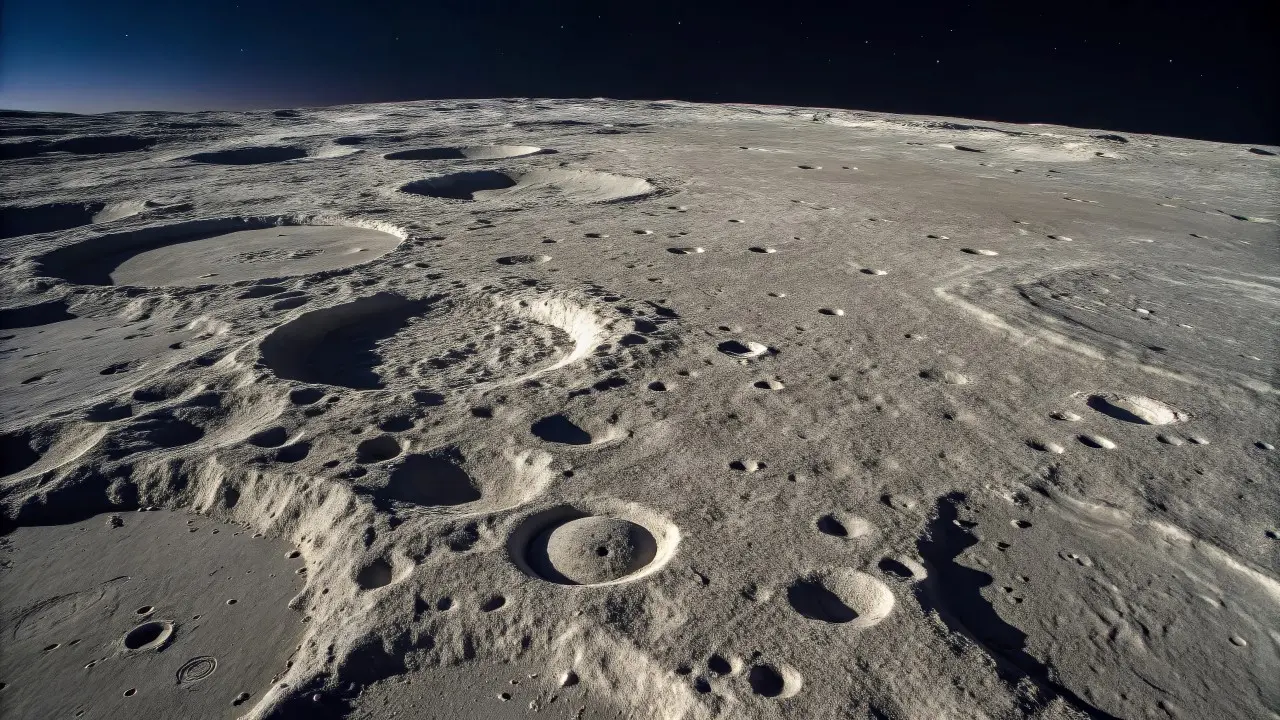
The European Space Agency signed a 65 million euro contract with ispace-EUROPE to build, test, and run the MAGPIE lunar rover ahead of an expedition targeting the south pole of the Moon starting in 2029. Under this agreement, the commercial entity takes charge of technical development while preparing the mobile system for long-range surface deployment.
Scientific payload designed for drilling and subsurface analysis
The MAGPIE lunar rover operates as a self-contained mobile laboratory.
More on this story: ESA signs 65 million euro contract for MAGPIE moon rover
Engineers integrated a mechanical drill, a neutron detector, ground-penetrating radar, and a volatile analyzer into the chassis to extract samples directly from lunar regolith. These instruments measure subsurface chemical compounds and track specific ground variations across several designated inspection sites. Mission specialists also intend to assess the physical compactness of the lunar terrain.
- Mechanical drill configured to penetrate ground layers and retrieve subsurface material
- Volatile analyzer engineered to identify volatile elements and gaseous compounds
- Ground-penetrating radar built to deliver geological scans beneath the surface
- Neutron detector assigned to inspect chemical components within the regolith
Search for solid water reserves inside shaded craters
The expedition focuses on ice deposits trapped inside permanently shadowed lunar depressions that never receive direct sunlight, unique environments where extremely frigid conditions have shielded frozen water caches from thermal evaporation across billions of years of solar history. Scientific teams seek to establish the precise depth, geographical variation, and structural distribution of these concealed polar resources.
MAGPIE will not conduct mining.
Cross-border partnerships supporting vehicle delivery and systems
Operational headquarters remains based in Luxembourg, yet scientific teams from Germany, the United Kingdom, Norway, and the Czech Republic collaborate directly to assemble the analytical hardware. Transportation of the robotic platform into space relies on formal bilateral coordination between the European Space Agency and the Japan Aerospace Exploration Agency. Mission planners also utilize historical orbital measurements gathered by India’s Chandrayaan-1 probe and NASA’s LCROSS satellite during 2009 to calibrate baseline trajectories.
Growth of the domestic space ecosystem in Luxembourg
Commercial space activity in the Grand Duchy began in 1985 through the incorporation of satellite operator SES, accelerated after Luxembourg formally joined the European Space Agency in 2005, and gained strategic focus following the launch of the SpaceResources.lu initiative in 2016. That domestic network grew from 16 commercial entities employing 600 workers in 2012 to approximately 80 enterprises supporting 1,650 employees by the end of 2024.
Surface operations will last roughly ten Earth days to collect volatile material measurements before mission activities conclude.
More news in Latest News (EN)
See more → NASA seeks new industry tech for Moon base power and oxygen
 Two Artemis II astronauts move to emeritus status at NASA
 New AURA 3 ultra short throw projector targets 4K gamersNew AURA 3 laser projector brings 4K 120Hz display for gamers
 Astronauts test blood flow and repair gear on space station
 ESA signs 65 million euro contract for MAGPIE moon roverLunar rover MAGPIE gets 65 million euro European backingESA awards 65 million euros to build the MAGPIE lunar roverIspace-EUROPE secures 65 million euro contract for Moon roverESA contracts ispace-EUROPE for 65 million euro lunar rover
 American satellite detects secret nuclear test from 1979
 Black Ops 7 and Warzone roll out Season 06 on September 17
More news on Mix Vale
- 1EA Play launches a 10-hour early trial for EA Sports NHL 27
- 2Uganda withdraws from Invictus Games, citing deference to King Charles III amid royal status debate
- 3Xbox consoles and Game Pass add Once Human as a free title
- 4Xbox Insiders test new Wreck Runners update before launch
- 5Apple boosts battery runtime across iPhone 18 Pro and Duo
- 6Dembélé scores in 19th minute as PSG lead Slovan Bratislava
- 7HOT WHEELS Infinite Rush debuts in early access with 150 cars
- 8Samsung cuts Galaxy Z Fold 8 price to $1,600 ahead of Apple
- 9Spanish intelligence cautioned Morocco on Ceuta migrant surge leading to over 100 fatalities and political fallout
- 10Researchers record two ESA satellites burning over Pacific