ESA awards 65 million euros to build the MAGPIE lunar rover

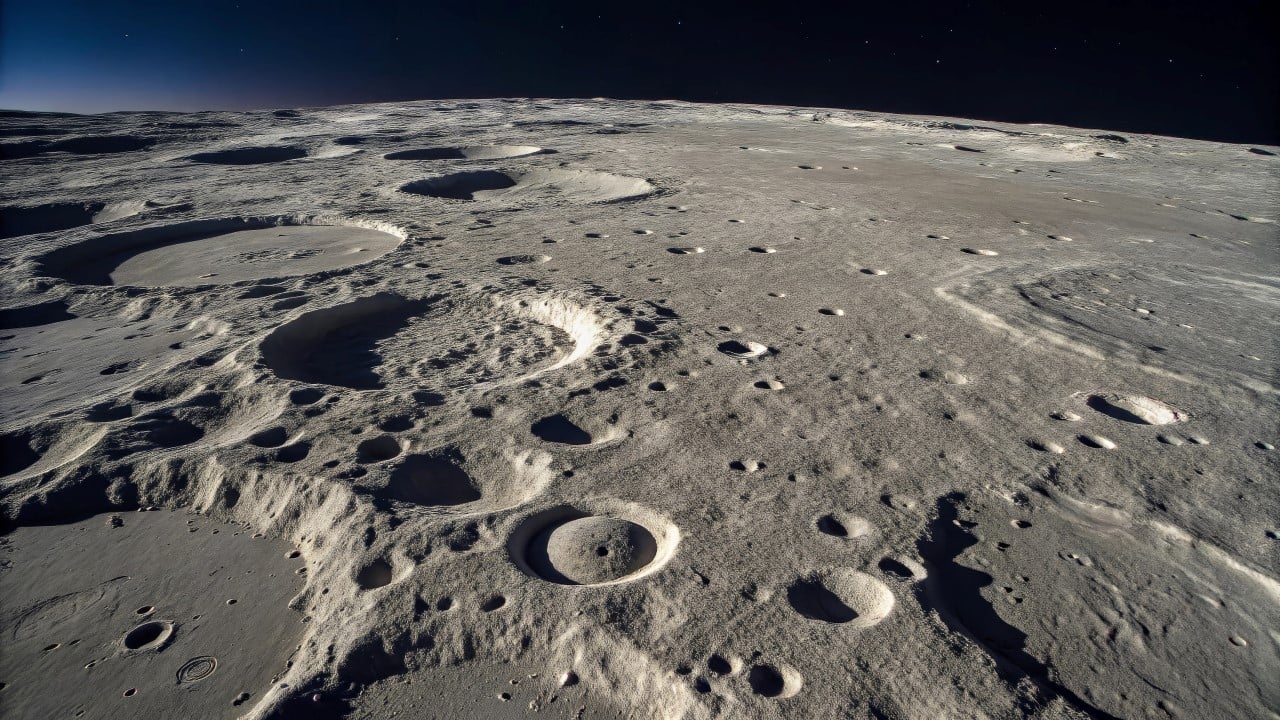
The European Space Agency contracted private firm ispace-EUROPE for 65 million euros to manufacture, test and direct the MAGPIE robotic rover targeting a lunar south pole landing starting in 2029. The technical agreement establishes operational parameters for Europe’s dedicated mobile presence on lunar ground before the end of the decade.
Onboard tools designed for deep subsurface sampling
MAGPIE functions as an autonomous laboratory on wheels across the Moon.
The mechanical frame will carry an integrated drill, a neutron detector, ground-penetrating radar and a specialized volatile analyzer engineered to extract regolith core samples and track the chemical concentrations embedded within the deeper subsurface strata. Instruments will determine the chemical concentrations located below the barren surface. Flight engineers plan to chart subsurface density variations across several designated test sectors.
- Mechanical drill engineered to penetrate crustal layers and reach deeper terrain
- Volatile analyzer calibrated to detect subsurface gases and evaporable compounds
- Penetrating radar built to deliver structural geological profiles beneath the landing site
- Neutron detector mounted to evaluate mineral elements resting inside the lunar regolith
Targeting ancient water ice trapped inside permanently shadowed basins
The mission concentrates its survey on frigid depressions that never receive direct sunlight, where perpetual subzero temperatures prevent water deposits from evaporating over billions of years. Researchers aim to document the precise depth, distribution patterns and localized variations of these ancient polar deposits.
MAGPIE will not mine resources.
Multinational alliances powering spacecraft launch and telemetry networks
Operations run from mission headquarters in Luxembourg while scientific institutes across Germany, the United Kingdom, Norway and the Czech Republic manufacture the analytical instruments. The European Space Agency secured flight logistics through a partnership with the Japan Aerospace Exploration Agency to transport the vehicle out of Earth’s atmosphere. Mission planners formulated navigation paths using orbital data gathered by India’s Chandrayaan-1 probe and NASA’s LCROSS spacecraft in 2009.
Growth trajectory of the commercial aerospace cluster in Luxembourg
Luxembourg entered commercial space operations in 1985 through satellite operator SES, joined the European Space Agency in 2005 and accelerated public policy by introducing the SpaceResources.lu program in 2016. The domestic sector expanded from 16 enterprises and 600 specialists in 2012 to roughly 80 commercial entities and 1,650 employees by 2024.
Surface operations will run for roughly ten Earth days to gather volatile samples before onboard systems shut down permanently.