
ESA contracts ispace-EUROPE for 65 million euro lunar rover

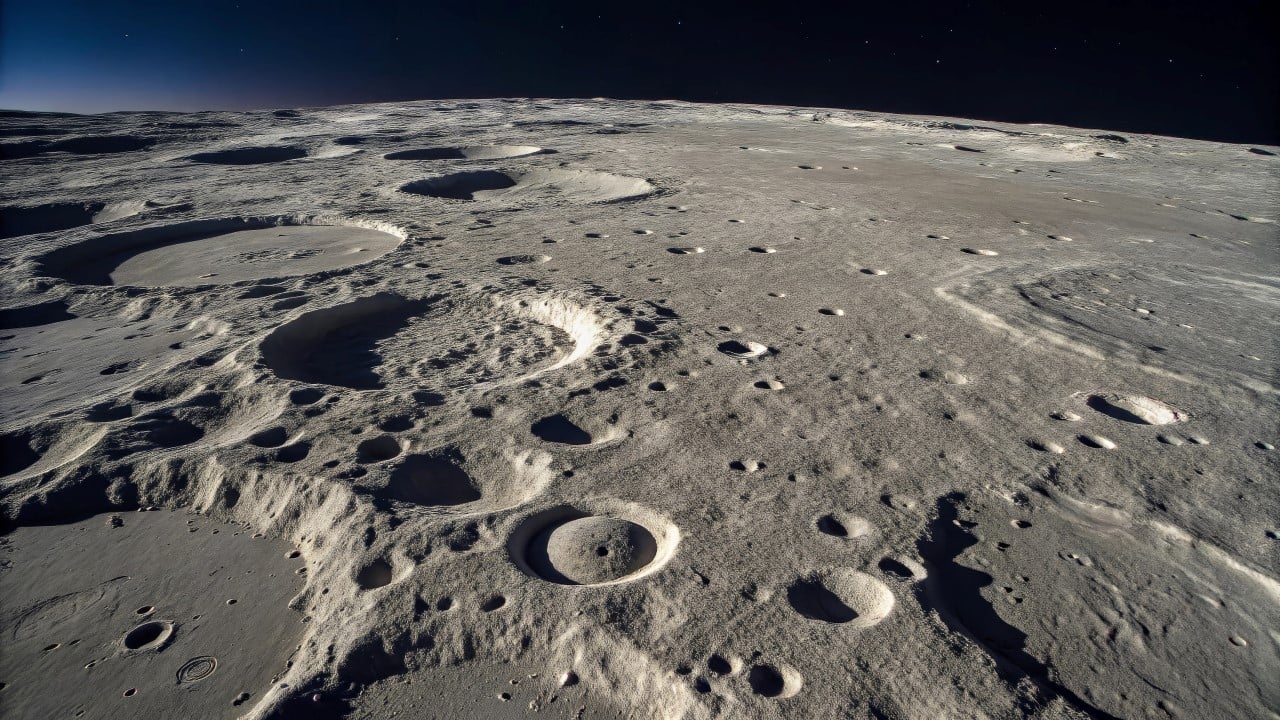
The European Space Agency signed a 65 million euro contract with ispace-EUROPE to build, test, and operate the MAGPIE lunar rover. The mobile unit must touch down on the south pole of the Moon starting in 2029.
Sensors and drilling equipment designed for regolith study
The MAGPIE rover will operate across the lunar surface as a traveling scientific laboratory.
Engineers will install a drill, a neutron detector, ground-penetrating radar, and a volatile analyzer onto the mobile platform to extract material from the regolith. These analytical devices will measure chemical compounds embedded in subsurface layers while technicians evaluate ground density across several test sites. Mission specialists require detailed readings regarding physical resistance at each testing point.
- Mechanical drill to bore into lunar soil and retrieve subsurface strata
- Volatile analyzer to determine evaporating elements and trace gas compounds
- Ground-penetrating radar to record geological structures below the crust
- Neutron detector to inspect elemental concentrations present within regolith deposits
Detection of subsurface ice inside permanently shadowed craters
The mission targets buried water ice inside permanently dark depressions where the complete lack of direct sunlight preserves low temperatures that stop evaporation across billions of years. Researchers want to determine the depth, distribution patterns, and regional variations of these resources across polar terrain.
The MAGPIE rover avoids mining operations.
Multinational cooperation backing the lunar deployment
Operational control of the rover remains based in Luxembourg, while research teams from Germany, the United Kingdom, Norway, and the Czech Republic build the onboard analytical systems. Transporting the payload toward the Moon relies on direct coordination between the European Space Agency and the Japan Aerospace Exploration Agency. Trajectory planning uses previous measurement baselines collected during 2009 by the Indian Chandrayaan-1 orbiter and NASA’s LCROSS satellite.
Expansion of the commercial aerospace hub in Luxembourg
Luxembourg began developing its aerospace sector in 1985 with the establishment of satellite operator SES, accelerated institutional participation by joining the European Space Agency in 2005, and defined a national exploration policy by launching the SpaceResources.lu initiative in 2016. That domestic ecosystem expanded from 16 companies and 600 staff members in 2012 to approximately 80 businesses with 1,650 workers in 2024.
Surface operations will last roughly ten Earth days to collect volatile material measurements before the mission concludes.





