
ESA signs 65 million euro contract for MAGPIE moon rover

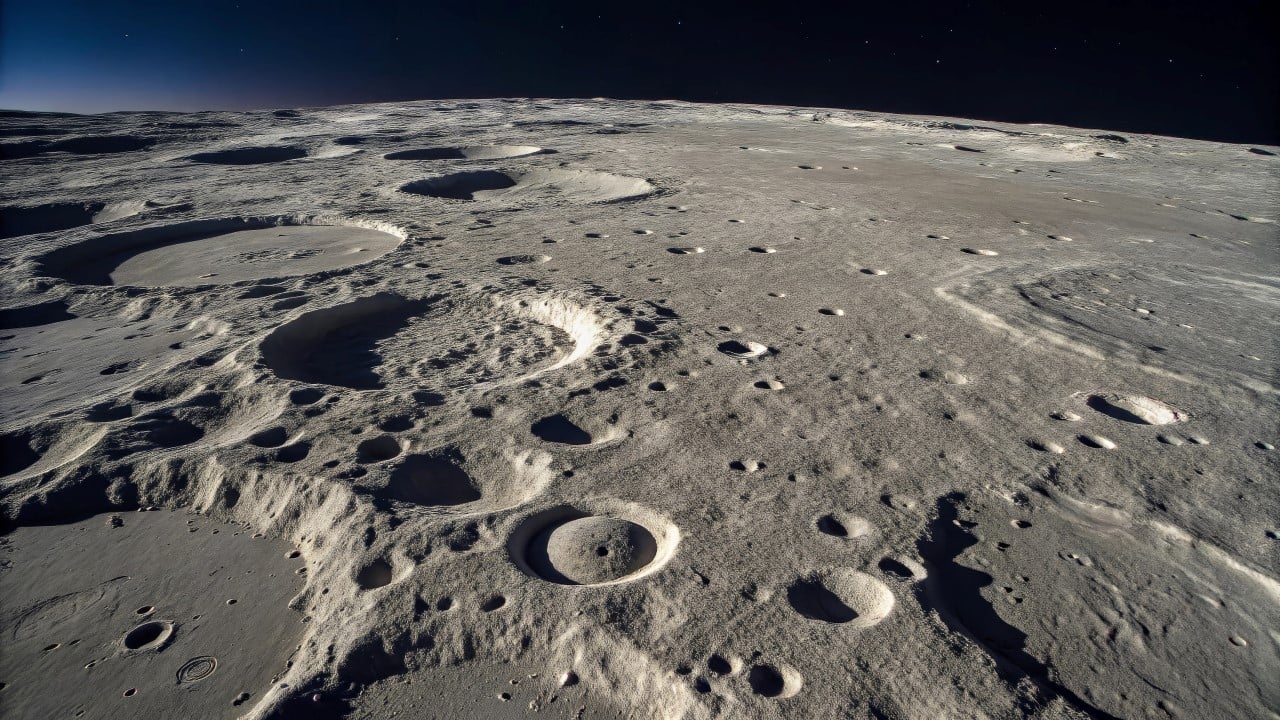
The European Space Agency signed a 65 million euro contract with commercial firm ispace-EUROPE to build, test, and direct the MAGPIE lunar exploration rover. Current flight schedules place the arrival of the robotic vehicle at the lunar south pole starting in 2029.
Scientific payload targets subsurface lunar regolith sampling
The MAGPIE lunar rover will operate across the terrain as an automated analytical workstation.
Engineers plan to install a subsurface mechanical drill, a volatile substance analyzer, a specialized ground-penetrating radar, and a neutron detector on the vehicle chassis to retrieve lunar regolith. These scientific devices will record the concentration of chemical substances locked inside subterranean soil strata. Project technicians also intend to inspect soil compaction and physical density across distinct survey sites.
- Mechanical drill designed to penetrate lunar ground and reach deep internal layers
- Volatile analyzer calibrated to detect evaporable elements and gas compounds
- Ground-penetrating radar deployed to map geological formations beneath the surface
- Neutron detector mounted to evaluate chemical elements inside the loose regolith
Exploration teams pursue frozen water deposits in shadowed polar craters
The expedition focuses on identifying frozen water deposits trapped inside permanently shadowed lunar depressions that never encounter solar rays, where extreme cold has preserved solid water across billions of years. Flight controllers and scientists plan to determine the subsurface depth, territorial variations, and spatial distribution of these lunar water reservoirs.
MAGPIE will not conduct mining.
Multinational engineering consortium supports mission launch and data analysis
While ispace-EUROPE manages rover operations from Luxembourg, engineering consortia across Germany, the United Kingdom, Norway, and the Czech Republic will build the analytical payload before Japan Aerospace Exploration Agency and European Space Agency teams conduct orbital transport. Flight preparations rely on orbital data gathered by India through the Chandrayaan-1 mission. NASA provided complementary baseline readings through its LCROSS lunar satellite mission in 2009.
Luxembourg expands commercial space ecosystem over four decades
Industrial development in the Grand Duchy began in 1985 with the establishment of satellite operator SES, accelerated when Luxembourg became a full member of the European Space Agency in 2005, and gained commercial momentum with the SpaceResources.lu government initiative in 2016. That domestic aerospace cluster grew from 16 companies employing 600 workers in 2012 to approximately 80 enterprises and 1,650 specialists in 2024.
Surface operations for the robotic explorer will span approximately ten Earth days to collect volatile material measurements before all technical activities conclude on the lunar soil.





