
Ispace-EUROPE secures 65 million euro contract for Moon rover

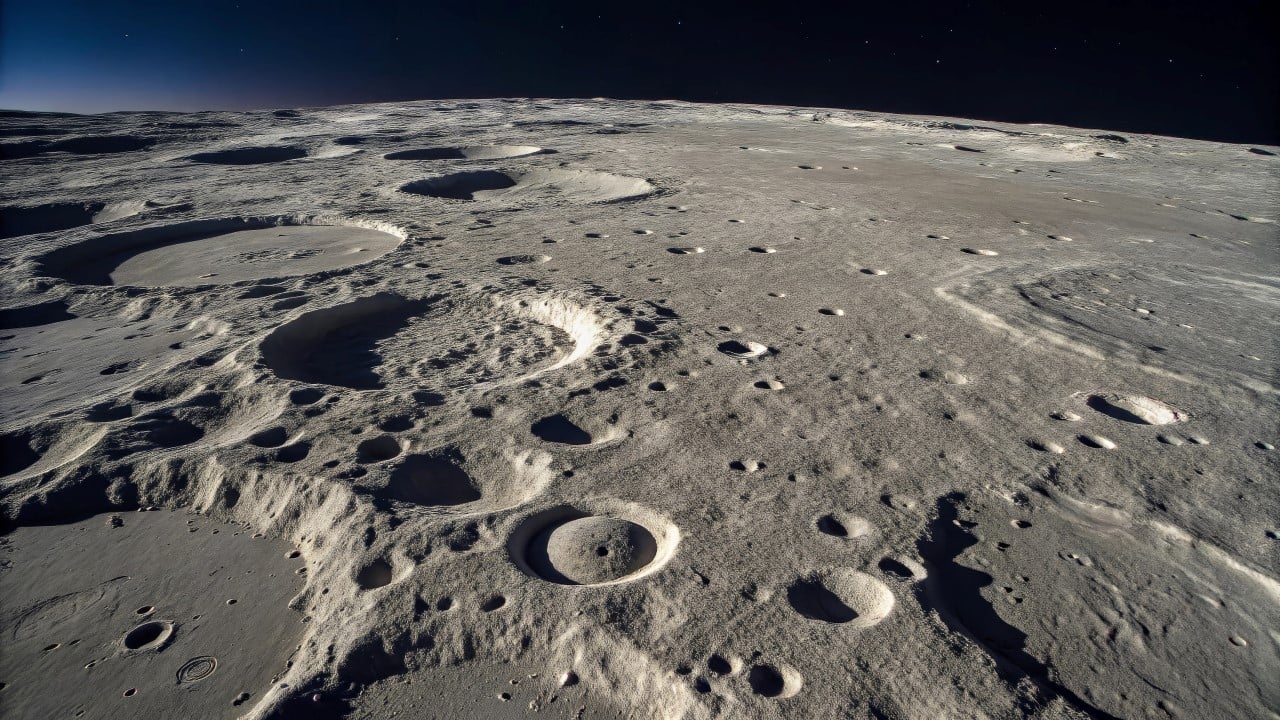
The European Space Agency signed a formal 65 million euro contract with aerospace firm ispace-EUROPE to oversee the full design, assembly, environmental testing, and operational deployment of the MAGPIE lunar exploration rover. Current flight scheduling targets an arrival at the hostile environment of the lunar south pole starting in 2029.
Robotic vehicle carries specialized drill and subsurface radar
The compact wheeled rover will function across the desolate surface as an autonomous mobile research laboratory.
The mechanical chassis integrates a deep rotary drill, an active neutron detector, a specialized ground-penetrating radar unit, and an onboard volatile analyzer specifically constructed to collect untouched samples from the lunar regolith. These coordinated analytical instruments will record the presence, dispersion, and concentration of chemical compounds locked inside the subsoil layers. Engineering teams monitoring the mission plan to gauge the physical firmness and density of the terrain across multiple measurement locations.
- Mechanical drill engineered to bore into compacted lunar soil and penetrate beneath outer surface layers
- Volatiles analyzer built to detect, heat, and identify subsurface gases and easily vaporized elements
- Ground-penetrating radar designed to conduct geophysical readings and structural profiling below the vehicle wheels
- Neutron detector deployed to identify trace materials and hydrogen-bearing elements resting within loose regolith
Exploration targets water ice inside permanently shadowed craters
The expedition will seek out hidden solid ice deposits preserved within shadowed polar craters where the total absence of direct sunlight and sustained ultra-low temperatures have prevented volatile resources from evaporating into deep vacuum over billions of years. Scientific controllers intend to map the precise geological depth, regional fluctuations, and geographic spread of these subsurface lunar reservoirs.
MAGPIE will not conduct mining.
Multinational teams coordinate payload development and flight operations
Operational mission control remains headquartered in Luxembourg, although hardware assembly draws upon scientific institutes and technical specialists distributed across Germany, the United Kingdom, Norway, and the Czech Republic to deliver the various measurement systems. Transporting the completed payload off Earth involves direct bilateral operational coordination between the European Space Agency and the Japan Aerospace Exploration Agency. Navigation modeling and flight target calculations incorporate historical lunar observations collected during 2009 by the Indian Chandrayaan-1 spacecraft and NASA LCROSS satellite.
Growth of Luxembourg space companies since satellite launch in 1985
Luxembourg established its domestic space sector in 1985 through the founding of satellite operator SES, deepened its technical footprint by formally entering the European Space Agency in 2005, and defined commercial space exploration as a state objective with the official launch of the SpaceResources.lu initiative in 2016. That specialized commercial cluster grew from 16 operational businesses supporting 600 workers in 2012 into an active commercial ecosystem of approximately 80 enterprises and 1,650 employees recorded during 2024.
Robotic research at the lunar landing site will run for approximately ten Earth days to log volatile measurements before surface operations terminate.





