
Lunar rover MAGPIE gets 65 million euro European backing

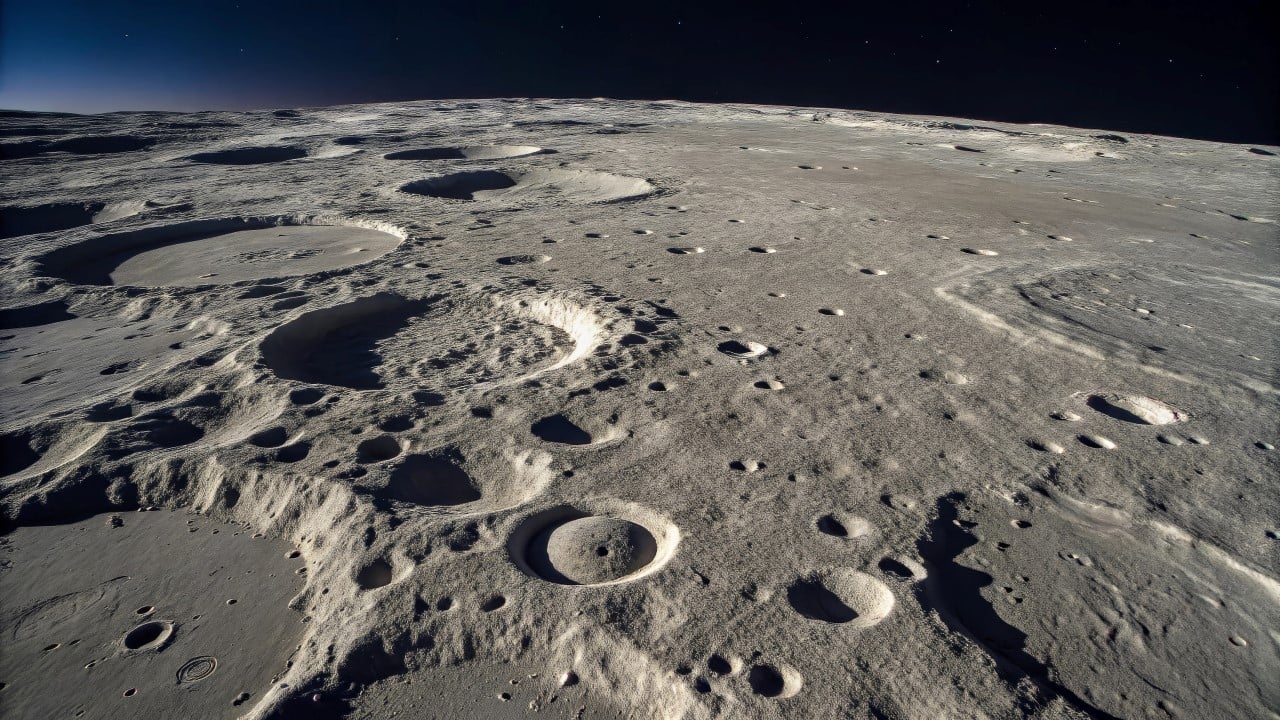
The European Space Agency finalized a 65 million euro contract with ispace-EUROPE to develop, test, and operate the MAGPIE lunar rover. Engineers designed the robotic vehicle to reach the south pole of the Moon starting in 2029.
Scientific payload targets subsurface drilling and soil analysis
The MAGPIE vehicle will operate on the lunar surface as a mobile scientific laboratory.
Mission engineers planned a hardware suite consisting of a drill, a neutron detector, a ground-penetrating radar, and a volatiles analyzer to gather regolith samples from subterranean layers across the landing site. These specialized instruments will measure the presence of chemical compounds buried underneath the dust. Flight controllers intend to map the structural density of the terrain across multiple target locations.
- Mechanical drill designed to penetrate the surface and reach internal layers
- Volatiles analyzer built to detect escaping gases and evaporable elements
- Ground-penetrating radar deployed to map geological formations beneath the terrain
- Neutron detector mounted to identify chemical signatures within the regolith
Mission searches for trapped water ice inside polar craters
The surface expedition will seek frozen water deposits concealed inside ultra-cold, permanently shadowed craters where shielding from direct solar rays preserved volatile ice reserves across billions of years of lunar history, allowing researchers to measure the depth, regional variations, and overall volume of the deposits. Scientists aim to determine the precise geographic boundaries of these subterranean reserves.
MAGPIE will not mine materials.
Global space agencies partner to deliver and navigate the explorer
Technical direction remains centered in Luxembourg, while engineering consortiums across Germany, the United Kingdom, Norway, and the Czech Republic build the analysis payloads. Delivery to space relies on direct cooperation between the European Space Agency and the Japan Aerospace Exploration Agency. Mission trajectories build on historical data gathered by India’s Chandrayaan-1 spacecraft and NASA’s LCROSS satellite in 2009.
Luxembourg expands national space sector into planetary exploration
Domestic growth in Luxembourg began with satellite operator SES in 1985, expanded through membership in the European Space Agency in 2005, and accelerated after the launch of the SpaceResources.lu initiative in 2016. That industrial cluster grew from 16 companies and 600 workers in 2012 to roughly 80 commercial entities and 1,650 employees by 2024.
The rover will operate on lunar soil for an estimated ten Earth days to sample volatile chemical deposits before concluding its surface operations.





