Mars rover finds organic carbon in ancient Jezero Crater rocks

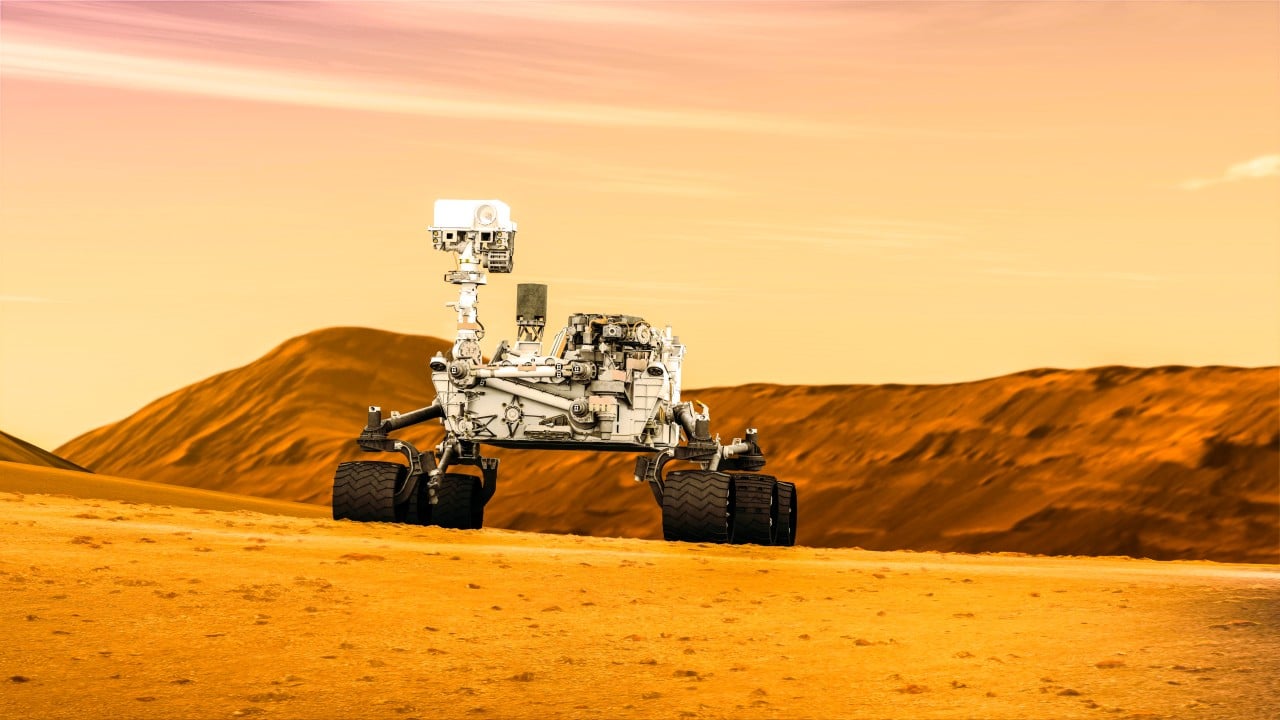
NASA’s Perseverance rover detected organic carbon compounds preserved inside ancient sedimentary rocks at Jezero Crater on Mars. The investigated samples date back to an early geological era when active liquid water regularly flowed across the surface of the red planet. This ancient river delta environment once hosted dynamic hydrology that transported and deposited distinct layers of mineral sediments.
Perseverance scientists continue laboratory evaluations.
Researchers identified these chemical signatures within sedimentary materials carried by ancient waterways before the planet turned arid, recording an era when continuous river systems supplied the Jezero Crater basin with diverse mineral compounds across successive geological epochs. The scientific journal Science Advances published the findings documenting the preservation of these primitive structures.
Potential geological drivers behind the detected materials
- Volcanic reactions within the Martian crust
- Prolonged chemical contact between liquid water and minerals
- Impacts from space objects striking the Martian surface
The detection of these chemical substances does not prove the existence of biological life on Mars. Purely geological and inorganic processes frequently generate identical organic compounds without any contribution from living organisms. Scientists treat these rock layers as records of early chemical evolution rather than definitive evidence of past biology.

Structural differences between Martian crust and Earth terrain
The crust of Mars exhibits physical stability absent from the shifting surface of Earth. The neighboring planet lacks active plate tectonics and does not experience the continuous atmospheric erosion that typically erases older terrestrial rock formations. Because of this billions-year-old geological stillness, ancient Martian formations retain original compounds in pristine condition. Researchers examine these preserved sedimentary layers to reconstruct how the Martian environment changed across deep time.
Biological implications linked to planetary organic chemistry
On Earth, complex macromolecules provide the primary chemical architecture required for biological life to emerge and diversify. These durable terrestrial structures remain preserved within ancient rock formations as the sole physical traces left behind by ancestral microbes.
Co-author Ashley Murphy from the Planetary Science Institute stated that carbon constitutes the foundational building block of terrestrial life. Murphy explained that establishing whether Mars accumulated these same chemical ingredients helps determine if environmental conditions ever supported living organisms. Determining this chemical composition clarifies whether the early Martian lake basin ever sustained a viable habitat.
Luís Henrique Costa é jornalista formado pela FMU, editor-chefe e fundador do Mix Vale, portal de notícias em atividade desde 2013. Responde pela direção editorial do veículo, que cobre Brasil e mundo em economia, benefícios sociais, esportes, tecnologia, ciência e entretenimento. Atua na área há mais de 15 anos e lidera uma equipe de cerca de 15 colaboradores.