
Massive gas cloud disguises early black hole as cosmic star
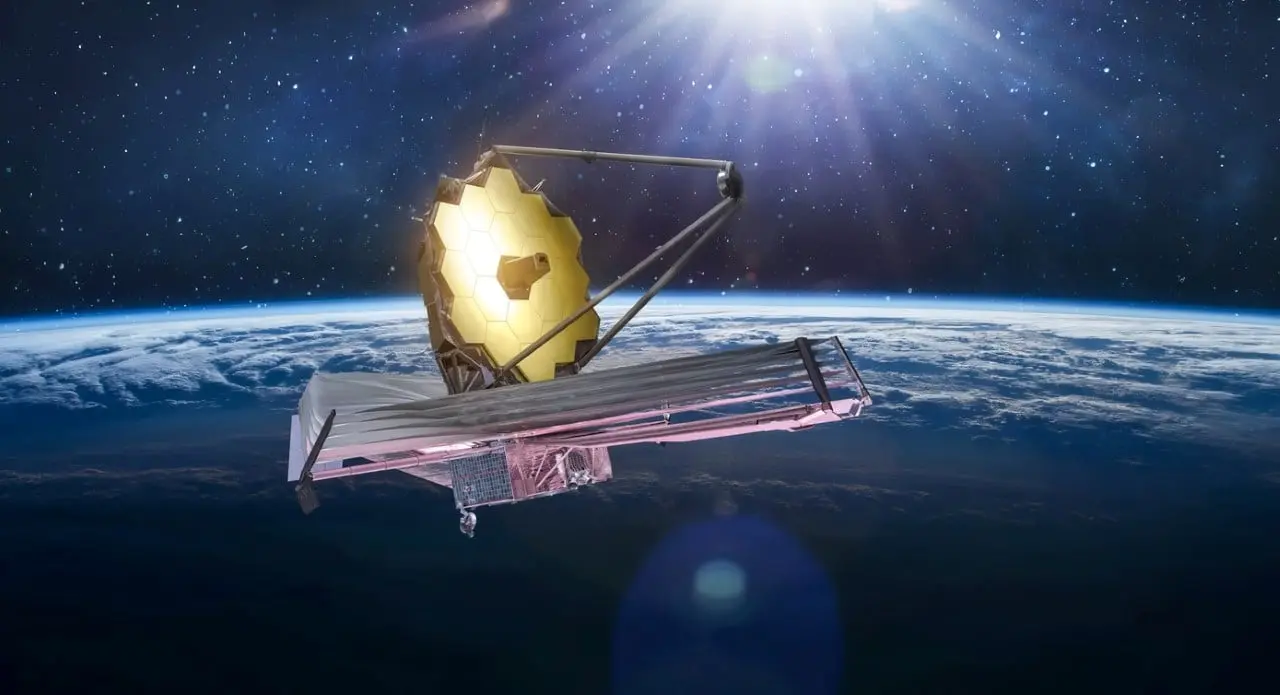
Astronomers at the Massachusetts Institute of Technology identified on September 8, 2026, an ancient black hole cloaked inside an immense gas envelope matching the dimensions of the Solar System after evaluating observations collected by the James Webb Space Telescope.
Researchers first detected faint crimson specks across deep-field exposures shortly after science operations began in 2022. Observers quickly assigned the label of little red dots to these signals because existing frameworks provided no direct explanation for their appearance.
Standard cosmological models fail to explain early red points
No conventional cosmological framework explained the emergence of these specific targets discovered by the James Webb Space Telescope in the early universe.
When considered as developing galaxies, the formations displayed excessive mass and improbable gravitational stability for structures existing only a few hundred million years after the origin of the cosmos. Had they represented standard supermassive black holes actively drawing in material, instruments would have registered the customary emissions of radio waves and X-rays that consistently track such rapid accretion. These enigmatic bodies expanded rapidly in number during the first 1 billion years before vanishing almost entirely 2 billion years into cosmic history.
More on this story: Webb telescope reveals hidden black hole glowing like star
Structural measurements reveal extreme mass inside MoM-BH*-1
A research team led by Rohan Naidu organized the targets under the Mirage or Miracle project to determine whether the detections represented genuine physical objects or optical distortions. One specific point within the survey stood out by generating red radiation at intensities far exceeding those of all neighboring celestial bodies.
The investigation published in the journal Nature demonstrated that the physical readings correspond to a black hole containing 100,000 times the mass of the Sun, completely enclosed within an extremely dense hydrogen cloud that shines like a colossal star spanning the entire diameter of the Solar System while replacing nuclear fusion with heat generated by central gravitational pull.
Standard stellar cores could never attain such extreme luminosities through ordinary nuclear fusion alone. The energy emitted by this entity outshines the brightest known star by a factor of roughly 100 billion. The sheer scale of this radiated energy challenges traditional definitions of stellar brightness.
Scientists designated the structure as MoM-BH*-1, incorporating the customary asterisk from astrophysical notation into its formal label. The collected data recorded light emitted when the cosmos had reached an age of approximately 660 million years.
Spectral signatures rule out ordinary interstellar dust clouds
Robert Simcoe, director of the Kavli Institute at MIT, noted that red appearances in deep astronomical surveys usually indicate the presence of thick dust clouds that scatter short blue wavelengths while letting longer red wavelengths travel across space.

Learn more: Hubble and Webb locate hidden black hole in Omega Centauri
Analysis of the incoming light showed an abrupt drop in emission just below a specific wavelength, marking a Balmer break typically seen in stars with the maturity of Vega. Naidu stated that this spectral drop represented the deepest Balmer break ever recorded by astronomers studying any celestial target. Spectroscopic readings confirmed that the envelope consists almost entirely of light elements that do not exceed the density of helium. Conventional space dust requires an abundance of significantly heavier elements that are completely absent from the object.
Independent surveys confirm matching observations across distant targets
Astronomer Anna de Graaff provided preliminary backing for this structural concept in September 2025 by presenting findings on an extreme object nicknamed The Cliff for the Max Planck Institute for Astronomy. Her group systematically tested interstellar dust scenarios, eliminated them after repeated inconsistencies, and formulated an early model depicting an obscured black hole embedded in gas.
Subsequent findings published in Nature in January revealed that the broadening of observed emission lines results from electron scattering rather than gravitational acceleration, decreasing previous mass estimates by a factor of up to one hundred. Astrophysicist Vasily Kokorev utilized a foreground galaxy cluster as a gravitational lens at the University of Texas at Austin in June to isolate over 40 distinct spectral lines in GLIMPSE-17775. The European Space Agency subsequently confirmed that multiple international teams are reaching consensus around this shared cosmic interpretation.
Physicists probe unresolved mechanisms behind the gas envelope
Nobody photographed MoM-BH*-1 directly.
Researchers are still working to understand how an outer gaseous layer of this magnitude avoids disruption while feeding an active central sink. The James Webb Space Telescope already carries reservations for follow-up observation runs scheduled during its upcoming operational cycle to test alternative ideas involving ultra-dense star clusters.
On the same topic: Young universe: unprecedented system discovered with three active supermassive black holes
Naidu concluded that formations of this type may have governed the fundamental rate at which the first galaxies forged new stars during the cosmic dawn.
Records from the European Research Council show that MoM-BH*-1 orbits alongside a brighter companion galaxy, with a merger expected to occur within 100 million years. Combining the mathematical light signatures of the two objects reproduces the exact profile of an isolated little red dot. This visual alignment indicates that the structure displays such clear spectral signatures today only because it has not yet collided with the adjacent cosmic system.
More news in Latest News (EN)
See more → Driveway collapses into sinkhole at Nicolas Cage Malibu home
 Lindsay Clancy trial jurors recount deadlock over lone holdout
 Meta deploys Muse automated assistant across United StatesAutomated Muse tool arrives in United States to run tasks
 Fi recalls two canine supplements over salmonella threat
 Apple chief teases iPhone 18 Pro camera in short video clipCamera teaser for iPhone 18 Pro surfaces ahead of Apple event
 Inside Adam Sandler’s $12 million California mansion in Pacific Palisades
 AI has over 10% risk to end humanity, Anthropic researcher says
 Apple plans clear casing and 5,200 mAh cell for iPhone 18 ProApple readies 5,200 mAh iPhone 18 Pro with see-through back
 DNA solves 1977 Wilson County case of missing Maryland teen
More news on Mix Vale
- 1Apple drops iPhone Ultra moniker for new foldable device
- 2Bilateral security pact brings $48 billion in defense value
- 3Washington weighs massive defense dividends from Israel pact
- 4Deadly cross-border attacks escalate, claiming six lives amid renewed diplomatic efforts
- 5German far-right party secures state election win, coalition prospects hinge on small populist faction
- 6New documentary reveals deepening cracks in Canada’s progressive image, highlighting widespread societal struggles
- 7Raiders’ Fernando Mendoza to start career on bench: Legendary agent cites Mahomes, Rodgers as development models
- 8U.S. State Department updates Peru travel advisory, highlighting crime, terror, and drug risks for visitors
- 9Ben Shelton defeats Carlos Alcaraz in record late US Open match
- 10Cupertino hosts keynote revealing iPhone 18 and Ultra models